

Tuxedo vs Suit: What Actually Separates the Two, Explained
I see the tuxedo vs suit question when a client holds a black-tie invitation and already owns a good dark suit. They are not interchangeable: a tuxedo has satin or grosgrain facings, while a suit uses one cloth throughout. In Dubai, the humid walk from car to venue and the air-conditioning inside also matter. The invitation and hour settle the choice.
Quick Verdict
Choose a tuxedo when the invitation says black tie, the event begins in the evening, or you are the groom at a formal night reception. Choose a suit when you need one garment for business, daytime ceremonies, dinners and events not explicitly marked black tie.
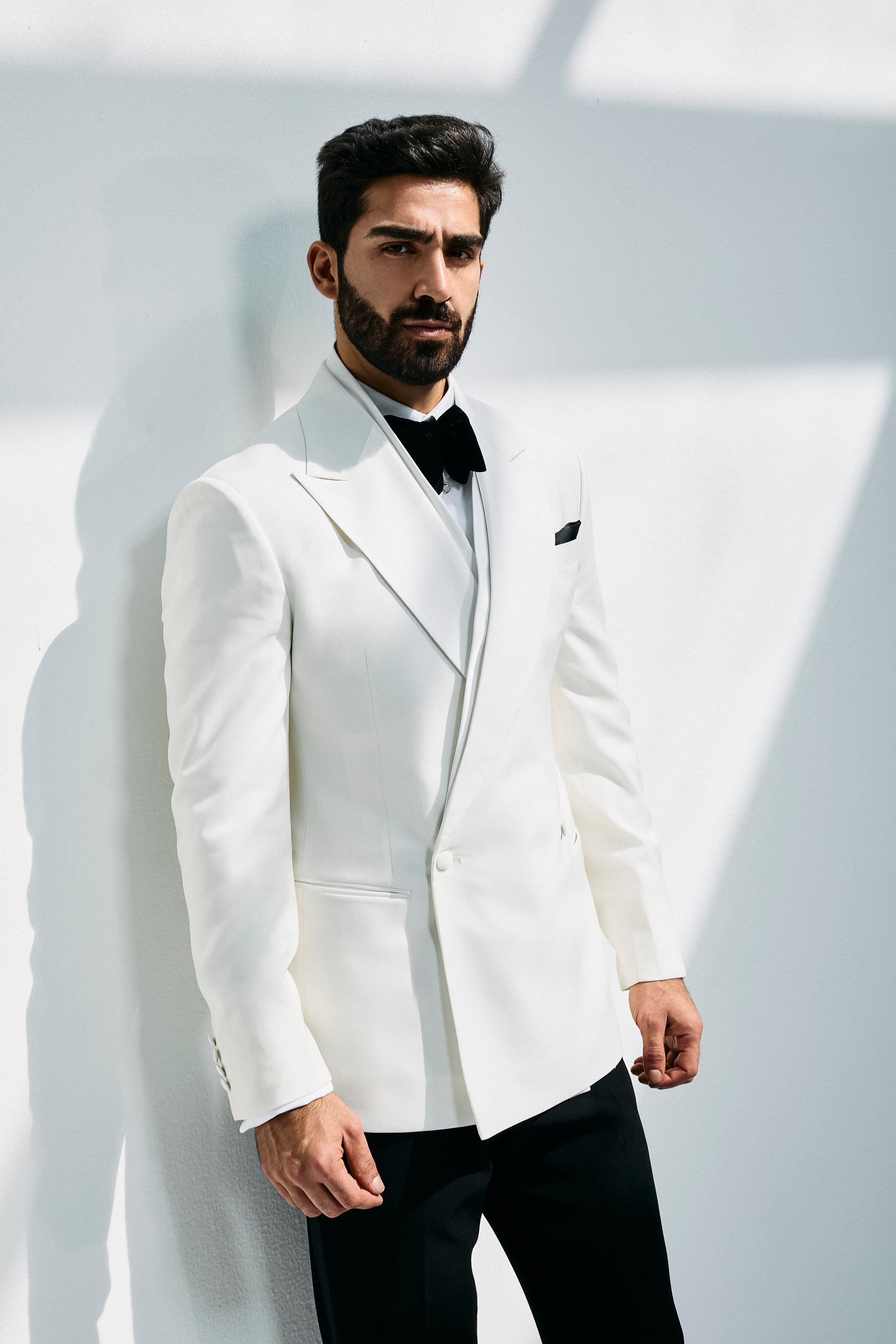
In tuxedo vs suit terms, a tuxedo answers formal evening dress precisely. A suit earns more wear in most wardrobes.
Tuxedo vs Suit Comparison
The tuxedo vs suit distinction starts with the surface. Under evening lighting, a tuxedo’s satin or grosgrain lapel catches light differently from its matte wool body; a suit reads as one continuous surface. For a closer visual checklist, see 5 Ways to Tell a Tuxedo From a Suit at a Single Glance.
| Tuxedo | Suit |
|---|---|
| For: A man attending a black-tie evening or formal night wedding. | For: A man needing tailored clothing for business and a broad range of occasions. |
| What it does well: Gives the lapel formal contrast and a clear evening identity. | What it does well: Works across business, travel and ceremonies. |
| Where it fails: It looks out of place in many daytime and business settings. | Where it fails: It does not meet a strict black-tie dress code. |
| Wear it to: Black-tie dinners, galas and evening ceremonies. | Wear it to: Boardrooms, business functions and daytime weddings. |
| Do not wear it to: Corporate meetings and events calling for business dress. | Do not wear it to: Events where the host has requested black tie. |
Tuxedo vs Suit: Fabric and Surface Contrast

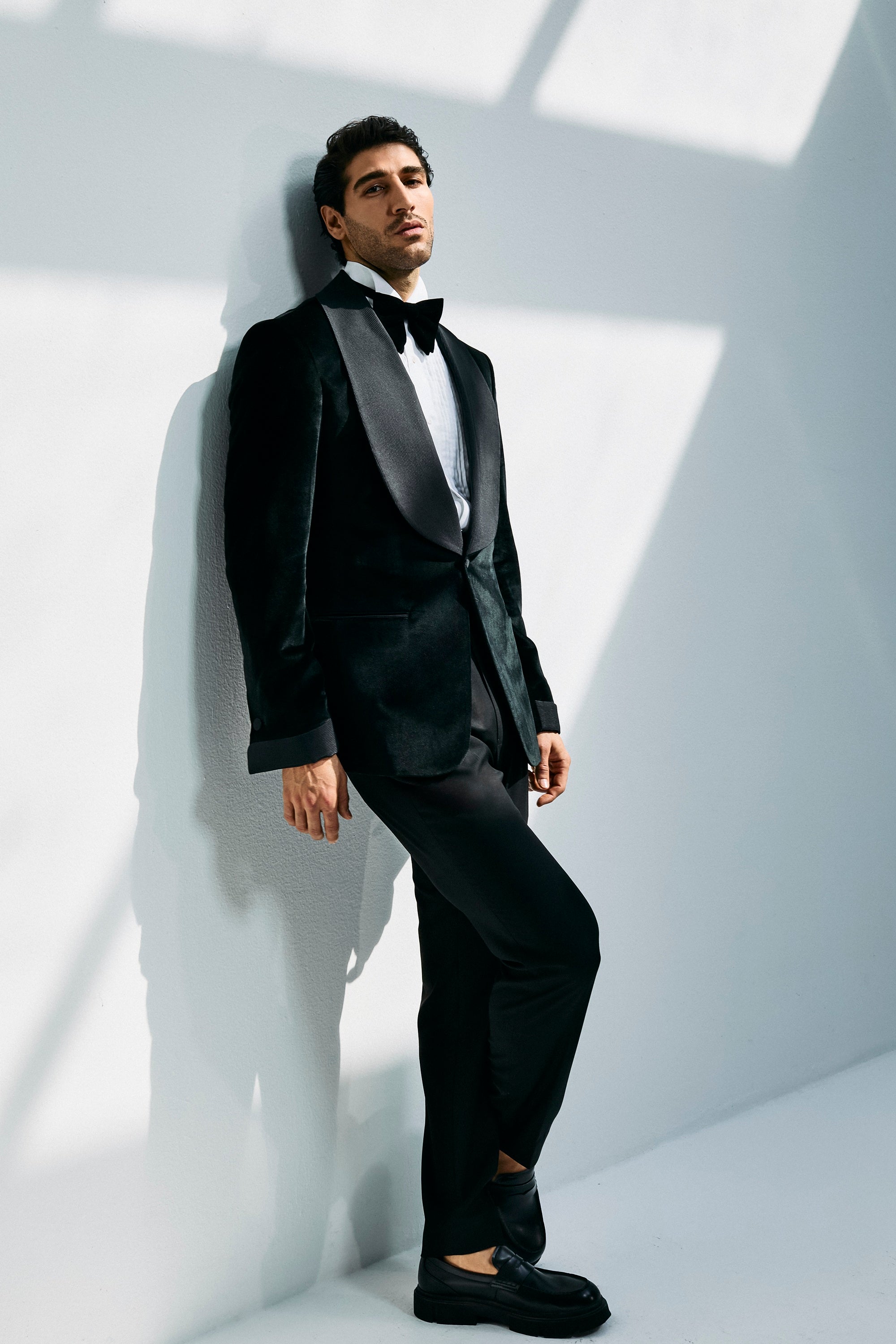
A suit is normally cut in one cloth. Navy, charcoal and mid-blue suiting wool are common because jacket, trouser and lapel remain visually consistent. The cloth may have texture, such as a fine twill, but should not rely on shine to look formal.
By contrast, a tuxedo works through contrast. Its body may be black wool, while lapels, covered buttons and sometimes the trouser side stripe use satin or grosgrain. Satin is smooth and reflective. Grosgrain has a fine rib and a quieter, drier finish.
I generally favour grosgrain for a man who wants formality without glare in photographs. Satin works under ballroom lighting, though its reflective surface makes every pull across the chest more visible.
Dubai changes the cloth discussion. I would not choose heavy cloth merely because an event is formal. A lighter wool is more comfortable on the humid journey from the car and can still hold shape in a heavily air-conditioned venue. Before a commission, I discuss cloth weight, lining, canvas structure, the outdoor arrival and any photographs before sunset.
The tuxedo vs suit distinction causes confusion when people say “tuxedo suit”. It does not mean merely a black suit; a tuxedo has the formal components of evening dress. See what a tuxedo suit is for those components in plain language.
The deciding detail: the tuxedo’s contrasting facings. They are the clearest visual signal of evening dress.
Tuxedo Colours and Dinner Jacket Variations
Begin with black or midnight blue. Black is direct and familiar. However, midnight blue can appear deeper than black under warm evening lighting because its blue undertone holds definition where black may become a flat silhouette in photographs.
The difference is quiet. In a ballroom, midnight blue should read almost black until it sits beside a true black jacket.
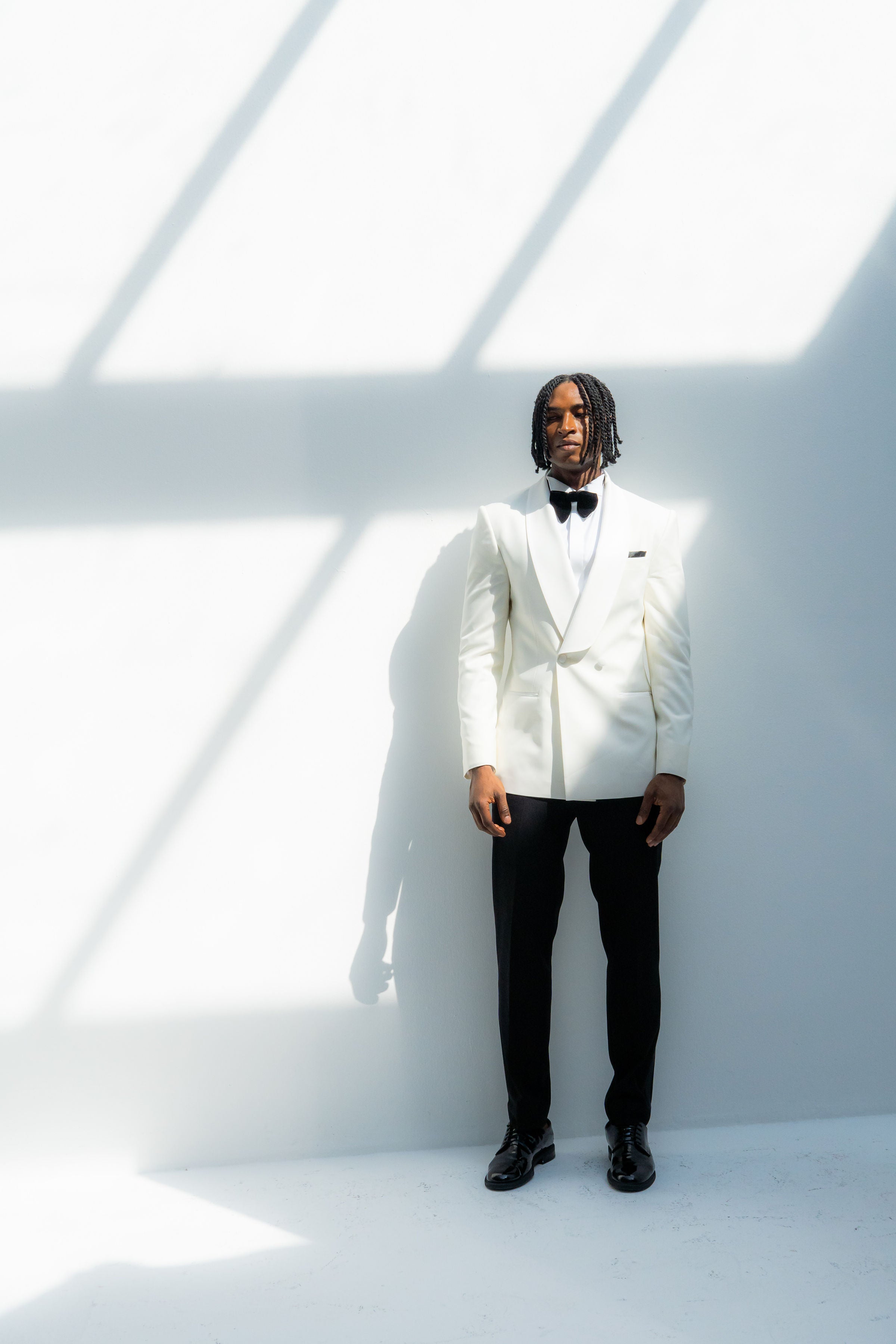
A white dinner jacket has a place, but not at every formal event. It can work for a warm-weather evening reception, a resort setting or a formal celebration where the host has made the dress code clear. Wear it with black evening trousers, not matching white trousers, and with the same formal shirt, bow tie and polished shoes as a black tuxedo.
Dubai weather alone does not make a white dinner jacket appropriate. Instead, venue, start time and the host’s direction decide it. At an indoor black-tie gala, it may look like costume rather than evening dress if nobody else has been invited to dress that way.
A coloured suit jacket is different again. Burgundy, green or patterned tailoring may work at a fashion-led party, but colour does not make it a dinner jacket or automatically satisfy black-tie requirements.
Lapel and Jacket Details
Most business suits use a notch lapel: the small V where collar meets lapel. It is practical and familiar.
A suit can also use a peak lapel. It creates more vertical line and stronger shoulder presence, especially for a groom or a man with a narrower frame.
On a tuxedo, expect a shawl collar or peak lapel. The shawl collar curves continuously from neck to chest. It is softer, traditional dinner-jacket territory.
A peak lapel is sharper and more architectural. I often suggest it to a man who wants more structure in photographs.
Then inspect the buttons. A tuxedo normally uses covered buttons, not ordinary horn buttons. Its trousers should have a clean waistband and are traditionally worn without belt loops.
A suit can take a belt. I would still choose properly adjusted side tabs or a well-fitted waist over a belt fighting to hold up loose trousers.
Peak lapels appear on both garments. Lapel shape alone does not make a jacket a tuxedo; the contrast facing and complete evening outfit settle it.
For lapel formality, choose the tuxedo. A shawl or silk-faced peak lapel does work a business suit cannot replicate.
Tuxedo Shirt, Bow Tie and Evening Shoes
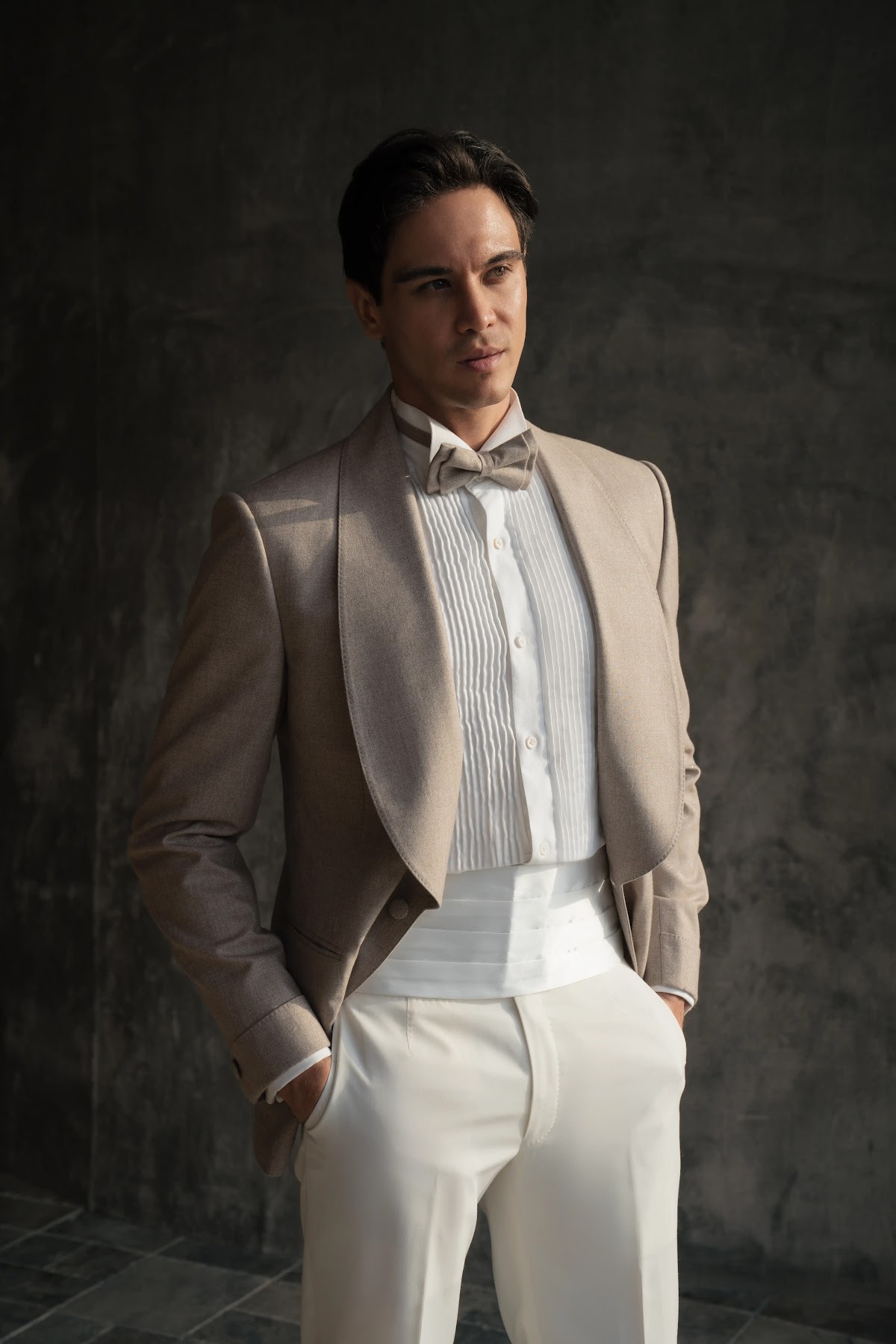
The shirt completes the tuxedo. White is standard, with a crisp collar and French cuffs for cufflinks. A pleated or piqué front suits traditional black tie; a clean plain front is often quieter for a modern evening wedding.
A business shirt may fit beneath the jacket, but it often looks incomplete once the bow tie and formal lapels are in place. Its softer collar, button cuffs and office-weight cloth were made for a long tie, not evening dress.
Wear a black bow tie. It keeps the shirt front visible and sits correctly within the open V of a peak lapel or the curve of a shawl collar. Black satin works with satin-facing tuxedos; grosgrain is usually the neater partner for grosgrain facings.
Keep the waistband hidden. A cummerbund or evening waistcoat covers the join between shirt and trousers when the jacket opens as you sit. Traditional tuxedo trousers have no belt loops, and a visible belt interrupts the clean horizontal line.
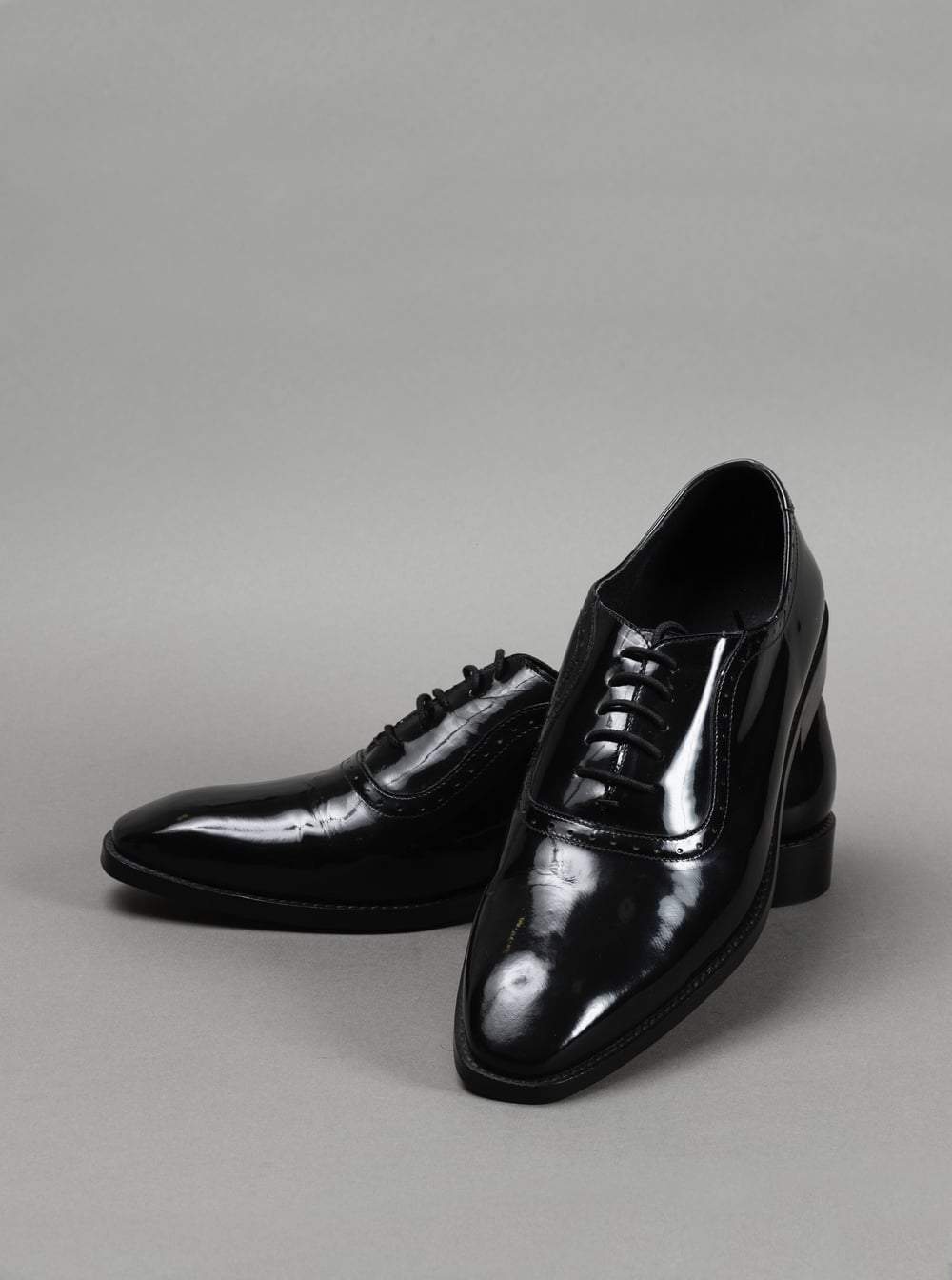
Patent leather evening shoes are traditional. Highly polished black Oxfords are a sound alternative, particularly if you want one pair for formal dinners and dark suits. Brown shoes, trainers and casual loafers usually weaken black tie’s deliberate contrast.
In Dubai, carry the right shoes to the venue if the walk from the car is wet or dusty. A polished black shoe looks controlled under ballroom lighting. A scuffed one draws the eye.
Tuxedo vs Suit: Occasion and Dress Code
Black tie is a dress code, not a colour. When the invitation says black tie, wear a tuxedo with a formal shirt, black bow tie and proper evening shoes. A black business suit with a long tie may look respectable, but it is not black tie. Encyclopaedia Britannica’s guide to black tie also distinguishes the dress code from ordinary business dress.
A suit is right for most professional settings. In Dubai, that includes presentations, meetings, formal lunches and dinners where men arrive in navy, grey or black tailoring. It also suits daytime, garden-based and cocktail-attire weddings.
For a wedding, begin with the hour and the host’s direction. An evening ballroom reception can justify a tuxedo for the groom. A morning ceremony usually points to a suit. Read our guide to wedding tuxedo suits when you are deciding around ceremony timing and dress code.
Guests should not out-formal the invitation. A tuxedo at a cocktail wedding can look overdressed. A suit at black tie leaves you visibly short of the required standard.
For versatility, take the suit. It covers far more of a working man’s calendar without looking forced.
Choosing a Tuxedo vs Suit in Practice
I ask clients to make the decision in this order.
Read the invitation literally. “Black tie” means tuxedo. “Cocktail” normally means a dark suit, not a tuxedo. If no dress code is listed, ask the host or assess the venue and start time.
Look at the clock. An 8 pm dinner has a different visual language from a 1 pm ceremony. Evening generally favours the tuxedo. Daylight makes contrast facings look more theatrical.
Consider how often you will wear it. If this is your only serious tailored garment, a navy or charcoal suit earns its place first. If you attend formal dinners, charity galas or black-tie weddings regularly, a tuxedo is a sound addition.
Build the whole outfit. A tuxedo needs the right shirt, bow tie, footwear and trouser treatment. A suit gives more latitude with shirts and ties. Do not buy a tuxedo jacket and finish it with office accessories.
Check movement at fitting. Sit in a car. Reach forward. Put your hands in trouser pockets. A jacket can look correct standing still and fail over the back or across the chest as soon as you move.
A blazer is a separate route. It is less formal than a matching suit or tuxedo, and works only where the occasion permits it. Tuxedo vs Suit vs Blazer explains where each level sits.
For a first purchase, choose the suit. Add a tuxedo once your diary genuinely requires black tie.
Suit, Tuxedo and Blazer Levels of Formality

A matching suit has one jacket and trousers cut from the same cloth. Colour, texture and surface are intended to read as one outfit. That makes it the useful middle ground for business, weddings, client dinners and cocktail events.
A tuxedo is more formal because jacket and trousers are designed for evening dress, with contrast facings and specific accessories. Its formality comes from the complete arrangement, not simply dark cloth or a sharper lapel.
A blazer is a separate jacket worn with different trousers. You might pair navy with grey wool trousers, or a textured jacket with tailored chinos where the event permits it. The contrast should look deliberate, not like two pieces that were meant to match but do not.
Blazers work for relaxed business gatherings, smart dinners and some cocktail occasions. They do not meet black tie and are rarely right for a formal evening wedding unless the invitation clearly permits less formal dress.
The visual test is simple. A suit creates one line from shoulder to trouser hem. A blazer combination makes a deliberate break at the waist.
Vavci Formalwear Options
Black Tail Coat Tuxedo
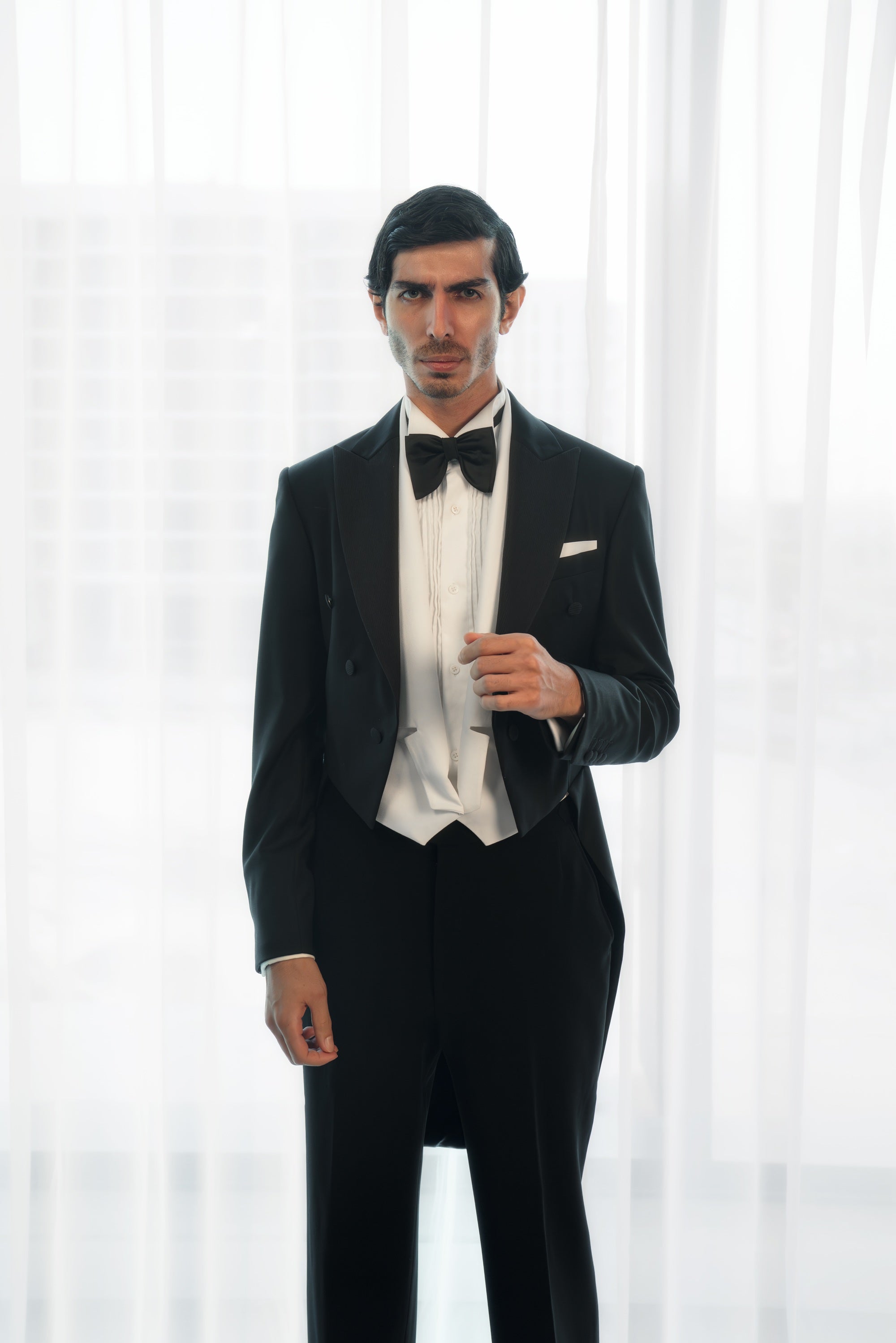
I would put the Black Tail Coat Tuxedo in front of a client with a genuine formal evening ahead. It is cut in black wool as a tailcoat, the most ceremonial cut here. Choose it when the dress code asks for full evening formality rather than a dark suit.
Black Tuxedo Trousers
The Black Tuxedo Trousers are cut in black wool to complete the tailcoat. Traditional tuxedo trousers have a clean waistband and no belt loops, so the horizontal line stays uninterrupted when the jacket opens. Choose them as the base of a full evening outfit rather than pairing the jacket with ordinary suit trousers.
For a fully individual commission, bespoke tailoring at Vavci allows lapel shape, cloth, canvas structure, lining and balance to be chosen for you rather than adapted afterwards. You can also explore our wider tuxedo collection and guidance before deciding.
Pros and Cons
Tuxedo Strengths
Meets a black-tie dress code properly.
Contrasting lapels give clear evening formality in person and in photographs.
Peak lapels or a shawl collar bring stronger ceremonial presence.
Works particularly well for formal dinners, galas and evening wedding receptions.
Suit Strengths
Covers professional, social and ceremonial occasions with fewer restrictions.
Works with different shirts and ties across the year.
Usually makes more sense as a first serious tailored purchase.
Offers a more natural answer for daytime weddings and cocktail events.
Considerations
A tuxedo needs formal accessories. A standard long tie and belt weaken the result.
A suit does not become black tie because it is black or has a peak lapel.
Neither garment compensates for incorrect shoulder width, poor sleeve pitch or trousers that pull when seated.
Dubai heat makes heavy cloth and unnecessary full lining uncomfortable before you reach the venue.
Tuxedo vs Suit: Frequently Asked Questions
Can I wear a black suit instead of a tuxedo to a black-tie wedding?
No. A black suit remains a suit, even with a white shirt and black tie. Black tie calls for a tuxedo with formal lapel facings, appropriate trousers, a bow tie and evening footwear.
Is a tuxedo more formal than a suit?
Yes. A tuxedo is designed for formal evening wear; a suit is designed for much broader use. Lapel facings and formal accessories create the visual difference, but the real distinction is the dress code each garment answers. Do not treat a tuxedo as a business suit in black.
Can I wear a tuxedo with a long tie?
You can, but I would not recommend it for traditional black tie. A bow tie keeps the shirt front and lapel shape in proportion. A long tie belongs more naturally with a suit. At a deliberately fashion-led event, the host’s direction takes priority.
Which is better value, a tuxedo or a suit?
A suit is usually better value when you own only one tailored outfit, because it works for business, weddings and dinners. A tuxedo becomes better value when your calendar includes several genuine black-tie events. Value comes from correct use and fit, not simply purchase price.
What should a groom wear, a tuxedo or a suit?
For a black-tie or formal evening wedding, especially in a ballroom, I would put the groom in a tuxedo. A suit is often better for a daytime ceremony, outdoor venue or relaxed reception. Consider the bride’s styling, venue and event time before choosing.
Is a peak-lapel suit a tuxedo?
No. A peak lapel is a shape used on suits and tuxedos. A tuxedo is identified by its formal contrast elements and its role in an evening dress code. A peak-lapel suit can look sharp at a wedding or presentation without becoming black tie.
What is the difference between a dinner jacket and a tuxedo?
In modern use, the terms often describe the same type of formal evening jacket. A dinner jacket may also specifically mean a white or coloured evening jacket worn with black tuxedo trousers. Occasion and the expected traditional formality determine the details.
Is it okay to wear a tuxedo to a wedding as a guest?
Yes, when the invitation says black tie or clearly asks for formal evening dress. A tuxedo is not right for a daytime, cocktail or relaxed wedding unless the host specifically requests it. The invitation, not the groom’s outfit, determines guest dress code.
Do tuxedos look better than suits?
No. They look more formal, not automatically better. A tuxedo has more contrast and a stronger evening presence, while a well-fitted suit often looks more natural at work, in daylight and at most social events. Fit, cloth and suitability matter more than the label.
What shoes should I wear with a tuxedo?
Wear black patent leather evening shoes or highly polished black Oxfords. Both keep the outfit formal and the trouser line clean. Brown leather, trainers and casual loafers usually look out of place with traditional black tie.
Can I wear a midnight blue tuxedo instead of a black tuxedo?
Yes. Midnight blue is a traditional, appropriate tuxedo colour for black-tie events. Under evening lighting, it can appear deeper than black, though it should still be paired with black formal accessories and the correct evening shirt.
Key Takeaways
A tuxedo uses formal contrast at the lapels and is made for black-tie evening dress.
A suit uses matching cloth throughout and is the more versatile wardrobe choice.
Peak lapels appear on both, so look at the lapel facing and the full outfit.
For a first tailored garment, a suit normally earns more wear.
For a black-tie invitation, wear a tuxedo rather than a black business suit.
In Brief
The tailcoat and its trousers make one complete outfit for the most formal evenings.
| Tail Coat | Tuxedo Trousers |
|---|---|
|
Black Tail Coat Tuxedo Best for black-tie evenings and formal wedding receptions. |
Black Tuxedo Trousers Complete the outfit with a clean waistband, traditionally worn without a belt. |
Bottom Line
Choose a tuxedo when the occasion has earned it. A black-tie invitation is not asking for your darkest suit; it asks for a garment built around evening formality, from lapel facing to bow tie. Choose a suit when you need range, particularly if this is the first properly fitted tailored garment in your wardrobe. It will work harder across Dubai’s business and social calendar. The best choice is not the more dramatic one. It is the one that fits the invitation, the hour and how you will actually wear it. In the tuxedo vs suit decision, begin with the tuxedo for a formal evening. For almost everything else, begin with the suit.
Style guidance is general and may vary according to the host’s dress code, venue, cultural expectations and personal preference. Product details, availability, fabric selection and bespoke commissioning requirements should be confirmed with Vavci before purchase or appointment.