

The Waistcoat's Job in a Three-Piece Suit, Explained
I see the value of a waistcoat when a client removes his jacket after the ceremony. It keeps the front of a three-piece suit complete, covering the trouser waistband rather than leaving a strip of shirt exposed. In Dubai, that matters: the walk from car to venue may make the jacket impractical, while the air-conditioned room still calls for a finished outfit.
A waistcoat is not a vest added casually to a two-piece suit. It must work with the jacket cloth, buttoning point, lapel balance and trouser rise. Read our broader guide to three-piece suits for men if you are deciding whether the format suits your work or occasion.
The Waistcoat’s Purpose
A properly cut three-piece suit closes a gap that a two-piece leaves visible: the space between the jacket button and trouser waistband. When you sit, stand, reach for a glass or open the jacket, there should be no horizontal strip of shirt above the trousers.
Watch the jacket in profile. Its quarters can open as you walk or sit; the waistcoat keeps a clean vertical line beneath them. It also gives you a credible second state of dress. At a wedding reception or evening event, you can remove the jacket and still look properly dressed.
Not every suit needs one.
A two-piece is lighter, easier to repeat and often wiser for a long outdoor occasion. A waistcoat earns its place when formality, photographs and jacket-off moments are part of the day.
Components That Determine the Fit
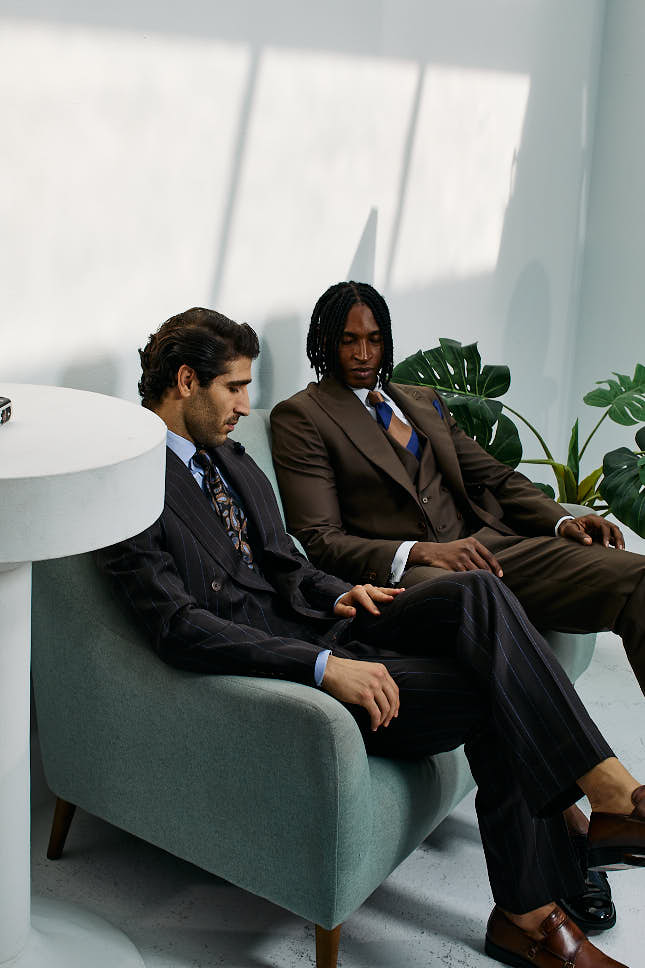
Before buttons or pockets, I check the line. Good cloth cannot rescue a waistcoat that rides above the trouser waistband or pulls into horizontal creases across the stomach.
Length: The front should overlap the trouser waistband. No shirt should appear between them when you stand naturally.
Chest and waist suppression: It should lie close without pulling open at the buttons. A waistcoat is shaped, not strained.
Front shape: A higher V is more formal and keeps more shirt covered. A deeper V shows more tie and can feel less severe.
Back and adjustment strap: The back is often lined and fitted with an adjuster. The adjuster is for small changes, not for correcting a waistcoat cut too large.
Pockets: Welt pockets can hold a watch or cards, but loading them distorts the front. Keep them light.
Bottom button: On a conventional single-breasted waistcoat, leave the lowest button undone. It improves the line when seated.
Tailor’s glossary
Rise
The distance from the trouser crotch seam to the top of the waistband. A three-piece suit needs enough rise for the waistcoat to meet the trousers cleanly.
Suppression
The inward shaping through the waist. It gives the waistcoat its close, controlled silhouette.
Quarters
The two front edges of a jacket below the buttoning point. They open as you walk and sit, revealing the waistcoat beneath.
Welt pocket
A narrow pocket finished with a fabric-bound opening rather than a flap.
Waistcoat Cloth, Colour and Pattern
Cloth decides whether a waistcoat settles into the suit or insists on attention. Plain navy, charcoal and mid-grey are sound choices for formal business and weddings. They leave room for the shirt, tie and jacket to do their work.
A matched waistcoat uses the same cloth as the jacket and trousers. That is a true three-piece suit. A contrasting waistcoat can make a considered tailored combination, but treat it as a separate garment, not as a substitute third piece.
Checks, herringbone and textured cloth add surface interest. Keep the shirt plain and the tie quiet. In Dubai daylight, pale grey, beige or blue can look brighter than it did under fitting-room lighting; a bold check under a patterned jacket becomes busy quickly.
My usual rule is one visible pattern. If the jacket has a pronounced check, choose a plain waistcoat, or leave the waistcoat out.
How a Waistcoat Works in Wear
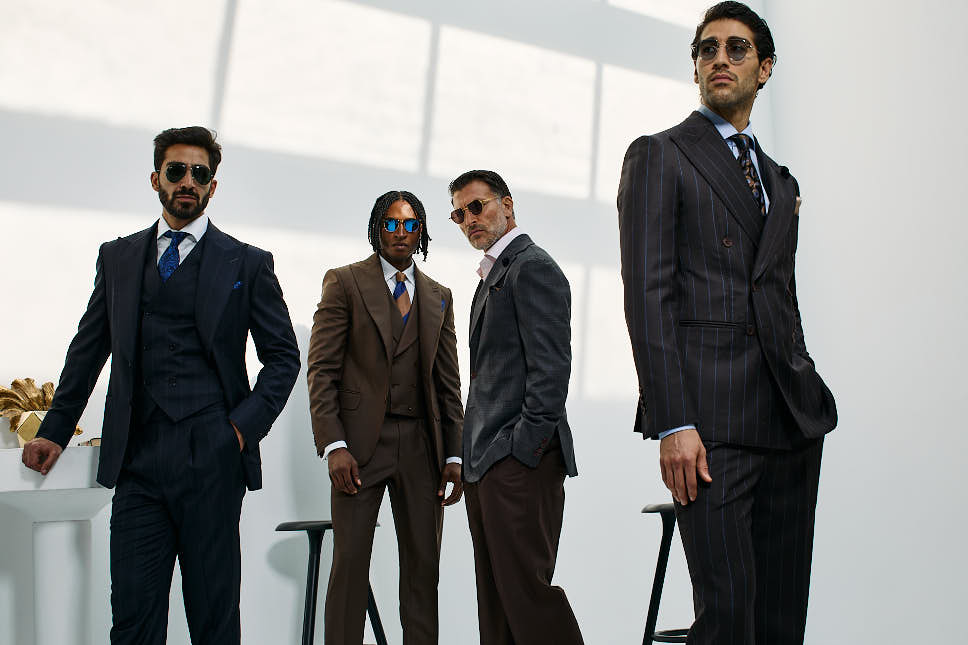
Do not judge a waistcoat only in front of the mirror. Check it in movement before accepting it.
Button the trousers first. The waistband must sit where it will sit during the event. If the trousers fall low, the waistcoat cannot do its job.
Put on the waistcoat and fasten it. It should cover the waistband without pressing into it. Check that the fronts remain level.
Sit down. The buttons should stay closed without a visible pull. If the bottom edge hikes up, there is insufficient length or too little room through the body.
Put on the jacket. Its fronts should frame the waistcoat rather than conceal it entirely. The jacket must close without fighting the additional layer.
Walk, reach and get into a car. This reveals a short waistcoat. The lower edge should return to position, not creep above the waistband.
For Dubai, I would usually keep the waistcoat back light and avoid an unnecessarily heavy lining. A breathable suiting wool in roughly the 240 to 280 gram range can be more useful for a daytime ceremony than a dense cloth, though weave and time spent outdoors still decide the right choice.
Why the Third Layer Matters
For a groom, the waistcoat earns its keep during the long middle of the day. Photographs, greetings, dinner and dancing often continue after the jacket comes off. A matched waistcoat preserves the intention of the outfit.
Business calls for more restraint. A waistcoat can work well for a client presentation, board meeting or formal dinner. It is less useful for a man moving between hot pavement, car and heavily air-conditioned office. In that case, order one only if you expect to wear it away from the jacket at times.
The question is not whether a waistcoat is fashionable. It is whether it has a real job in your wardrobe. For occasion-led examples, see these designer three-piece suit looks.
Waistcoat Comparisons
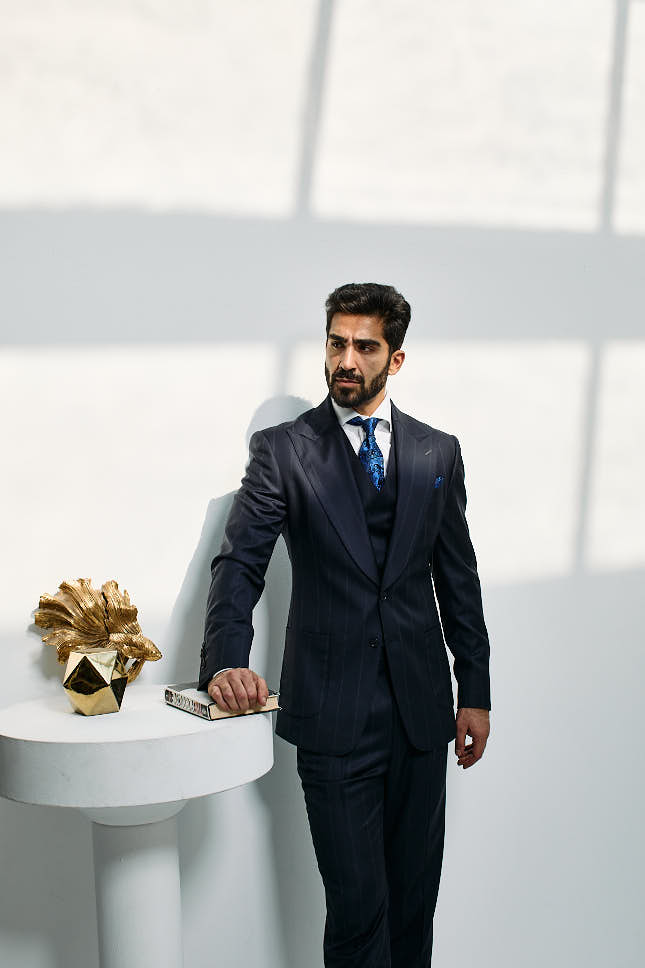
Waistcoat versus a separate vest
A suit waistcoat is cut for tailored trousers and a jacket. A separate vest may be knitted, quilted or intended for informal layering. They are different garments. Treating every sleeveless layer as a waistcoat produces poor combinations, especially with formal shirts and ties.
Single-breasted versus double-breasted
For most first-time wearers, I recommend single-breasted. It lies flatter under a jacket and is more flexible. A double-breasted waistcoat puts more visual weight across the chest and works best when the jacket will come off.
Waistcoat versus cummerbund
For black tie, a waistcoat may be correct when it is cut specifically for evening dress. A cummerbund is lighter and traditionally covers the trouser waistband beneath a dinner jacket. Do not use a business-suit waistcoat as a substitute for formal evening wear.
Waistcoat with a pocket square
A pocket square belongs in the jacket breast pocket, not the waistcoat pocket. Keep it restrained. With a bold-check waistcoat, use plain white linen or leave the square out.
Wearing a Waistcoat as a Separate
You can wear a waistcoat without its jacket at a wedding reception, formal dinner or indoor occasion where the jacket is likely to come off. The shirt, tie, trousers and waistcoat then carry the whole composition, so poor fit is more exposed.
Begin with tailored trousers sitting at the natural waist, a crisp shirt and a restrained tie. The trouser cloth needs enough weight and finish to support the waistcoat. Plain navy, grey or softly textured cloth gives more room for this than a highly formal matching piece.
Do not take an orphaned waistcoat from a formal suit and pair it with jeans or low-rise trousers. Its cloth, length and buttoning point were designed for tailored trousers. The result usually reads as an incomplete suit, not an intentional separate.
A double-breasted waistcoat can stand well on its own, provided the trousers are properly cut and the front stays smooth when seated.
Three-Piece and Waistcoat Options
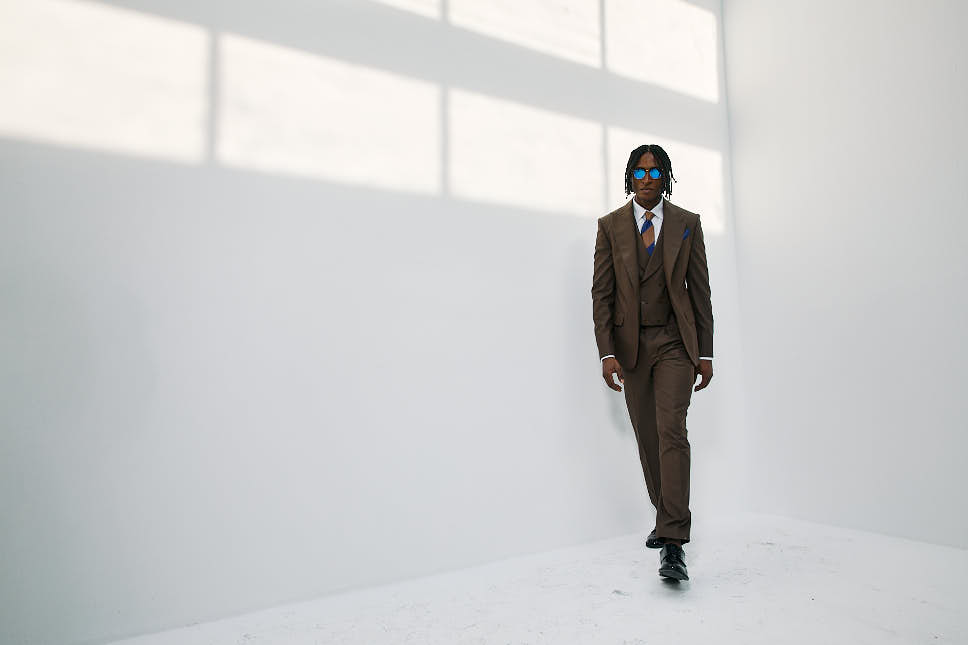
Matching the waistcoat to the suit is usually the cleanest route. Cloth, shade and the scale of the details stay controlled. These examples show what the third layer changes.
Navy Blue 3 Piece Suit
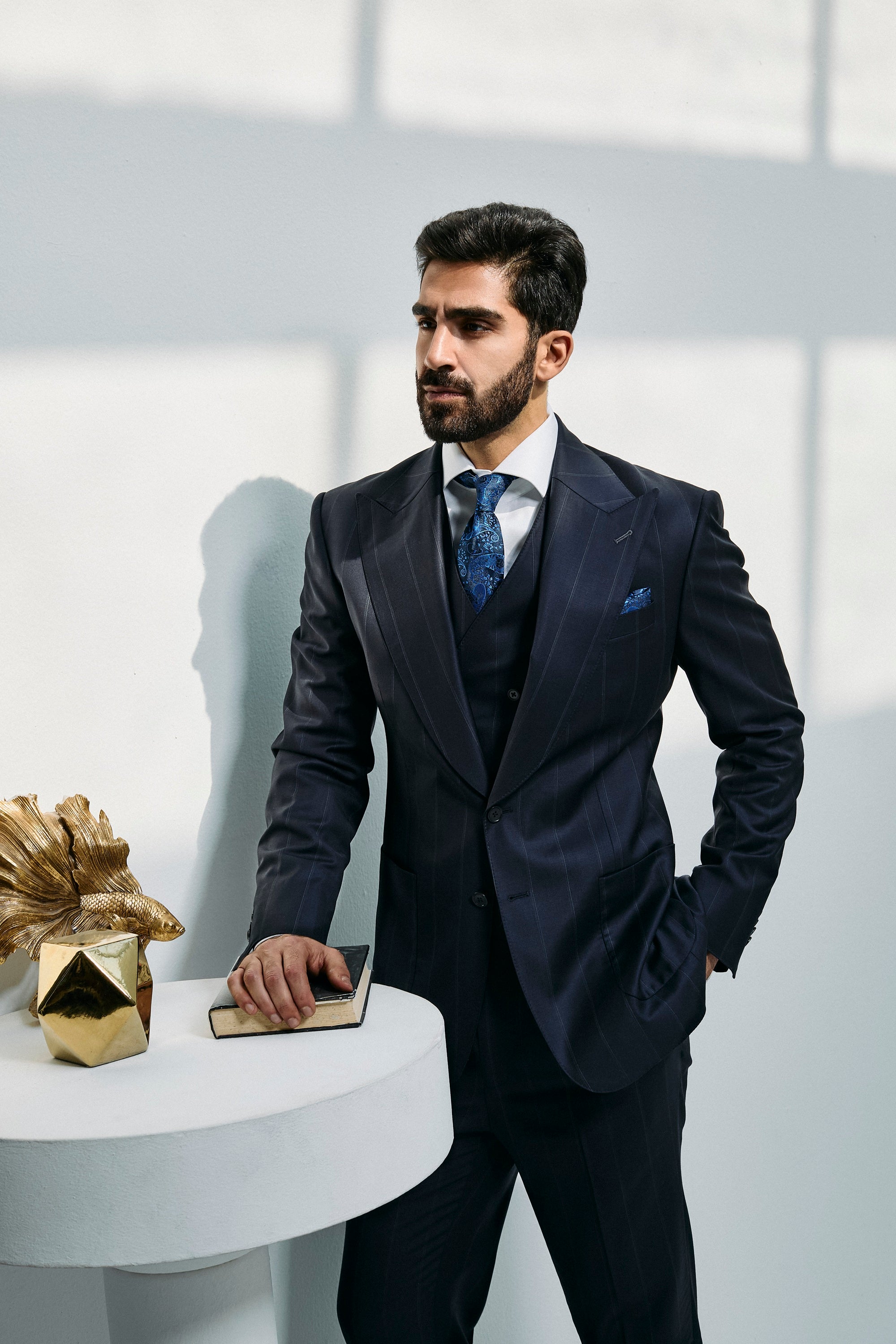
This navy wool three-piece is single-breasted with a peak lapel. Navy is the most useful colour for a matched waistcoat: it reads formally for weddings and business, and the waistcoat keeps a clean front when the jacket comes off. A quiet shirt and tie let the tailoring lead.
3 Piece Sea Blue Suit
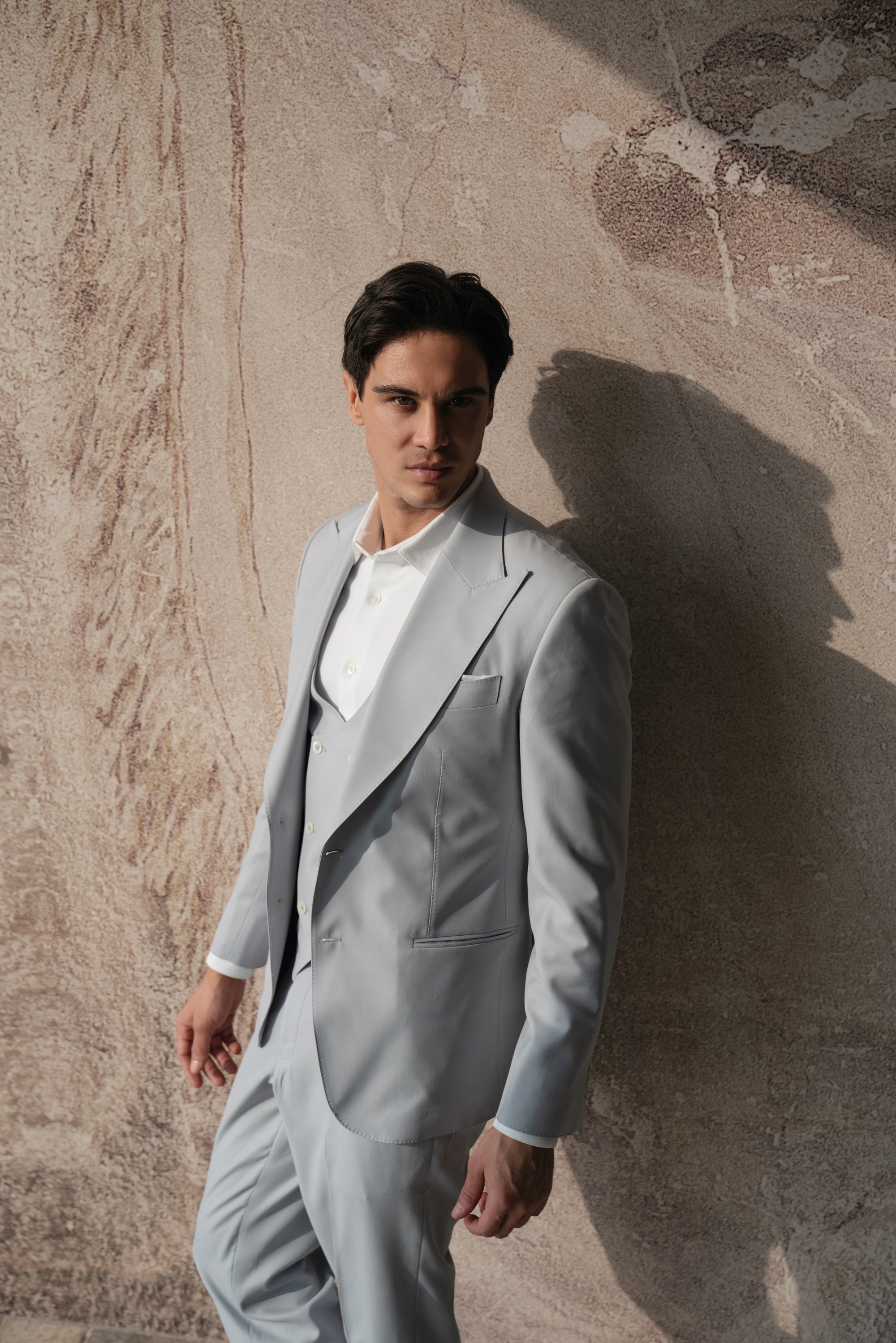
This sea blue wool three-piece is single-breasted with a peak lapel. The lighter blue suits an evening reception or a daytime celebration, and the matched waistcoat holds the line through photographs and the jacket-off part of the day. Judge the waistcoat length and trouser rise together at fitting.
Beige 3 Piece Suit
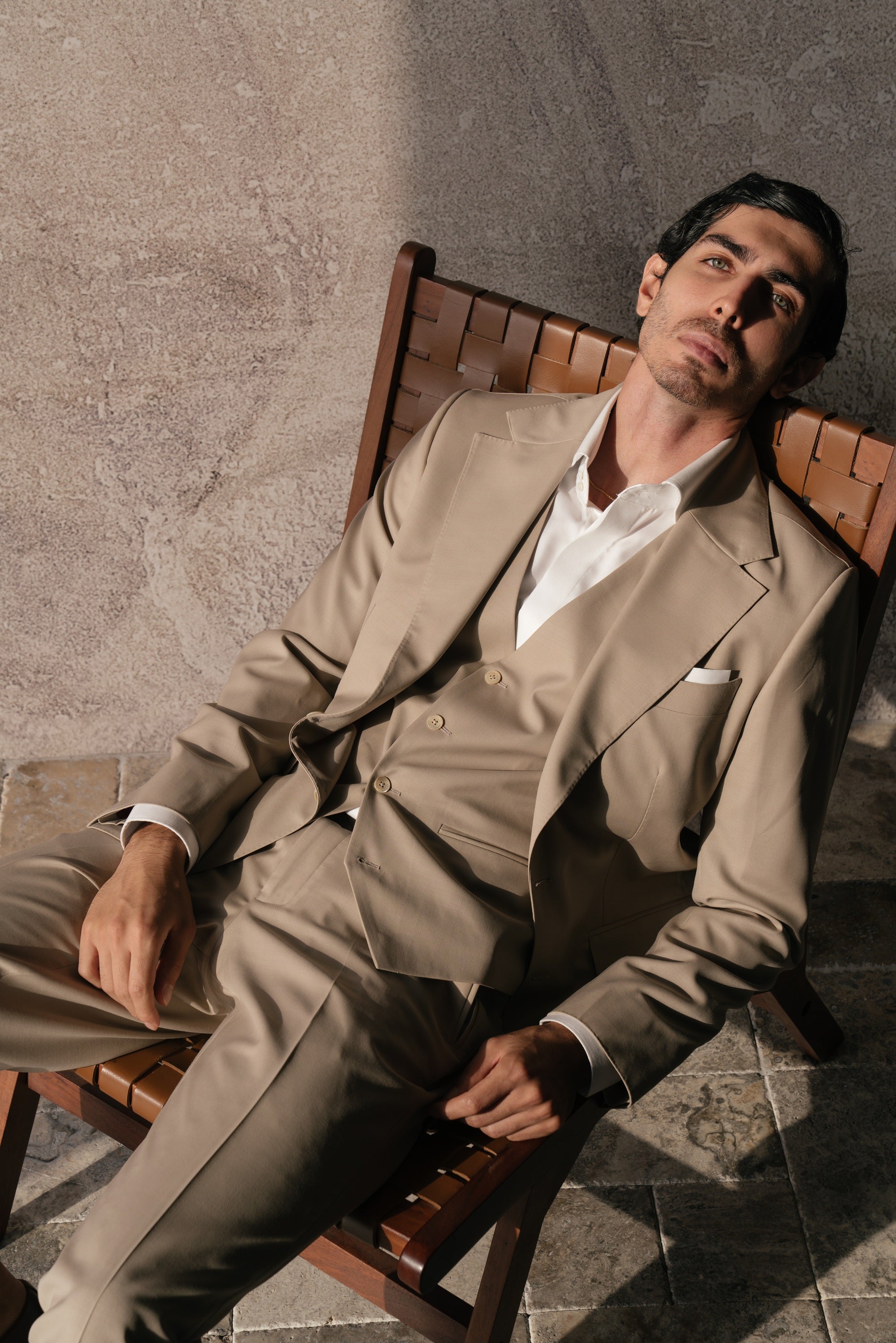
This beige wool three-piece is single-breasted with a notch lapel. The lighter colour and waistcoat suit warm-weather and daytime weddings, though beige can look brighter in Dubai daylight than under fitting-room light. Keep the shirt plain so the matched cloth stays the focus.
Brown 3 Piece Suit
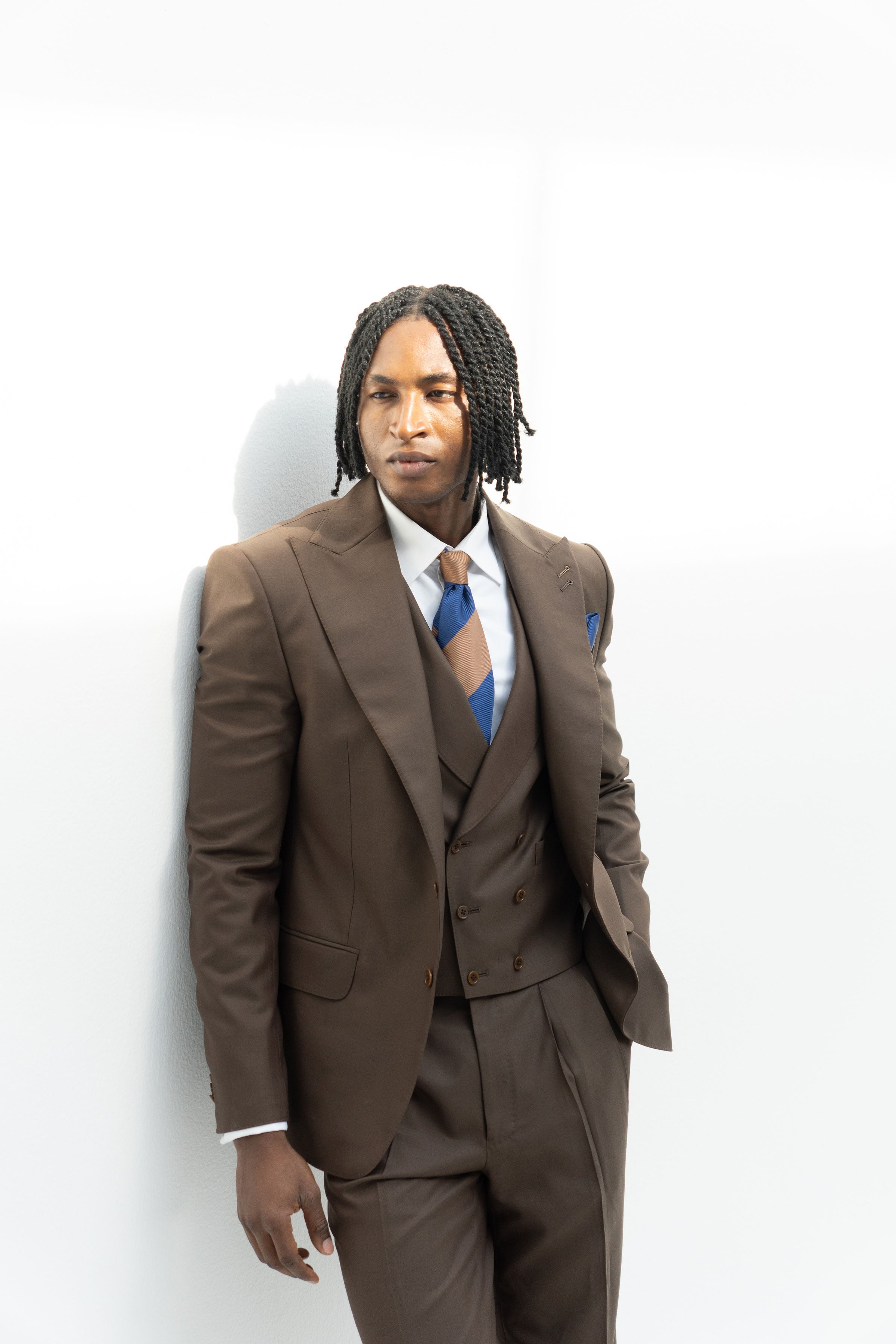
This brown wool three-piece is single-breasted with a peak lapel. Brown gives a warmer, less corporate option for weddings and social occasions, and the waistcoat adds shape through the torso without a tightly buttoned jacket. Pair it with brown leather shoes rather than black.
Black Tail Coat Tuxedo
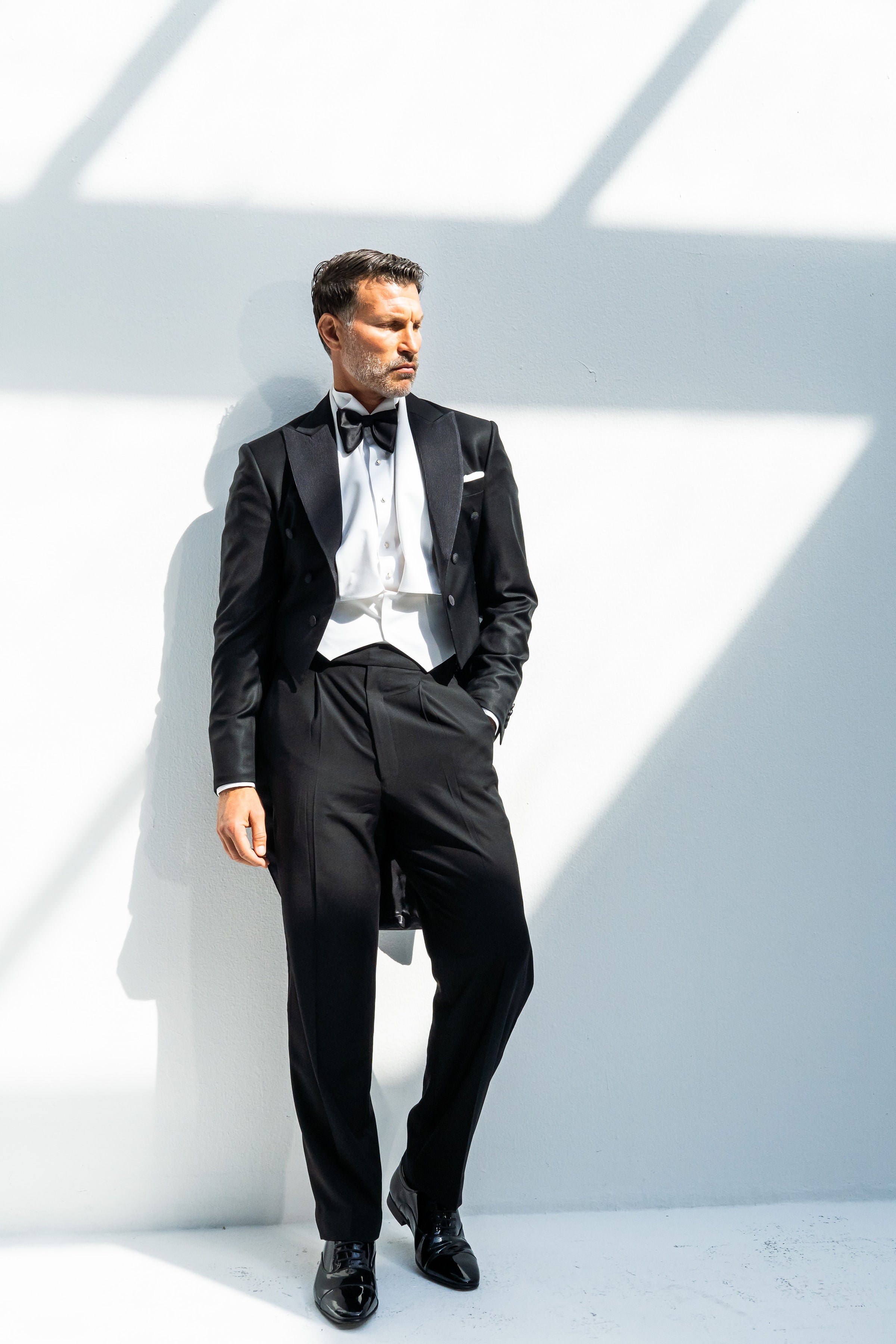
This black wool tailcoat sits at the most formal end of the range, for evening ceremonies and events that call for full formality. Its evening waistcoat or vest is cut specifically for the tailcoat rather than borrowed from a business suit, so treat it as a distinct commission from the three-piece suits above.
For an exclusively cut three-piece, I establish the trouser rise and waistcoat length at the first fitting, then test the full outfit seated at a later fitting. The house works from one Dubai location and cuts custom-made, made-to-measure garments in cloths including Vitale Barberis Canonico, established in 1663, and Piacenza 1733. Explore the Suits & Blazers category if you are comparing suit formats before deciding on a commission.
Pros and Cons
Strengths
Covers the trouser waistband and keeps the shirt from showing when the jacket opens.
Keeps the outfit finished after the jacket comes off.
Adds shape through the torso without relying on a tightly buttoned jacket.
Gives a wedding or formal suit more distinction in photographs.
Lets one suit work in two states: jacket on for the ceremony, jacket off for the reception.
Considerations
Adds warmth, particularly with dense cloth, a fully lined back or outdoor daytime wear.
Requires trousers with the correct rise. Low-rise trousers usually leave an untidy gap.
Needs close fitting through the chest and waist, so fit errors are more obvious.
May be unnecessary when a suit is mainly for daily office use and the jacket stays on.
Waistcoat Care and Storage
A waistcoat spends much of its life close to the body, so care starts after wear. Following an outdoor arrival in Dubai heat, air it on a shaped hanger before putting it away. Fasten one or two buttons lightly to keep the front in line without holding it under tension.
Keep the welt pockets empty. A phone, heavy card holder or keys can stretch the cloth and distort the front. Steam can lift light creasing, but use careful pressing and a pressing cloth when the wool needs a sharper finish.
Professional cleaning has a place after a spill or sustained wear, particularly with delicate wool and lining. It is not the answer to every use. Repeated dry cleaning may shorten cloth life, so spot cleaning, airing and gentle steaming are often the better first response.
Frequently Asked Questions
Should a waistcoat match the suit exactly?
For a formal three-piece suit, yes: match the waistcoat to the jacket and trousers in cloth and colour. A contrasting waistcoat can work for a more relaxed or country-inspired look, but it turns a true three-piece into separates. For a wedding or formal business event, matching cloth is the safer choice.
What is the best colour waistcoat for a navy suit?
For formal work and weddings, the best colour waistcoat for a navy suit is usually the same navy cloth. Mid-grey can work for a less formal combination, while pale blue or beige may suit daytime celebrations. Do not add a third strong colour through the waistcoat, tie and pocket square at once.
Can I wear a linen shirt with a waistcoat?
You can, but linen creases and has a visibly textured surface, so the result is less formal. It can suit an outdoor daytime celebration with an unstructured jacket. For a business meeting or evening event, I would choose smooth cotton for a cleaner line.
Should a waistcoat cover the trouser waistband?
Yes. Covering the trouser waistband is its central structural job. If shirt fabric shows between waistcoat and trousers, the trousers sit too low, the waistcoat is too short, or both garments need reconsidering.
Can a waistcoat be worn without a jacket?
Yes, particularly at a wedding reception or formal dinner. It must fit cleanly through chest and waist because no jacket hides a poor line. Double-breasted waistcoats and those with a more substantial front can stand particularly well on their own.
Is a waistcoat suitable for Dubai weather?
A waistcoat can suit Dubai weather when the occasion is largely indoors and cloth is chosen carefully. Use breathable wool, keep the lining restrained and do not treat it as a daily necessity in peak summer. For a long outdoor ceremony, a well-cut two-piece may be more comfortable and equally correct.
Can I wear a waistcoat with sherwani clothing?
A waistcoat can form part of sherwani clothing, but it is cut and styled differently from a Western suit waistcoat. Its neckline, length, closures and decorative treatment often answer to the sherwani, not to a tailored jacket and trouser waistband. Keep the traditions distinct rather than mixing components without a considered design.
Should men wear a waistcoat?
Men should wear a waistcoat when it serves the occasion and the suit has the correct trouser rise. It is most useful for weddings, formal dinners and events where the jacket may come off. For long outdoor hours in Dubai, a two-piece may be more comfortable.
What is the difference between a suit jacket and a waistcoat?
A suit jacket is the outer tailored layer; a waistcoat sits beneath it and covers the trouser waistband. The jacket shapes the shoulders and frames the torso. The waistcoat holds the line when the jacket opens or comes off. They work together, but do different jobs.
Can a waistcoat be worn with jeans?
A formal suit waistcoat is rarely convincing with jeans. Its cloth, length and buttoning point are designed around higher-rise tailored trousers, not denim worn lower on the hip. An informal waistcoat may work differently, but do not confuse it with one from a three-piece suit.
How many buttons should a men’s waistcoat have?
Most single-breasted men’s waistcoats have five or six buttons, though the right number depends on front depth and the wearer’s proportions. Leave the lowest button undone on a conventional single-breasted style. More buttons do not improve fit; length, chest balance and waist suppression do.
Key Takeaways
A waistcoat’s first job is covering the trouser waistband and maintaining a clean front beneath an opening jacket.
Correct trouser rise and waistcoat length matter more than button count or pocket details.
A single-breasted waistcoat is generally easier to wear; double-breasted versions bring more presence and more bulk.
In Dubai, choose the third layer for the occasion rather than assuming every suit needs one.
A waistcoat is most useful for weddings, formal evenings and events where you expect to remove the jacket.
Conclusion
A waistcoat is the working centre of a three-piece suit. It completes the line between jacket and trousers, keeps the outfit composed after the jacket comes off and exposes fit errors immediately. Get the length, trouser rise and chest balance right before spending time on cloth or accessories. If you are commissioning one in Dubai, consider your outdoor time, how often the jacket will come off and whether the extra layer has a genuine role in your wardrobe. For local commissioning considerations, see where to get a three-piece suit made to order in Dubai.
Please note that stock and technical details are subject to revision at any time. How a suit ultimately fits and feels rests upon the individual, their proportions, the fabric selected, and the occasion it is intended for. For those commissioning bespoke, custom-made or made-to-measure pieces, a personal consultation is essential, with design, cloth, fit and delivery particulars to be finalised prior to placing an order.