

Buying a Suit in the UAE: What First-Timers Should Know
A suit can look right under fitting-room lights, then pull across the back at the steering wheel or feel heavy before you reach the lobby. For a first suit in the UAE, colour is not enough. Check cloth weight, construction, alteration room and whether it suits the life you lead in Dubai. Use this checklist before buying a ready-made suit, commissioning made-to-measure clothing, or investing in bespoke work. For a broader view of men’s suits, begin there, then return with a tape measure, an occasion and a clear spending range.
The full checklist
Screenshot this before visiting a shop or tailor. It is practical by design. A sound choice should survive a short walk outside, a car journey and a long meeting.
-
Confirm the occasion, dress code and date before choosing colour or lapel style.
-
Set a complete spending figure that includes shirt, shoes, belt, alterations and any second trousers.
-
Check the cloth composition, weave and approximate weight before buying.
-
Ask whether the jacket is fully lined, half-lined or unlined.
-
Check the shoulders, collar, chest and jacket length before discussing sleeve length.
-
Move properly: sit, drive, raise both arms and fasten the jacket.
-
Confirm exactly what alterations are included and what cannot realistically be changed.
-
Choose a suit shape that matches the occasion rather than the mannequin.
-
Allow enough time for alterations, fittings and a final wear test.
A printed copy is useful, but a screenshot will do. Tick each point during the appointment, before the details blur together.
How to use the checklist in a UAE fitting
Work through the checks in this order. It prevents a strong lapel or a kind mirror angle from distracting you from a poor foundation.
-
Arrive in the shoes you expect to wear. Trouser length changes with heel height. Formal shoes also change how you stand.
-
Try the jacket first. A trouser waist can be adjusted. A shoulder line cannot be rebuilt economically.
-
Fasten the jacket and sit down. The button should close without strain, and the lapels should remain close to the chest.
-
Walk outside if possible. Ten minutes in the sun are unnecessary. Two minutes can show whether dense lining and heavy cloth are wrong for your routine.
-
Photograph the front, side and back. Have someone else take them. A mirror gives a moving, flattering view. A still image shows balance.
-
Ask for the alteration plan in plain terms. “We will adjust it” is not enough. Ask what will move, by how much, and whether the work is included.
Dubai changes the answer. A suit moving between an air-conditioned DIFC office, a car and a restaurant terrace needs a different cloth decision from one worn mainly in a cool European city.
Check cloth and lining for the UAE climate

Confirm the cloth before admiring the colour
For regular Dubai use, I usually begin around 220 to 260 grams in an open or moderately open weave. High-twist wool can feel drier than softer, denser cloth of the same stated weight because air passes through it more readily.
A 280-gram to 320-gram wool can still make sense for an evening wedding, a ballroom, or a man moving only from car to venue. I would not make it the first suit for someone outdoors between meetings.
Check the lining honestly
Full lining helps a jacket slide on and may help structured cloth hang cleanly. It also adds a layer across the back and chest. Half lining reduces that layer; an unlined jacket is usually coolest, though it may show its internal finishing and rumple more readily.
Unlined is not automatically better. A very soft unlined jacket may be wrong when a sharp, formal outline is needed for presentations or ceremonies.
Ask what the canvas actually does
Consider two jackets that have spent years in the same wardrobe: one built on floating canvas, the other assembled with adhesive. The former relies on an unattached inner layer that gradually conforms to its owner's frame, refining its silhouette with every wear. The latter fuses fabric to a bonding agent, a technique that, particularly among more accessible offerings, need not signal inferior craftsmanship. Yet exposure to warmth and the rigours of cleaning can, in time, render this bonded structure somewhat less reliable in its behaviour.
For occasional wear, a well-fitting fused jacket can be entirely sensible. For weekly use, I would inspect the chest construction and cloth before deciding that the lower initial price is better value.
Travel, commuting and crease resistance in Dubai
A travel suit is usually cut from wool chosen to recover reasonably well after sitting, driving or carrying a laptop bag. High-twist wool and firmer, resilient weaves suit men moving between Dubai meetings, airport lounges and heavily air-conditioned interiors.
Crease resistance is not breathability. A cloth may recover neatly after a long car journey yet feel too dense on a humid walk from the car park to the office. Synthetic-heavy or washable cloth can suit some routines, but may not give the drape, hand or comfort expected from a proper wool suit.
Test this before committing. Sit in the jacket and trousers for several minutes, stand, then inspect the seat, elbows and back. Some creasing is normal. What matters is whether the cloth settles and the jacket still hangs cleanly.
Each fit check explained
1. Confirm the job the suit has to do
A navy two-piece is usually the most forgiving first purchase for office work, interviews and formal dinners. A three-piece adds presence and warmth. Keep black for black tie, funerals or a dress code that specifically requires it.
For a wedding party, consider the groom’s outfit, venue and photography. Read our guide to groomsmen suits before putting several men into the same cloth or colour.
2. Set the full figure, not only the jacket price
Include shirt, shoes, belt or braces, tie, alterations and cleaning. A suit needing extensive correction is not automatically the better purchase because its ticket price is lower.
Consider a groom whose wedding is still months away, affording him the luxury of time, this is where Vavci's bespoke tailoring truly comes into its own. Every stitch is rendered exclusively for the individual, granting him command over cloth selection, silhouette and the finer points of construction. Yet for the gentleman pressed for time, needing to be impeccably dressed within days, a discerning choice from ready-to-wear, refined through minor alterations, may serve him just as elegantly.
3. Check shoulders and collar first
The shoulder seam should end at your natural shoulder, not fall down the arm or bite inward. The collar should meet the shirt collar without a visible gap. If it lifts at the neck, the jacket is not balanced for you.
This is where many first purchases go wrong. Sleeve shortening is normal. Rebuilding shoulders and correcting a badly gaping collar usually are not worth the cost.
4. Check chest and waist with the button fastened
A two-button jacket should usually fasten at the upper button only. It needs room to breathe and sit, but should not form a horizontal X across the front. Slight waist suppression gives shape. Too much makes the jacket pull whenever you reach forward.
5. Check jacket length and trouser break
Judge jacket length from the side as well as the front. The hem should normally cover the seat and divide torso and leg in balance. Very short jackets may look current in a photograph and date quickly in professional settings.
A trouser break is the crease where the trouser meets the shoe. For a first suit, a slight break or no break is usually cleaner than cloth pooling at the ankle.
6. Move as you normally move
Stand still, then sit. Reach for a phone. Turn as if getting out of a car. Tailored clothing is not sportswear, so a little pull is normal, but the jacket should recover cleanly rather than remain distorted.
What suit alterations can and cannot change
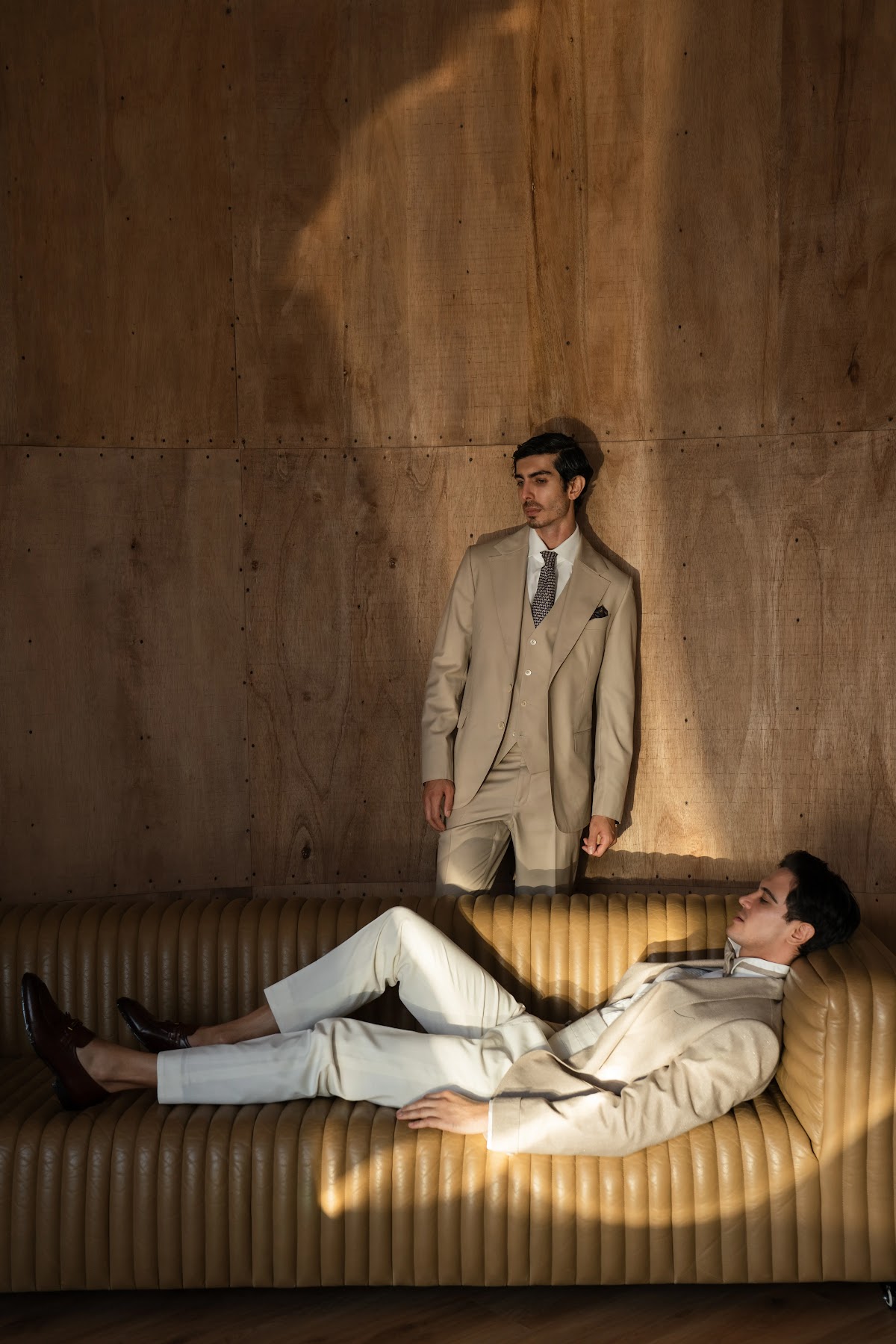
Alterations refine a suit already close to right. They do not turn the wrong jacket into the right one.
Trouser hemming is routine, and the waist can often be taken in or let out within the cloth at the centre back. A tailor can usually adjust jacket waist suppression, shorten sleeves and make modest changes to the trouser leg. These are the corrections I would expect after choosing a sound ready-made size.
Shoulders, collar balance, jacket length and major chest corrections are different work. They involve the jacket structure, lining and often sleeve setting. On a ready-made suit, the cost and risk may exceed what the garment warrants.
Ask how much seam allowance remains before buying. This matters if your weight fluctuates, or you expect changed training or travel. A jacket that can only be taken in is less forgiving than one with sensible room to let out.
Choose the right buying route
There are three sensible routes. None is automatically superior. Time, body shape, frequency of wear and how particular you are about cloth and cut decide it.
| Route | Best for | What to verify |
|---|---|---|
| Ready-made | Short deadlines and relatively standard proportions | Shoulders, collar, chest and available alteration room |
| Made-to-measure | More personal choice with a shorter process than full bespoke | How the base pattern is adjusted, the fitting stages included, and the collection schedule |
| Bespoke | Distinct body balance, regular wear or a significant occasion | Individual pattern work, fitting stages, cloth and delivery schedule |
Made-to-measure starts with an existing pattern adjusted to your measurements. Bespoke starts with a pattern drafted for you. Both can be good. Ask directly rather than assuming the label answers the question.
Before choosing lapels, review the main types of suits every man should recognise. A single-breasted two-button jacket is the easiest starting point. Double-breasted and three-piece suits are more specific choices.
Choose a suit cut for your build and working routine
Slim, regular and relaxed cuts describe the ease through chest, waist, seat and thigh. None is inherently better. The right cut holds a clean line while letting you move through the day without fighting the cloth.
A close-cut jacket can look sharp in the mirror, then restrict driving, sitting and reaching across a meeting table. Too much cloth creates the opposite problem: it gathers at the back, looks untidy in photographs and makes the jacket appear borrowed.
For a first suit, close enough means the buttoned jacket follows your body while leaving room to sit comfortably. Too small means lifted lapels, an X at the front, spread vents or a trouser seat that pulls when seated. Do not buy smaller hoping an alteration will create a sharper shape.
Your routine settles it. A man seated in a DIFC office or driving between appointments may need more ease than someone wearing the suit only to dinner. Check both positions.
Compare VAVCI pieces before you decide

Use these pieces as reference points for colour, pattern and formality. They do not replace trying on a jacket and checking the points above.
3 Piece Sea Blue Suit
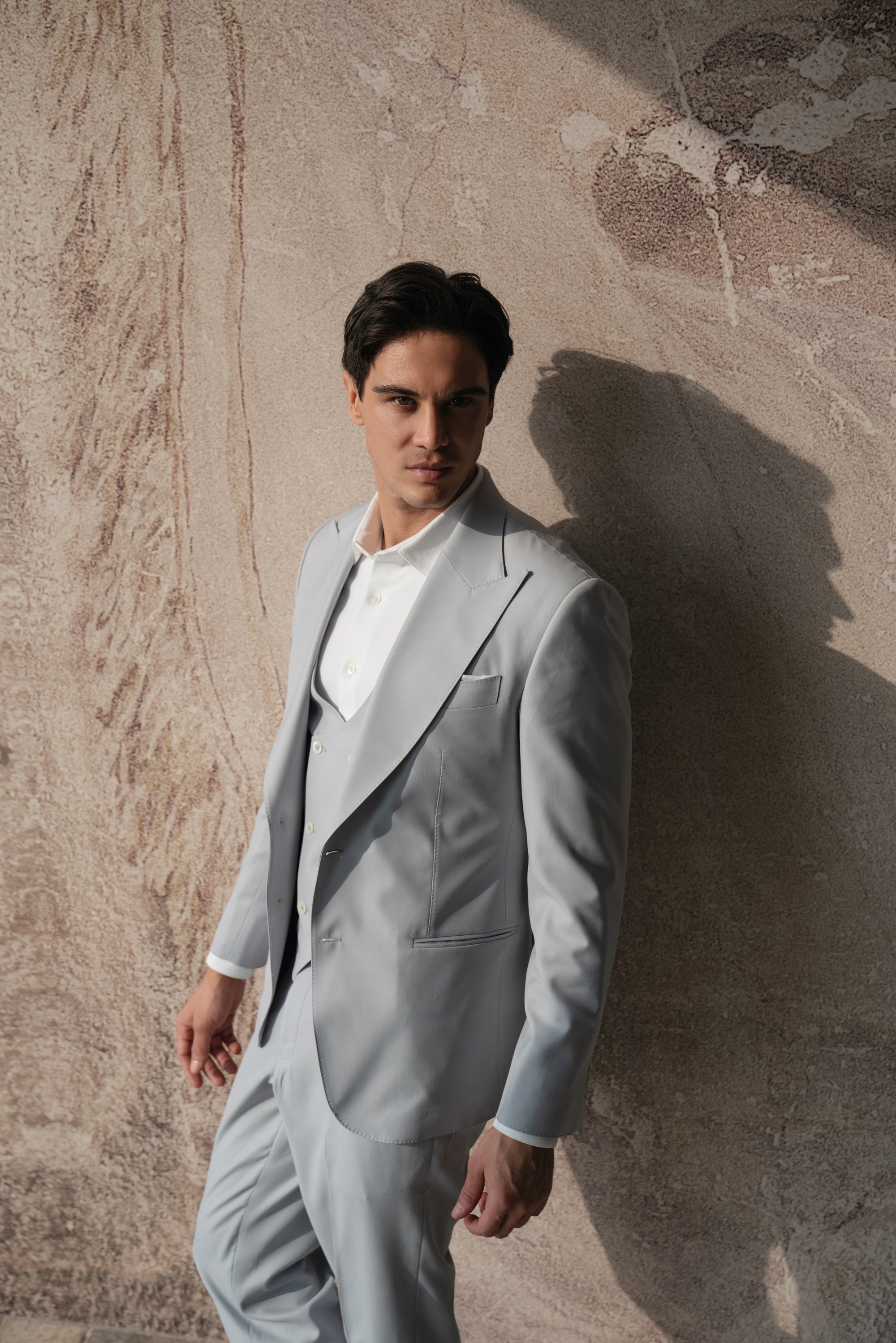
This three-piece suit is cut in sea blue wool, single-breasted with a peak lapel. The waistcoat adds presence for celebrations, presentations and evening events, and holds that presence after the jacket comes off. Blue is among the easier colours to place across professional and social settings.
Beige 3 Piece Suit
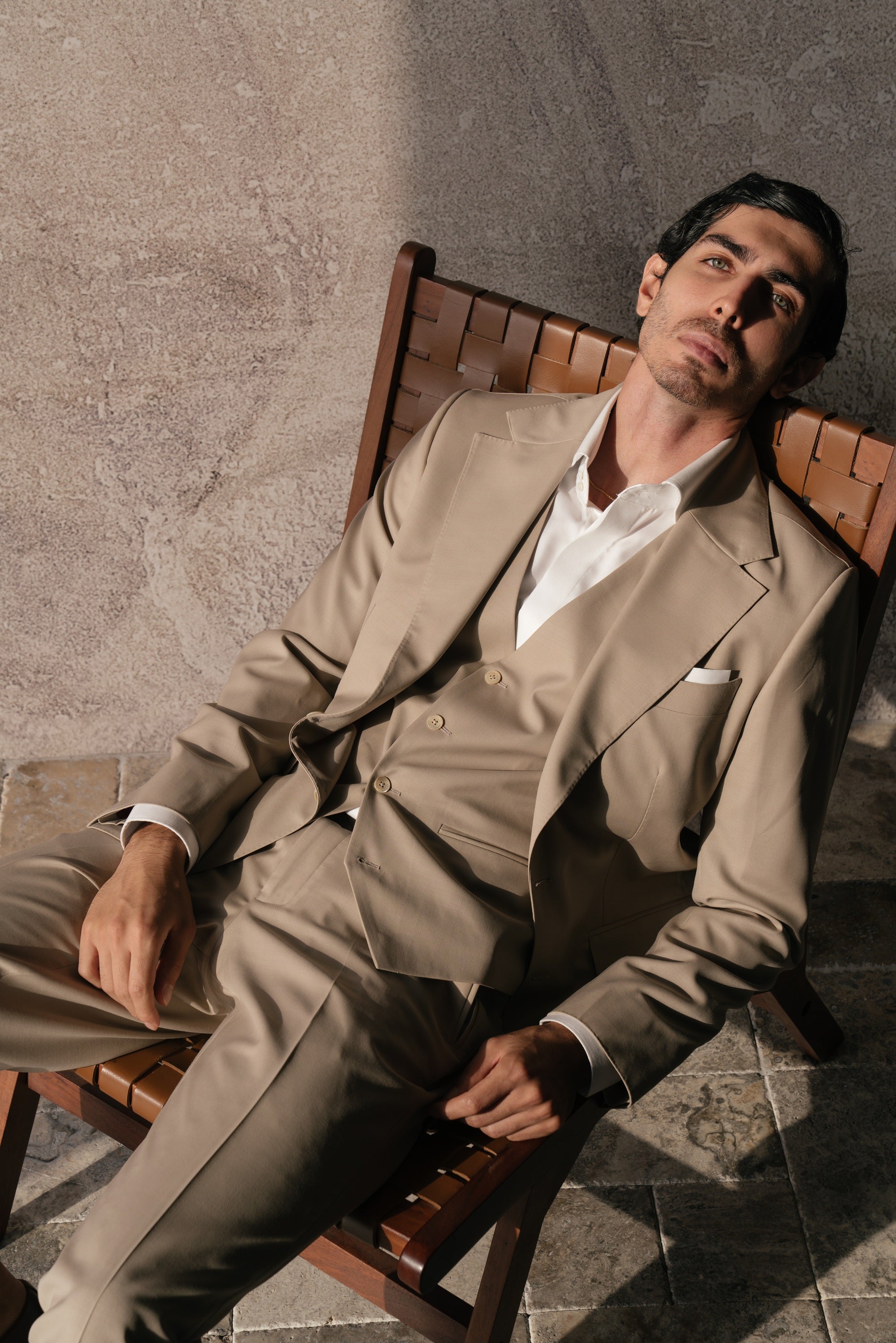
This beige wool three-piece is single-breasted with a notch lapel. The lighter colour and waistcoat suit daytime weddings and warm-weather occasions more than a conservative boardroom. Judge whether the extra layer feels comfortable in the heat before committing to it.
Beige Double Breasted Blazer

This beige blazer is double-breasted in a linen and silk blend with a peak lapel, worn as a separate jacket rather than part of a suit. The double-breasted front reads more formal and more expressive, so keep the trousers and shirt plain and check the buttoning point sits correctly.
Mustard Blazer

This mustard blazer is single-breasted in a linen and silk blend with a peak lapel. The colour is a clear statement, better for a creative office, social event or daytime celebration than a first business suit. Pair it with neutral trousers and let the jacket lead.
Tan Double Monk Shoes

These tan double monk shoes are made from pure leather with a patina finish and square toe. Tan works with navy, blue and beige tailoring rather than black, so they suit the lighter suits shown here. Keep the belt close to the shoe colour.
For more Western tailoring options, browse Suits & Blazers. If the occasion is black tie rather than business or a wedding, wear a dinner jacket or tuxedo rather than forcing a regular suit into that role.
Pros and cons of buying your first suit in the UAE
Strengths
-
You can choose cloth and lining suited to heat, humidity and strong air-conditioning.
-
Dubai offers ready-made options for short deadlines and premium bespoke routes for more exacting requirements.
-
A versatile navy or charcoal suit can cover several professional and social occasions.
-
Local alterations can correct trouser length, waist suppression and sleeve length after you try the garment on.
-
A private fitting can reveal shoulder, posture and collar issues that online shopping cannot show.
Considerations
-
A three-piece or fully lined jacket may feel unnecessarily warm for frequent daytime use.
-
Online photographs cannot confirm shoulder fit, sleeve pitch or whether the collar sits cleanly.
-
Patterned, double-breasted and peak-lapel suits are less versatile than a restrained first two-piece.
-
Major structural changes to a ready-made jacket may cost more than the garment warrants.
Frequently asked questions
What colour should my first suit be?
Navy is usually the most useful first colour in the UAE. It works in a boardroom, at dinner and at many wedding events. Medium grey is another sensible choice. Black has a narrower role and can look severe in daylight. Choose plain cloth before a large check if one suit must cover the widest range of occasions.
Should I buy a three-piece suit in Dubai?
Choose one if the occasion calls for it or you enjoy a waistcoat. It gives a groom or guest more presence after the jacket comes off. For daily professional use, a two-piece is usually cooler and more flexible. You will feel the extra layer on a humid outdoor walk.
Are suits online in the UAE worth considering?
They can work when you know a brand’s block and your measurements are stable. Check the return policy, garment measurements and alteration allowance before ordering. I would not recommend buying a first suit online if you have not established your jacket size. Shoulder and collar checks matter more than a numerical chest size.
How quickly can a ready-made suit be altered?
Simple trouser hems and waist adjustments may be completed quickly, depending on workload. Jacket sleeve length can also be straightforward where buttonholes need not move. Shoulder width, jacket length and a poor collar line are different matters. Buy early enough for a fitting after alterations, rather than collecting on the event day.
Which parts of a suit can a tailor alter?
Trouser length is usually the simplest adjustment. A tailor may also take in or let out the trouser waist where sufficient seam allowance remains, adjust the trouser leg, shorten jacket sleeves and bring in the jacket waist modestly. The exact scope depends on construction, spare cloth and details such as pockets and buttonholes.
Can a tailor alter the shoulders of a suit jacket?
It can be technically possible, but I would not treat it as a normal alteration. Shoulder work may require sleeves, lining and internal structure to be opened and reset. It is costly, carries risk and may not correct a collar or chest problem at the same time. Start with a jacket that fits your shoulders.
Should I choose a slim-fit or regular-fit suit for my first suit?
Choose the cut giving a clean outline without restricting normal movement. Slim fit can work if you can sit, drive and reach forward without pulling across chest or seat. Regular fit may suit men needing more room through shoulder, thigh or waist. The label matters less than the fit on your body.
What is a travel suit, and is it suitable for Dubai?
A travel suit usually uses resilient cloth, often high-twist wool, intended to recover reasonably well after sitting or travelling. It can suit Dubai professionals who drive between meetings or fly regularly. Check weight and weave too. Crease-resistant cloth can still feel too warm if dense, heavily lined or poorly suited to humid outdoor conditions.
What does a canvassed jacket mean?
A canvassed jacket has a shaped internal layer through part or all of the chest. It helps retain form and may settle more naturally with wear. A fused jacket uses adhesive instead. Neither label replaces fit, but canvas is worth considering for frequent suit wearers who care how the chest develops over time.
Is a double-breasted suit suitable for a first-time buyer?
It can be, if the proportions suit you and your work environment accepts a more expressive jacket. Double-breasted fronts offer less visual forgiveness than single-breasted jackets. Waist and buttoning point must be right. If one suit must cover client meetings, interviews and ceremonies, start with a single-breasted two-button model.
How many fittings should bespoke work involve?
That depends on the tailor’s process and garment complexity. Ask when measurements are taken, whether there is a basted fitting, what can change at each stage and when the final fitting takes place. More appointments alone do not guarantee a better result, but a serious process allows correction before the garment is finished.
Where should I look for formal accessories?
Settle the suit before choosing shoes and accessories. Black leather shoes suit charcoal and black tailoring, while dark brown works well with navy. Keep the belt close to shoe colour. For ties, begin with textured plain silk or a restrained pattern. Browse Menswear Style & Accessories for related styling ideas.
What if you cannot tick every box?

Prioritise in this order: shoulders and collar, chest comfort, cloth suitability, alteration plan, then styling. A plain suit with a clean shoulder line will serve you better than a striking one that fights your body whenever you sit.
If time is short, choose the best-fitting ready-made jacket available and spend on accurate alterations. If your proportions make that difficult, or the suit is for a wedding, senior client role or regular formal wear, made-to-measure or bespoke may be more rational. Use a bespoke consultation to discuss your actual schedule, not only lapel preferences.
Key takeaways
-
Start with climate, occasion and fit, not colour or branding.
-
For Dubai daywear, lighter wool and considered lining usually matter more than a dramatic pattern.
-
Judge shoulder, collar and chest before accepting any alteration plan.
-
Ready-made suits suit short deadlines when the underlying fit is already close.
-
Bespoke suits are best considered where personal balance, cloth choice and long-term wear justify the process.
Conclusion
Your first suit should make the next decision easier. A well-chosen navy or grey two-piece establishes your size, preferred trouser line and the level of structure you can tolerate in the UAE climate. Do not pay for features you will not wear, and do not accept a poor shoulder line because the jacket looks good from one angle. Bring this checklist to the fitting, take photographs, sit in the suit and ask direct questions about cloth and alterations. If you want a garment cut exclusively for your proportions and routine, Vavci offers private consultations in Dubai for made-to-measure and bespoke tailoring.
This article provides general guidance for buying suits in the UAE. Availability, cloth selection, alteration scope and lead times may change. Product images and specifications should be confirmed before purchase. Bespoke and made-to-measure garments require consultation, and final construction, fit and delivery details should be agreed before an order is placed.