

The Best Suits for Men, Vetted Fabric to Construction
Who this guide is for: You may be buying your first proper suit, replacing jackets that never sat quite right, or choosing a serious option for work and occasions. This guide is for men in Dubai who want to judge the best suits for men beyond colour and label. I will show you where the money goes, what changes between price tiers, and what still matters after six months of moving between heat, cars and aggressive air-conditioning.
A good suit does not need to be bespoke. It needs to suit your body, your use and the climate. Ready-made tailoring can make sense for a deadline. Made-to-measure gives you more control. Proper bespoke is the most involved route because the process starts with your balance and posture, not a pre-existing size block.
What you will learn
-
How to separate fabric quality from fabric marketing.
-
Why cloth weight, weave and lining matter in Dubai.
-
The real differences between ready-made, made-to-measure and bespoke suits.
-
How canvas, shoulder construction and lapel shape affect drape.
-
Which suit shapes work for boardrooms, weddings and evening events.
-
How to judge a jacket standing still, walking and sitting in a car.
-
What price tiers commonly include, and what they often leave out.
-
Which errors cannot be fixed by later alterations.
How to vet a suit before buying
The best men’s suit is not the one with the loudest cloth or the most visible branding. It is the one that stays composed when you move. Start at the shoulder. The seam should end at your natural shoulder point, without a divot, overhang or ridge. If that is wrong, leave it. Sleeves and waists can be adjusted. Rebuilding shoulders is rarely sensible.
Then close the jacket. The front should lie cleanly across the chest, without pulling into an X. A little waist suppression gives shape, but a jacket tightened hard through the middle will pull open when you sit. I ask clients to sit in the chair they use at work, or to mimic getting into a car. That is where an over-fitted jacket usually gives itself away.
Look at the cloth in daylight. Hotel lighting can flatter almost any navy. Step near a window. Check whether the surface has depth, whether it creases sharply when pinched, and whether the colour reads cleanly against your skin. High-twist wool often recovers well after a day in meetings. Softer cloth can drape beautifully but may mark and crease more easily.
The trouser matters just as much. It should hang from the seat without horizontal strain, then fall cleanly from thigh to hem. Your break is the amount of trouser resting on the shoe. For most modern business suits, a slight break or no break is cleaner than fabric folding heavily over the vamp.
Fabric routes and cloth weights for Dubai

Start with the cloth’s job
Dubai heat changes the calculation. The walk from a parked car to a DIFC lobby may take two minutes, but the cloth still has to recover afterwards. For a working suit, I would usually begin around 240 to 280 grams in an open or high-twist wool. With a lightly lined jacket, that range can work through most of the year.
A 300-gram cloth can be excellent for evening wear, winter travel and cooler interiors. It is not automatically too heavy. It simply asks more of you outdoors. A dense 350-gram flannel may look handsome in photographs, yet it is not the practical first suit for a man moving around Dubai during the day.
Wool quality is not a Super number
Super 120s or Super 150s refers to fibre fineness. It does not prove that cloth is stronger, cooler or better for you. Very fine cloth can feel soft but may be less forgiving where trouser thighs rub or when you sit for long periods. For regular office use, I would often choose a resilient Super 110s or 120s wool over a finer cloth.
Heritage mills matter because consistency matters. Cloth from Vitale Barberis Canonico, founded in 1663, Piacenza 1733, or Tessitura Monti, established in 1911, gives a tailor a known starting point. So do cloths from Loro Piana, Ermenegildo Zegna, Guabello, Drago and Huddersfield. The mill does not replace fitting, but it can tell you something about fabric reliability.
Useful cloth categories
-
High-twist wool: firm, breathable and usually good at recovering from creasing. A strong choice for business travel and daily use.
-
Open-weave wool: allows more air movement, though it can be more vulnerable to snagging and may show its structure clearly.
-
Wool and silk blends: can add subtle surface interest for evening wear. They are less useful as a first office suit.
-
Wool and linen blends: lighter in character and appropriate for daytime occasions, but expect some crease.
-
Velvet: an evening cloth, not an all-purpose suit fabric. Direction, pile and colour matter greatly.
Choosing a suit for travel, work and changing conditions
A travel suit is not a separate category of magic cloth. It is usually a suit in resilient wool, often high-twist, with enough recovery to look composed after a flight, car journey or several hours at a desk. That can make it useful for regular business wear too, provided the cloth has the handle and drape you want.
Dubai asks a suit to handle opposing conditions. You may cross heat and humidity from the car park, then sit beneath strong air-conditioning for a long meeting. An open weave or high-twist wool around 240 to 280 grams, with lighter lining, often handles that change better than a dense cloth and heavily lined jacket.
Long meetings reveal a cloth’s character.
For daily work, choose a quiet navy or grey cloth that recovers after sitting and does not look technical under office lighting. A travel-oriented suit should still look like a proper suit. If it feels overly synthetic, lacks shape through the chest or creases into a harsh line, convenience has become its only virtue.
Washable wool blends and technical cloths may suit a specific use, but I would not choose them simply because they promise easier care. The cloth still needs to drape well, suit the occasion and remain comfortable through a full day. A suit for a client meeting has different requirements from one packed for a weekend flight.
Construction routes: ready-made, made-to-measure and bespoke
Ready-made with alterations
Need it quickly? A well-chosen ready-made suit is the sensible route when your proportions align closely with a standard size. Buy the best shoulder fit you can find, then adjust the sleeves, trouser waist and hem. You gain speed and a known final result. You give up control over balance, jacket length, shoulder expression and the relationship between chest and waist.
For a one-off event, this is often enough. It is less convincing if you have a notably dropped shoulder, a prominent chest, a very erect posture or a substantial difference between jacket and trouser sizes.
Made-to-measure
Consider the typical made-to-measure process: a tailor takes a standard pattern block and refines it around your measurements, sleeve length, jacket suppression, trouser shape, cloth selection and finishing details all open to adjustment. Yet the calibre of the outcome rests not on the concept alone, but on the skill applied to measuring, the sophistication of the pattern system employed, and whether a genuine fitting session forms part of the journey.
Fittings tell you more than a long list of lapel and lining choices. Establish how many are included, and whether the jacket can be adjusted after assembly, before you commission it.
Bespoke
Bespoke means the garment is cut exclusively for you, usually from an individual pattern drafted around your posture and proportions. A basted fitting matters because it exposes balance issues before the garment is finished. Most men have asymmetry. One shoulder may sit lower, one hip may be higher, or one arm may hang forward. A personal pattern can account for those things.
Investing in a Vavci bespoke suit reflects the full journey from first consultation to a pattern cut solely for you, refined across several fittings before it ever leaves our atelier. This path suits the man for whom a garment must be conceived around his form, not merely coaxed into fitting it. We would recommend it to the seasoned executive, the groom preparing for his defining day, or anyone who turns to tailoring as a matter of habit rather than occasion. For a last-minute black-tie summons, however, bespoke is rarely the answer required.
What a suit alteration can and cannot fix
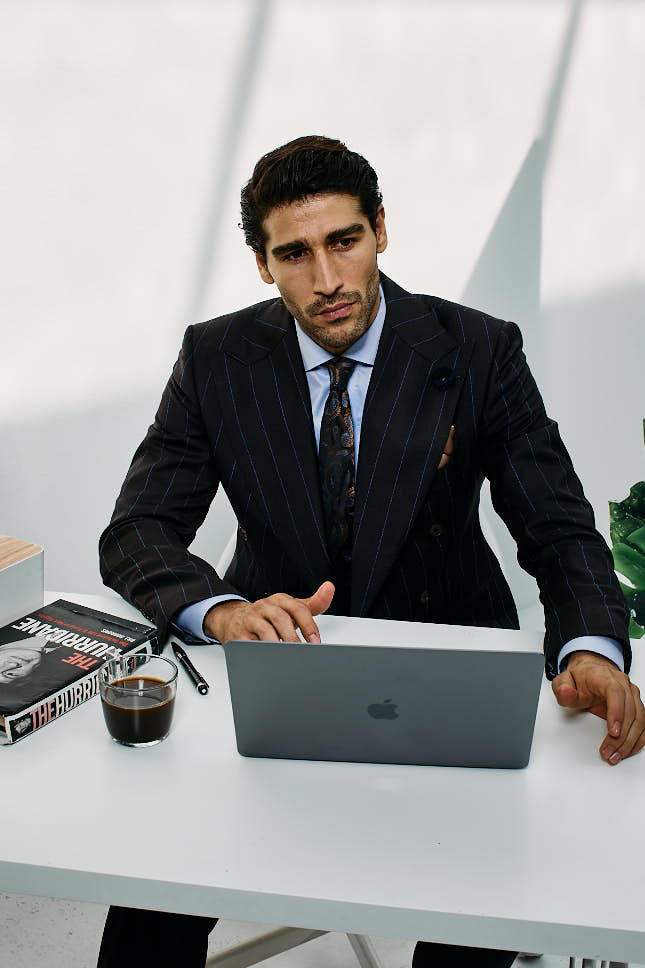
Alterations work best when the suit is already close. Trouser hems, a modest waist adjustment, sleeve length, jacket waist suppression and minor seat adjustments are usually realistic. They refine proportion. They do not change the architecture of the garment.
The shoulder is the dividing line. Altering it can affect the sleeve head, chest and armhole, so the work may cost more than it is worth on a ready-made suit. Major changes to armholes, jacket length, chest balance or a pronounced posture issue are similarly difficult. A jacket that pulls because one shoulder is lower or your chest projects differently on each side may need a different pattern, not more darts.
Test the base garment before agreeing to alterations. Button the jacket, let your arms hang naturally, then lift them forward as if reaching for a steering wheel. Sit down and look at the chest, collar and seat. If the collar stands away from your neck, the shoulders overhang or the front pulls sharply, choose another size or another cut.
A good alteration should leave the suit looking as though it began that way. If the proposed work is extensive, ask whether made-to-measure is the more sensible route. It may involve more, but it can avoid spending effort trying to force the wrong foundation into shape.
Style facets that change the result
Single-breasted or double-breasted
A two-button single-breasted jacket is the most adaptable starting point. It works in conservative offices, at dinners and for most weddings. It layers more easily under a coat and tends to be more forgiving in a car.
A double-breasted jacket creates a stronger line across the torso. It can make a lean man look more substantial and give a broad-chested man useful structure. It needs enough length and room through the body. Cut too short or too tightly, it becomes theatrical rather than assured.
Lapel width and shoulder expression
Lapel width should relate to your chest, height and face, not a passing trend. Narrow lapels can look slight on a large frame. Very broad lapels can overwhelm a slight one. Peak lapels sharpen the chest line and suit formal or more expressive tailoring. Notch lapels are easier to wear daily.
Shoulders matter more than most men realise. A soft shoulder follows your natural slope and feels less rigid. A structured shoulder creates a clearer horizontal line and may suit formal business settings. Neither is inherently superior. The question is whether the jacket looks as though it belongs to you.
Colour and pattern
Navy remains the strongest first suit because it works in daylight and at night. Mid-grey is nearly as useful, particularly for conservative business settings. Charcoal is more formal and can be excellent for presentations, but it may feel severe at a daytime wedding.
Checks and stripes need restraint. A subtle check may work for a second or third suit. A bold pattern can date quickly and exposes poor alignment at the seams. Build the foundation first. Then add character.
Featured suit options
I would use these ready options to identify the silhouette you are drawn to before deciding how much adjustment and personalisation you need. These options sit separately from Vavci’s bespoke programme, where the value lies in personal pattern work, fittings and cloth selection.
Navy Blue 3 Piece Suit
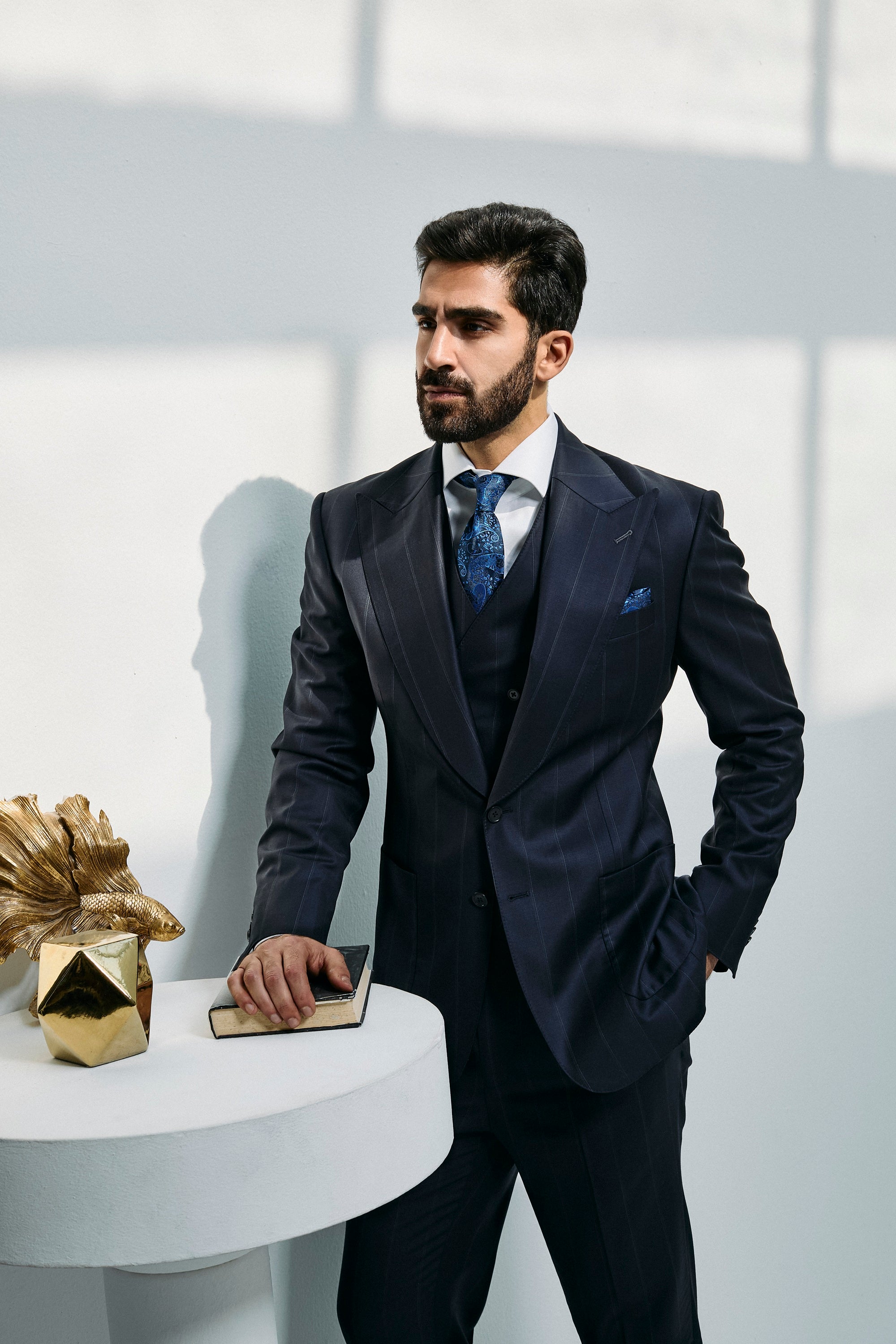
This navy wool three-piece suit has a single-breasted cut and peak lapel. Navy is the most versatile place to start, so it carries a man from business meetings to weddings and evening dinners, and the waistcoat holds its line once the jacket comes off.
Beige 3 Piece Suit
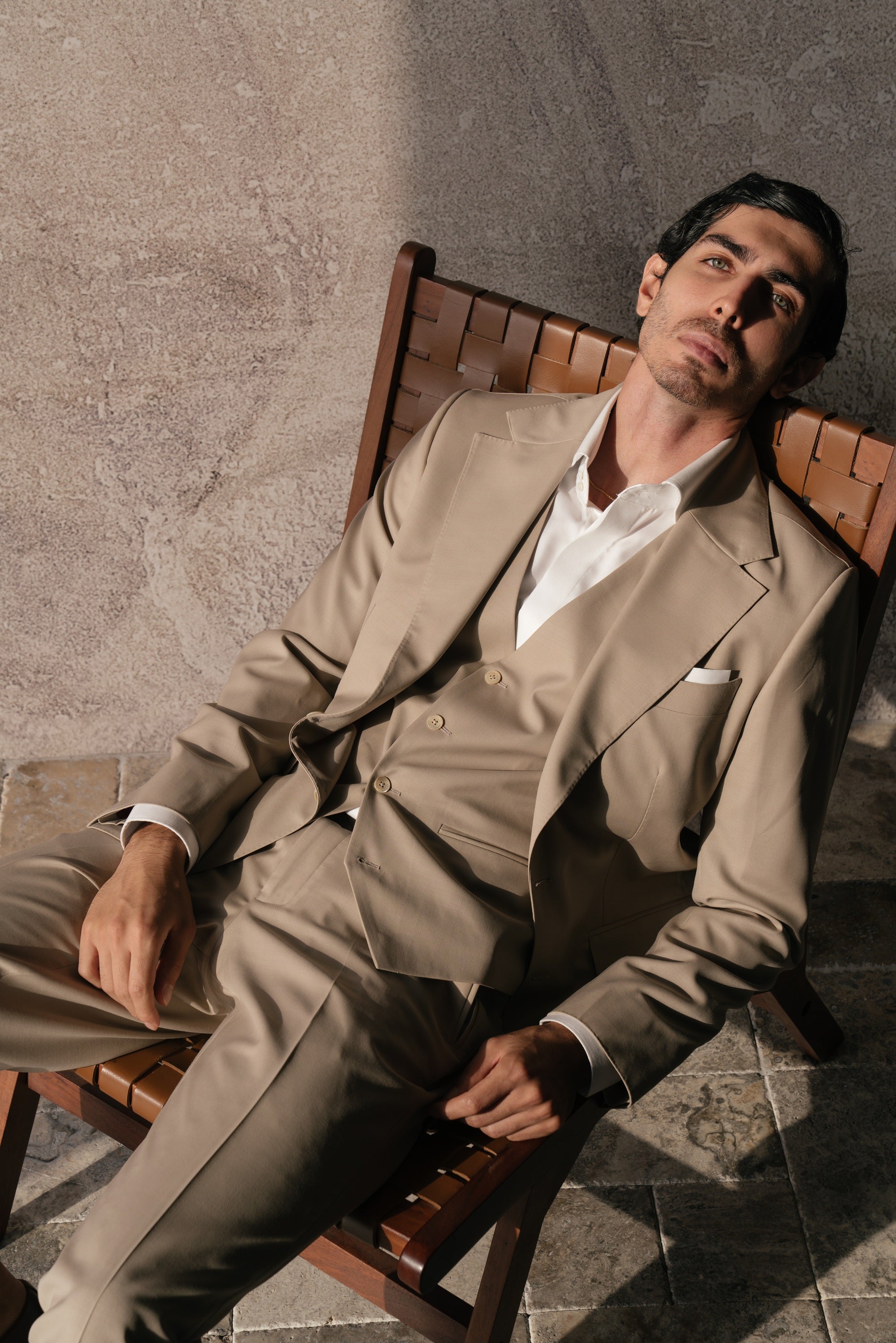
This beige wool three-piece suit has a single-breasted cut and notch lapel. Its lighter colour suits daytime weddings, celebrations and warm-weather events where charcoal or navy would feel heavy, while the waistcoat keeps the outfit composed once the jacket is off.
Brown 3 Piece Suit
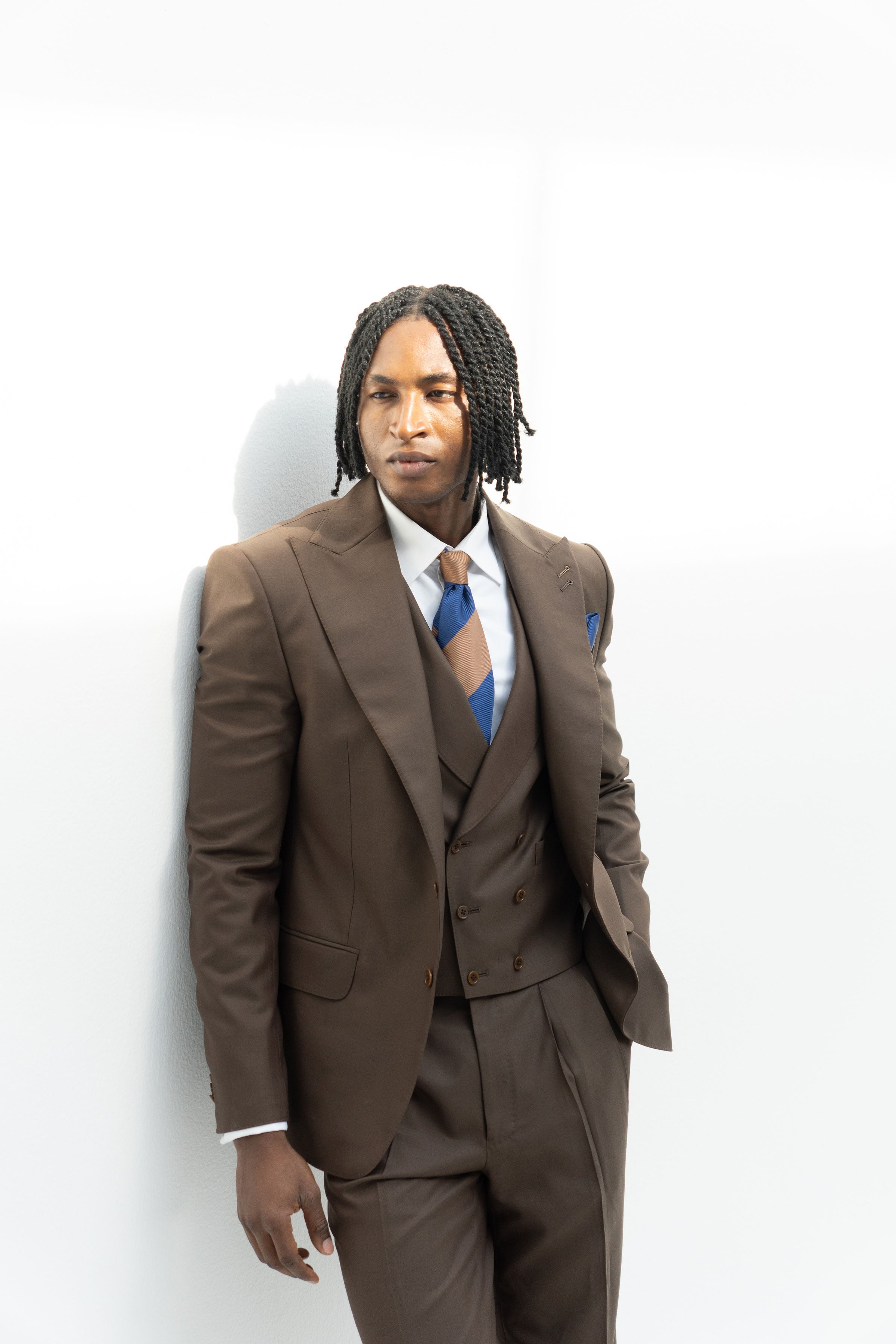
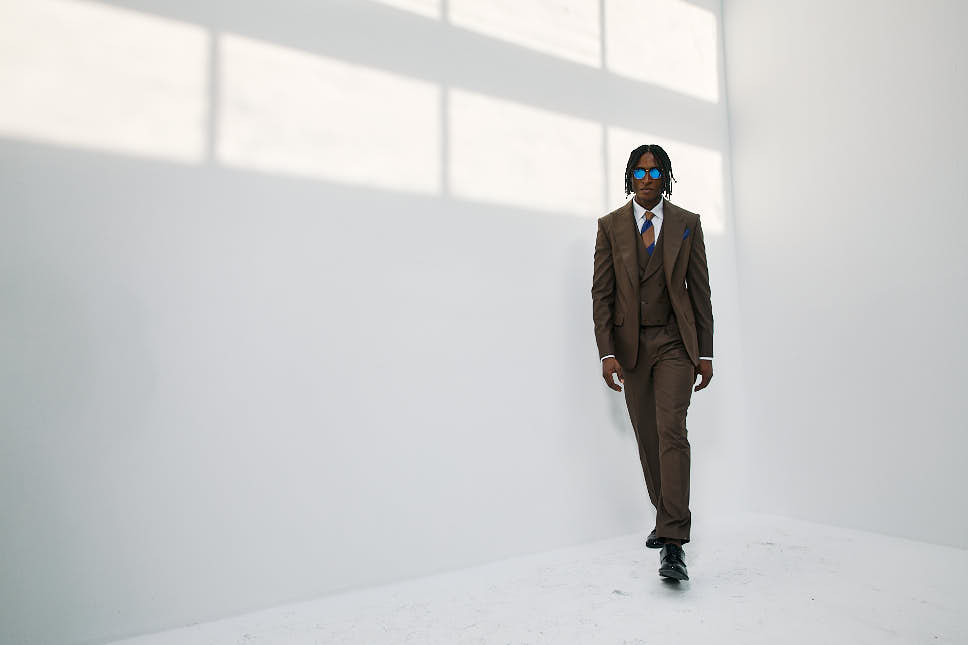
This brown wool three-piece suit has a single-breasted cut and peak lapel. Brown reads warmer and less corporate than grey, so it works for daytime events and less formal offices, and the peak lapel gives the jacket a sharper line than a notch would.
Coffee Pinstripe Double Breasted Suit

This coffee wool suit has a pinstripe, a double-breasted front and a notch lapel. The double-breasted cut and pinstripe build a stronger chest line, so consider it for a man who wants clear presence at a formal event or evening rather than a quiet office suit.
Coffee Pinstripe Double Breasted Suit (Style 2)

This is a second coffee pinstripe suit in wool, again with a double-breasted front and notch lapel. It offers the same confident, pinstriped double-breasted character in an alternative cut, suited to weddings, celebrations and evening events.
Suits buying guides
The Best Velvet Suits Available for Men in the UAE covers a cloth with a narrow but valuable role. Velvet is for evening, celebration and controlled lighting. The guide explains colour, lapel choice and how much contrast an outfit can take before it becomes costume-like. Read it if you are considering a dinner jacket or formal statement piece rather than a daily business suit.
How to Choose a Suit Design That Actually Suits Your Build focuses on proportion. A suit should respond to your shoulder slope, torso length, chest shape and stance. Read this next if suits have technically fitted your size but still made you look short, narrow, blocky or over-fitted.
The Best Single-Breasted Suits to Order in Abu Dhabi examines the most adaptable jacket format. Although Vavci has one location in Dubai, the principles apply wherever you assess a single-breasted suit: shoulder fit first, sensible buttoning position, useful cloth and enough ease to move naturally. It is especially relevant if you want one dependable suit rather than a statement piece.
The Best Slim-Fit Suits to Order in Abu Dhabi Today separates a clean, close line from a suit that is simply too tight. Slim fit should still let the jacket close without strain and the trouser fall without pulling across the thigh. Read it before buying a narrow-cut suit for work, particularly if you spend much of the day sitting.
The Best Business Suits for a Boardroom-Ready Wardrobe is for men building around professional use rather than one event. It covers the practical order of purchases, the value of quiet colours and why reliable cloth and fit matter more in a boardroom than novelty details.
What to look for when buying
1. Buy for the hardest hour of your day
If the suit must survive a morning client meeting, an afternoon drive and an evening dinner, do not assess it only under showroom lights. Move in it. Sit down. Raise both arms. Put your phone in the trouser pocket. A suit that works only while standing still is not a good suit.
2. Spend on the parts that cannot be changed
Prioritise shoulders, chest balance, jacket length and cloth. Sleeves, hems and waist suppression can usually be adjusted. The foundation cannot. This is why an inexpensive jacket with a good shoulder can be more useful than a more expensive one sitting incorrectly across the upper body.
3. Check construction honestly
Canvas is a floating internal layer that helps a jacket take shape over time. A fused jacket has an adhesive layer bonding cloth together. Fusing is not automatically poor, especially at lower price points, but heat and moisture can test inferior adhesives. A half-canvassed or fully canvassed jacket may drape more naturally, though cutting quality still decides the final result.
4. Match formality to the event
For work, navy or grey in a quiet weave is usually strongest. For a groom, the suit needs to work with the venue, photographs and the couple’s overall dress code. For black tie, a tuxedo or dinner jacket is more appropriate than a dark business suit. My guide to wedding suits for men helps clarify that distinction.
5. Decide whether tailoring is the value
If you wear suits occasionally and standard sizing works, ready-made with skilled alterations may be enough. If your job puts you in front of clients weekly, or fit has consistently been a problem, made-to-measure or bespoke may be the more rational purchase. The best tailor for men’s suits near you is not always the one with the largest cloth book. It is the one who notices what your body needs and explains the trade-off clearly.
Fittings, lead times and when to start
Start with the event date, then work backwards. Ready-made alterations may take days or a few weeks, depending on the work required and the tailor’s workload. Do not buy a suit on Thursday for a Saturday wedding and assume every issue can be corrected in time.
Made-to-measure and bespoke require more patience. A made-to-measure commission needs time for measuring, making and at least one fitting. Bespoke normally involves an initial consultation, an individual pattern and more than one fitting before collection. For a wedding or major formal event, I would begin several months ahead where possible.
The first consultation should cover more than chest and waist measurements. I ask how you stand, how you sit, whether you drive, what shoes you will wear and whether the suit must work in Dubai heat or a cold ballroom. Those answers affect cloth, lining, trouser rise and the amount of ease.
A basted fitting comes before the garment is finished. The jacket and trousers are temporarily assembled so the tailor can see whether the collar sits cleanly, the chest is balanced and the hem hangs correctly. Measurements can suggest these points. A fitting shows them.
Leave room for follow-up adjustments. Collecting immediately before an event gives you no margin if a trouser hem needs refining or the jacket needs a small correction after a final press. The suit should be settled before the day you need to wear it.
Common mistakes
-
Buying a suit that is too tight: tightness is not shape. It causes pulling at the button, creasing at the seat and restricted movement.
-
Choosing cloth by Super number alone: finer yarn does not automatically mean a better working suit.
-
Ignoring the shoulder: poor shoulder fit is difficult and often uneconomic to correct.
-
Using an occasion suit as an office uniform: velvet, bold checks and strong peak lapels have a place, but not every day.
-
Overlooking lining: a heavily lined jacket may feel less comfortable during Dubai’s warmer months.
-
Buying shoes after the trousers are hemmed: trouser length should be set with the shoe you plan to wear most often.
-
Confusing a blazer with a suit jacket: a blazer is designed to be worn separately. A suit jacket is cut to match its trousers. See my guide to blazers before separating them.
Frequently asked questions
What is the best suit colour for a first suit?
Navy is usually the best first suit colour because it works in business settings, weddings and evening dinners. Choose a mid-to-dark navy with subtle texture rather than a shiny finish. Grey is an equally sensible alternative if your workplace is more conservative or you already own navy tailoring.
Is a wool suit too warm for Dubai?
Wool is often suitable for Dubai when weight, weave and lining are chosen carefully. A 240 to 280-gram high-twist or open-weave wool can be more comfortable than a synthetic blend because it breathes and recovers better. Do not choose cloth only by touch in an air-conditioned showroom.
Is a half-canvassed suit worth buying?
A half-canvassed suit can be worth buying if you wear tailoring regularly and the cut is good. The canvas supports the chest and lapel while keeping the lower jacket lighter. It will not correct poor shoulder fit or incorrect jacket length, so assess those points first.
Should I choose slim fit or regular fit?
Choose the fit that follows your body without strain. Slim fit should mean a controlled line through chest, waist and thigh, not a jacket that pulls when buttoned or trousers that catch as you walk. Fit labels vary between makers, so trust the mirror and movement test more than the label.
What is the difference between a suit and a blazer?
A suit jacket and trouser are made from the same cloth and intended to be worn together. A blazer is a separate jacket designed to work with different trousers. Wearing a suit jacket as a blazer usually reveals itself through mismatched cloth, colour and formality.
How many suits should a professional own?
Two suits are enough to begin if your work requires regular tailoring: one navy and one grey or charcoal. Add a third only once you know how often you wear them and what your existing suits fail to cover. For office combinations, read business attire for men.
Can a ready-made suit be made to look bespoke?
A good alterations tailor can make a ready-made suit look much better by correcting sleeve length, trouser length, waist and jacket suppression. He cannot fully recreate a personal pattern, change a badly fitting shoulder or solve every balance issue. Buy the closest base garment possible before altering it.
Which parts of a suit can be altered?
A skilled tailor can typically address trouser hems, subtle waist refinements, sleeve length, jacket waist suppression, and minor seat corrections without disturbing the garment's essential character. Such refinements yield the finest results when the foundation is already sound, shoulders, chest, and overall proportion properly aligned from the outset. Where alterations grow too ambitious, however, the suit's inherent balance may suffer, and the effort required can quickly outweigh the improvement gained.
How long do suit alterations usually take in Dubai?
Suit alterations in Dubai may take a few days to a few weeks, depending on the tailor, season and complexity of the work. Simple trouser hems are usually quicker than jacket changes or multiple adjustments. Allow extra time before a wedding, formal event or business trip in case a second fitting is needed.
How many fittings does a bespoke suit require?
A bespoke suit typically requires more than one fitting after the initial consultation and measurement appointment. The exact number depends on your posture, garment complexity and how much correction is needed. A groom or client with a difficult balance should allow enough time for careful follow-up work.
What happens at a basted fitting?
At a basted fitting, the suit is temporarily assembled before it is finished. This lets the tailor assess collar position, shoulder balance, chest shape, jacket length and trouser hang while you move. Corrections made at this stage are usually more effective than trying to alter a completed garment.
Can a tailor alter the shoulders of a suit jacket?
A tailor can alter suit jacket shoulders in some cases, but it is often difficult and may not be worthwhile. Shoulder work can affect the sleeve head, armhole and chest balance. If the shoulder seam overhangs, dents or ends far inside your natural shoulder point, another jacket is normally the better purchase.
Should I buy a travel suit for regular business wear?
A travel suit can work well for regular business wear if the cloth has good crease recovery, appropriate drape and a restrained appearance. High-twist wool is often useful for commuting, flights and long meetings. Do not choose technical or washable cloth solely for convenience if it does not suit your office, comfort or preferred finish.
Glossary
Canvas
An internal layer used to give a jacket shape and help it mould to the wearer over time.
Drape
The way cloth falls from the shoulder through the chest and body without pulling or collapsing.
Break
The amount of trouser fabric resting on the shoe at the front.
High-twist wool
Wool spun with a firmer twist, often chosen for crease recovery and a dry, resilient handle.
Suppression
The shaping taken into the jacket waist to create a more defined torso.
Basted fitting
An unfinished fitting where garment panels are temporarily assembled so balance and shape can be corrected before completion.
Where to go from here
Start with the use. For boardroom work, keep the cloth quiet and the fit mobile. If you are drawn to evening texture, read about velvet before buying. If a single-breasted jacket is likely to be your first purchase, assess shoulder, chest and cloth before lapel details.
For a more personal route, Vavci works from one Dubai location with custom-made and made-to-measure tailoring for men who want a suit cut around their own proportions. A proper consultation should cover how you travel, how long you sit, where you wear the suit and what you already own. Those answers should determine cloth and construction, not a display mannequin.
Key takeaways
-
The best suits for men begin with shoulder fit, chest balance and purpose, not a label or Super number.
-
For Dubai, consider lighter wool, useful weave and reduced lining before assuming a suit will be too warm.
-
Ready-made is sensible for speed. Made-to-measure and bespoke offer more control where fit problems persist.
-
Spend on the elements that cannot be meaningfully changed later: shoulders, jacket length, cloth and overall balance.
-
Bespoke suits at Vavci are intended for clients who value an individual cut and fitting process.
Conclusion
The best suit for men is a considered answer to a real need. A navy high-twist wool suit may suit a professional who spends his week in meetings. A double-breasted blue suit may suit a man who wants more presence at an event. Velvet may be exactly right for dinner, and entirely wrong for a Monday morning.
Judge the shoulder, cloth, balance and the way the suit behaves once you sit down. Those details remain after the first compliment has passed. If standard sizing has never quite worked for you, a private fitting in Dubai lets you solve the issue at the pattern stage rather than trying to disguise it afterwards.
Product availability and specifications may change. Suit suitability depends on individual proportions, intended use, fabric choice and fitting requirements. Bespoke, custom-made and made-to-measure garments require consultation and may involve different timelines and construction options. All final fabric, product and styling details should be confirmed before purchase or commission.