

The Best Dress Shirts for Men, Vetted Fabric to Finish
At a first fitting, I ask a client to sit as he would in the car, reach forward, and button his collar. The best shirts for men stay comfortable through those movements, then keep a clean collar, shoulder line and sleeve length until the working day ends. That is harder than it sounds. A shirt can feel right for five minutes in a cool fitting room, then pull across the back in traffic, tighten at the neck by lunch, or show every crease after the walk from the car park into a Dubai office. This guide is for a first serious purchase, a better working wardrobe, or a clearer way to judge brands and cloth before paying for a name.
I have treated this as a vetting guide, not a ranking. A formal meeting, a wedding and a warm Friday lunch rarely call for the same shirt. Begin with cloth. Then judge construction, fit and the job the shirt must do.
Who this guide is for
Use this guide when comparing the best shirt brands for men, replacing collars that have gone limp, or reducing a wardrobe to shirts with distinct jobs. It also helps when searching for 3XL men’s shirts near you: know the measurements before accepting a shirt that merely buttons.
More size must not mean more disorder. A larger shirt needs room across the chest and upper arm while its shoulder seam remains at your shoulder point. Extra cloth does not improve fit. Under a jacket, it usually makes matters worse.
Dubai requires two assessments. Try the shirt in air-conditioning, then consider the heat between car and lobby. A tightly woven, heavily finished cloth may look composed indoors and feel stifling outside. An open weave may breathe well but look tired before the day is done.
What you will learn
-
How to separate fabric quality from branding and price.
-
Which shirt cloths suit office, occasion and warm-weather wear.
-
How collar, shoulder, sleeve and body fit affect comfort.
-
Why collar construction matters more than decorative buttons.
-
How to assess ready-made shirts before settling on a brand.
-
Where linen, mercerised cotton and printed cotton make sense.
-
What to inspect before buying a formal or semi-formal shirt.
-
Which supporting guides answer specific questions on brands, formalwear and linen.
How to vet the best men’s shirts

Price may indicate better cloth or more careful making. It proves neither. A familiar label can be worth buying when the collar, stitching and fabric serve your use. It is still the wrong purchase if you pay for a logo and accept a collar unsuited to your neck or a body cut that balloons at the waist.
Start at the collar
The collar frames the face and is often the first part to fail visibly. Inspect it open and with a tie. It should meet the neck without a gap behind, its points should not curl, and the buttoned band should take one finger comfortably.
For corporate use, I usually recommend a restrained spread or semi-spread collar. It accepts a tie and remains credible when open. A very wide cutaway can suit the right face, but width alone does not make it more formal.
Then inspect the cloth honestly
Feel the fabric, then look through it towards the light. Check for an even weave, excessive thinness over the chest, and recovery after a light squeeze. Fine cloth can be light without being weak.
For daily office wear, cotton poplin or twill is usually easier to live with than an ultra-fine shirt requiring perfect pressing after every wash. For a guide weight, a light 100–120g cotton is useful in Dubai; a fuller twill will usually feel warmer. Evening wear may justify a smoother surface and firmer collar.
Look where factories save time
Turn the shirt inside out. Uneven seam allowance, loose thread ends and puckering at the armhole are warnings. None may stop you wearing it on day one. After six months of laundering, those shortcuts tend to show.
The yoke is the panel across the upper back. It should lie cleanly over the shoulder blades. If it strains when you reach forward, sizing up may restore movement but leave surplus cloth elsewhere. That is when made-to-measure becomes sensible.
Fabric first: cotton, linen and mercerised cotton
The best shirt for men is not one fabric. It is cloth that behaves properly for the room, weather and manner in which you wear it. I would not build a Dubai wardrobe around one cloth category.
Standard cotton for broad use
Cotton works because it can be woven in many ways. Poplin is smooth and relatively crisp. Twill has a subtle diagonal weave and usually feels fuller. Oxford has visible texture and generally suits relaxed business settings better than formal evening dress.
“100% cotton” says little by itself. Fibre content is a starting point. Yarn quality, weave, finishing and garment construction decide how a shirt drapes and how it looks after washing.
Linen for heat, with a clear trade-off
Linen is a sound choice for daylight, travel and warm-weather occasions because air moves through it readily. It also creases. That is not a fault; it is the nature of the cloth. Anyone promising crisp linen at 5pm is generally offering a blend or an expectation that will not hold.
I would wear linen with tailored trousers, loafers or a light unstructured jacket. For a conservative boardroom presentation, where a pressed surface must remain clean through the afternoon, I would not recommend it.
Mercerised cotton for a cleaner surface
Mercerisation treats cotton to give it a smoother appearance and more polished finish. It suits shirts intended to read sharper, particularly in darker colours or under a jacket where a defined surface helps.
Fit still decides the result. A glossy black shirt with aggressive waist suppression will pull at the buttons. A loose collar will still look careless.
Collar types and where they belong
Collar choice affects a shirt’s usefulness more than most men expect. Excellent cloth cannot rescue a collar that fights the tie knot or sits badly beneath a jacket.
Spread and semi-spread collars
A spread collar leaves more distance between its points. It allows a fuller tie knot and generally works well with a suit. A semi-spread is the safer business all-rounder: it takes a tie cleanly and still holds its line when open at the neck.
Both work well in pale blue or white. Keep the construction moderate in Dubai, especially if your day moves between outdoor heat and strong air-conditioning.
Point and button-down collars
A point collar has narrower spacing and tends to suit a smaller tie knot. It can be right for formal business, provided the points sit flat and are not too long or narrow for your face.
Button-down is less formal. It works with Oxford cloth, trousers and a jacket in a relaxed office. For a formal ceremony or conservative client meeting, I would leave it aside. Its buttons control the collar points; they are not decoration.
High collars are a specific choice
A high collar gives a more directional effect, particularly in evening wear. It is less adaptable than a conventional collar and may not take frequent tie wear comfortably. Buy it because it suits your face and calendar, not because it appears formal on the hanger.
Fit and construction that hold up
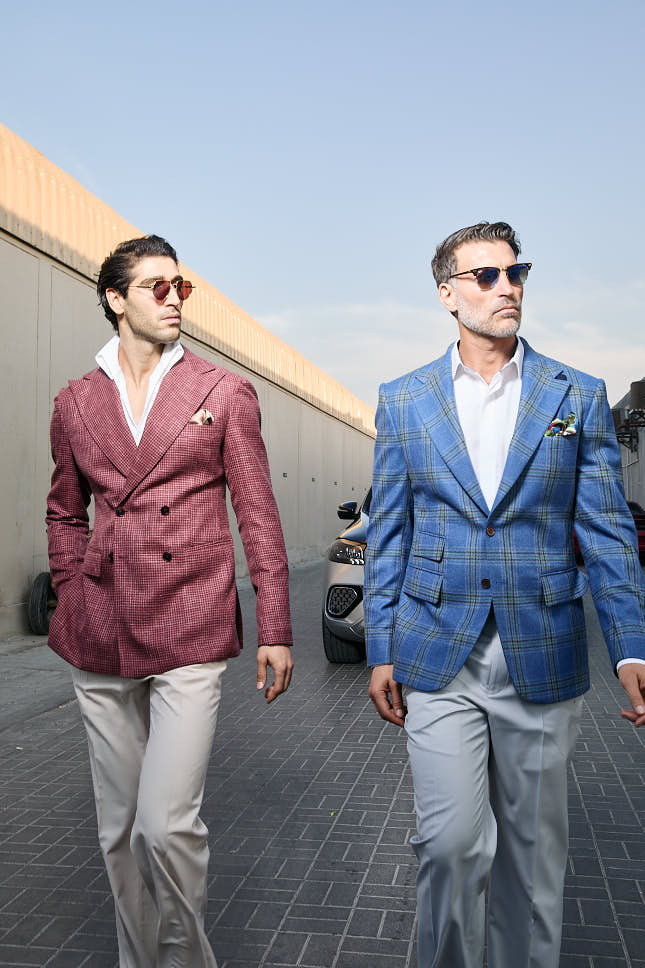
Judge movement before the mirror. I ask clients to sit, reach forward as if holding a steering wheel, then fold their arms lightly. Those tests expose a tight upper back, a low armhole or cuffs that climb the forearm.
Shoulders before chest
The shoulder seam should finish close to your shoulder point. Too far in restricts movement. Too far out collapses the chest into surplus fabric. A tailor can alter many areas, but rebuilding shirt shoulders is rarely worth doing.
Body shape and darting
Some men need a straight body; others need waist suppression. Darts remove cloth at the back, but too much suppression makes the front pull when seated. The placket should remain closed across the chest.
Sleeves, cuffs and break
With arms at rest, the cuff should reach the wrist bone. Under a jacket, around 1cm to 1.5cm of cuff usually shows. The sleeve should not bunch sharply above the cuff or let the cuff rotate around the wrist all day.
Without a jacket, bend your arm. The sleeve still needs enough length. A short sleeve is more noticeable than one that is slightly long.
When bespoke or made-to-measure is worth considering
Ready-made is sensible when your shoulders, neck and sleeve length align with a standard size. Choose a sound brand, make modest practical alterations, and put the difference into better cloth.
A pronounced chest-to-waist difference, one low shoulder, a fuller neck, unusually long arms or repeated collar trouble changes the calculation. A custom-made shirt may prevent poor purchases. The same applies to suits, which are a separate decision from a ready-made shirt.
Shirt fits explained: regular, slim and relaxed
Fit labels are not measurements. One maker’s slim fit is another’s regular fit. Judge the shirt on your body, not by the name on its label.
Regular fit
A regular fit should leave clean room across the chest and upper back without falling away from the body. Some waist ease is fine; ballooning beneath a jacket is not. The armhole must still sit high enough for you to reach forward without lifting the whole shirt.
Slim fit
Slim fit follows the chest, waist and back more closely. It should not pull at the placket, strain across the shoulder blades or create diagonal lines from buttons to armholes. A shirt that only looks good while you stand still is too tight.
Relaxed fit
Relaxed fit gives more room through the body and upper back, which can suit linen and less formal heat. The shoulder seam must still end at the shoulder point, and the collar must close correctly. Sizing up usually drops the shoulders and enlarges the neck. It solves neither problem.
Featured VAVCI pieces
These four pieces have different wardrobe roles. None is a universal winner. Choose by colour, cloth, cut and the degree of formality you require.
Wine Double Breasted Blazer

This wine blazer is cut double-breasted in a linen and silk blend with a peak lapel. The colour and double-breasted front make it an evening and occasion piece rather than a daily jacket, so keep the shirt and trousers plain and let the blazer carry the outfit.
Blue Checkered Blazer

This blue checked blazer is single-breasted in wool with a peak lapel. The check gives it more character than a plain navy jacket, so it suits smart social settings and less formal events; pair it with quiet trousers and avoid a second strong pattern.
Coffee Pinstripe Double Breasted Suit

This coffee wool suit has a pinstripe, a double-breasted front and a notch lapel. The double-breasted cut and pinstripe build a stronger chest line, so consider it for a man who wants clear presence at a formal event or evening rather than a quiet office suit.
Cherry Bespoke Shoe

This cherry loafer is made from pure leather and finished with a fringe. Its rich colour reads sharper than plain brown or black, so it works for evening and occasion wear; keep the rest of the outfit restrained so the shoe stands out cleanly.
Dress Shirts: buying guides
How to Judge a Men’s Shirt Brand Before You Commit looks past the label. It helps you compare consistency in fit, collar construction, cloth selection and finishing, the details that make a second or third purchase worthwhile.
10 Formal Shirt Brands Worth Knowing About in the UAE narrows the question to formal choices available locally. Read it before choosing shirts for business, ceremonies or black-tie-adjacent occasions.
The Best Formal Shirts for Men, Sorted by Occasion separates office formality, weddings and evening events. A shirt right under a navy business suit may be wrong with a dinner jacket or at a daytime celebration.
The Best Linen Shirts Worth the Investment This Season considers linen in more depth, including where its relaxed texture helps and where creasing becomes a disadvantage. Read it before building a warm-weather shirt rotation.
How to Choose a Shirt Design That Suits Your Build concerns proportion. Collar scale, pocket placement, pattern size and body shape change how a shirt reads, even when its measurements are technically correct.
The Best Office Shirts That Still Look Sharp by 5pm addresses the actual working day: meetings, driving, air-conditioning and the heat outside. It is for men who need a shirt that does not look exhausted by late afternoon.
How to Judge Cotton Shirt Quality Before You Buy One gives a closer method for inspecting cotton. It covers checks worth making before relying on a fibre label, thread-count claim or persuasive shop display.
Pros and Cons
Strengths of a fabric-first approach
-
It stops a familiar brand name from making the decision for you.
-
It helps you choose linen, cotton or mercerised cotton for a real use, not a vague idea of quality.
-
It makes the wardrobe more efficient because each shirt has a clear role.
-
It reveals collar, shoulder and sleeve faults before the return period ends.
-
It gives a sound basis for deciding between ready-made, altered and custom-made.
Considerations
-
Fabric knowledge does not replace trying a shirt on and moving in it.
-
Fine cloths can need more pressing and more careful laundering.
-
Linen will crease, including in a well-made shirt.
-
A distinctive collar or embellishment can limit how often a shirt works.
-
Premium pricing cannot improve fit when a brand block does not suit your body.
What to look for when buying a dress shirt
Advertising and luxury labels can turn the search for the best men’s shirts into a price comparison. Make it a wearing comparison instead. A Burberry shirt price may reflect positioning, fabric and design, but it cannot tell you whether the collar closes correctly or the sleeves work beneath your jacket.
1. Decide the job before the colour
Buy white and pale blue for formal business first. Add stronger colours, prints and black after the core is covered. For a wedding guest, consider venue, time and whether a jacket is involved. At black tie, follow the dress code exactly; white shirts are not interchangeable.
2. Match cloth to temperature and setting
Light cotton poplin is often useful on a hot working day. Linen is more relaxed and better in daylight. Mercerised cotton offers a cleaner, polished surface. If you spend most of the day in a cool office, do not buy as if you are outdoors for eight hours. If you walk between buildings, do not assume air-conditioning protects the shirt.
3. Check the collar with and without a tie
Button the top button. Turn your head and sit down. A collar tolerable while standing can become oppressive after an hour. Remove the tie afterwards. The collar should still frame the face rather than flatten onto the shoulders.
4. Test movement, not just appearance
Reach forward, sit and lift your arms lightly. Check for pulling buttons, cuffs above the wrist and a hem that leaves the trousers. A shirt tight across the back will not improve with confidence or expensive trousers.
5. Buy fewer shirts with distinct purposes
A useful starting rotation is two formal shirts, one textured business shirt, one warm-weather option and one occasion shirt. That is better than five versions of the same shirt that fail for the same reason. For broader coordination, see Casual Dress for Men.
Building a practical shirt rotation for Dubai
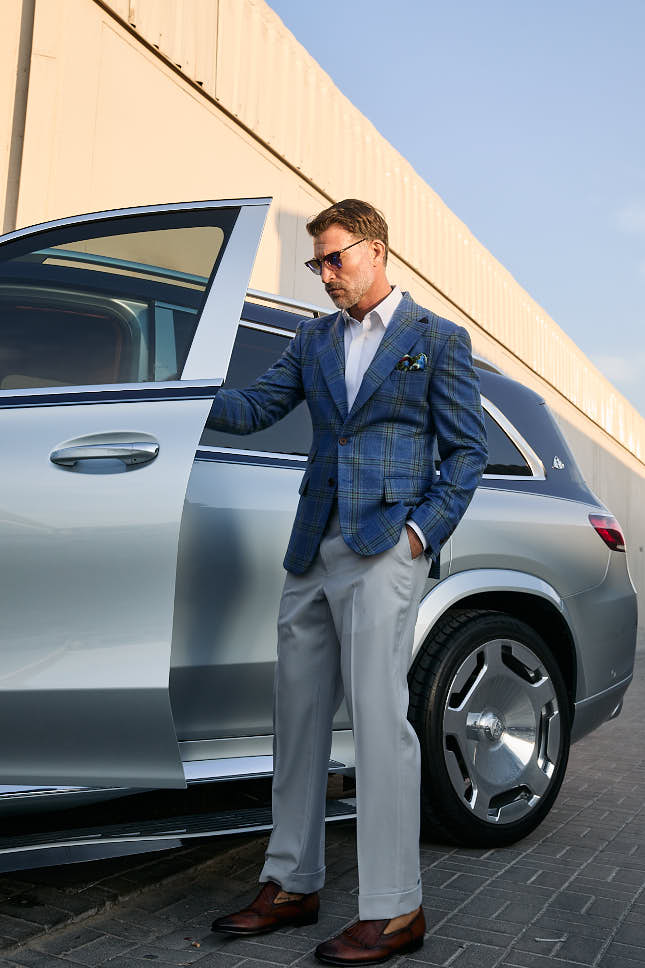
Five shirts can cover most professional and social needs when each has a clear job. I would begin with white and pale blue formal shirts in smooth cloth, both with collars that work under a jacket.
Next, add a textured business shirt, perhaps Oxford or subtle twill, for less formal office days. It has more character than poplin without becoming an occasion shirt. Keep the colour restrained enough for navy and charcoal trousers.
Fourth comes heat. Linen earns its place for daytime plans, travel and outdoor settings, but it will not resemble pressed poplin after a long afternoon. A lighter weave helps outdoors; a smoother, slightly fuller cloth can be better in an air-conditioned office.
Fifth is the occasion shirt: printed, darker or more detailed, depending on your evening dress. Tape detailing, a high collar or hand embellishment can belong here. None replaces the white and pale blue shirts that do the harder work.
Ready-made is usually enough when shoulder, collar and sleeve length are reliably correct. When you buy one size for the chest and another for the neck, or need the same alterations every time, made-to-measure may justify the attention.
Common shirt-buying mistakes
First: buying by neck size and ignoring everything below it. Neck size matters. It is not a complete fit system.
Second: treating slim fit as an achievement. A slim shirt should follow the body without pulling the placket or locking the shoulder blades. If natural movement is gone, the shirt is too small.
Third: expecting one shirt to do every job. A printed aqua shirt, high-collar shirt and pale formal poplin each have their place. Force one into all three roles and it will leave you underdressed somewhere.
Fourth: calling linen poor quality because it creases. Judge it by breathability, drape and suitability for the setting. Choose another cloth when you need a sharp surface at day’s end.
Last: ignoring alterations. Hem length, sleeve length and waist shape can sometimes be corrected. Shoulder width and collar balance usually cannot be corrected economically.
Shirt glossary
Placket
The folded strip at the shirt front that holds the buttons and buttonholes.
Yoke
The upper-back panel joining the body to the shoulders; it affects movement across the back.
Poplin
A smooth, tightly woven cotton cloth often used for clean-looking formal shirts.
Twill
Cloth with a diagonal weave. It generally has more texture and body than poplin.
Mercerised cotton
Cotton treated to produce a smoother, more polished appearance.
Break
The natural fold where cloth meets the body or another garment. In shirts, sleeve break and cuff behaviour show whether proportions are right.
Frequently Asked Questions
What are the best shirts for men to own first?
Start with white and pale blue formal cotton shirts, provided the collar and shoulders fit properly. They cover most professional settings and work with navy, charcoal and lighter suits. Add textured business cloth or linen only after that formal foundation is in place.
Which shirt fabric is best for Dubai weather?
Linen and lighter cotton weaves are usually most useful in Dubai heat, though setting still decides. Linen breathes but creases readily; smooth cotton stays sharper in an office. When you move between outdoor heat and strong air-conditioning, buy for the part of the day where appearance matters most.
Are mercerised cotton shirts good for formal wear?
Mercerised cotton can work well when a clean, polished surface is wanted. Formal suitability still depends on colour, collar and detailing. A plain pale shirt is more adaptable for conservative business than a dark shirt with embellishment or pronounced design features.
How should a dress shirt fit around the chest?
It should close cleanly without button gaps or horizontal pulling. You should sit and reach forward without the back tightening sharply. Too much fabric is not right either: it gathers under a jacket and makes the waist appear wider.
Should I buy linen shirts one size larger?
No. Linen should fit correctly at shoulder and chest, as cotton should. Some men prefer an easier body for relaxed wear, but sizing up often drops the shoulder seam and enlarges the collar. Choose the right size, then the cut with the ease you need.
What should I check before buying 3XL men’s shirts?
Check neck circumference, shoulder width, chest, sleeve length and shirt length rather than relying on 3XL alone. Brand sizing varies considerably. If the chest fits but the shoulder seam falls too far down the arm, the shirt will look untidy and may restrict movement in the wrong places.
Is an expensive branded shirt always better?
No. Higher price may buy finer cloth, stronger construction or design value, but it does not ensure suitability. Check collar, shoulder placement, fabric weight and stitching. The right ready-made shirt is a better purchase than a costly shirt needing constant adjustment.
Which brand is best for men’s shirts?
The best brand has a collar shape, shoulder block, sleeve length and cloth selection suited to your regular use. A recognised name may be worthwhile, but it cannot make poor fit acceptable. Try the shirt with the jacket and tie you wear most.
What are the best quality men’s shirts?
The best quality men’s shirts combine appropriate cloth, clean construction and a fit that remains comfortable all day. Look for an even weave, tidy seams, a collar that retains shape and an armhole allowing movement. Fine fabric matters only when the shirt is properly cut and finished.
What should I look for in a branded formal shirt in the UAE?
Look for a controlled collar, correct shoulder placement and cloth suited to the UAE climate. Light poplin or smooth cotton can work for meetings and air-conditioned offices, while the walk from car to building still makes breathability relevant. Test it with a tie before relying on brand or price.
Are Oxford shirts formal enough for work?
Oxford shirts are formal enough for many relaxed offices, especially with tailored trousers and a jacket. Their visible texture makes them less suitable for conservative meetings, formal ceremonies and evening dress. When formality is uncertain, smooth poplin or fine twill is safer.
Key Takeaways
-
Judge cloth, collar, construction and fit before brand recognition.
-
Build formal cotton shirts first, then add linen and distinctive designs for defined occasions.
-
Dubai heat makes weave, weight and lining choices in the rest of the outfit more consequential.
-
Do not compromise on shoulder fit or collar comfort.
-
Ready-made works for many men; repeated fit trouble can justify made-to-measure.
Where to go from here
Once cloth and fit are clear, go deeper rather than buying broadly. Read Men’s Dress Shirts at VAVCI for a closer look at shirt options, then use the formal shirt and linen guides above to narrow the choice by occasion.
Consider the shirt with the trousers, jacket and shoes it will meet most often. A shirt can be right on its own and still wrong for the suit, dress code or climate in which you intend to wear it.
Conclusion
The best men’s shirts earn their place through repeated wear. They sit cleanly at the neck, allow movement through the back, retain their shape through the day and suit the climate rather than fighting it. Start with the shirt’s job. Then check cloth, collar and fit, in that order.
If ready-made fits your shoulders, neck and sleeves properly, there is no need to complicate the decision. When it repeatedly fails at one of those points, stop buying around the problem. A proper fitting can show whether a different block, an alteration or a custom-made shirt is the sensible answer.
Product availability, fabric details and garment specifications may change. Shirt suitability depends on individual fit, the occasion and personal preference. Check measurements, care requirements and current product details before purchase. Bespoke, made-to-measure and custom-made requirements should be confirmed during a personal consultation.