

Smart Casual for Men: The Complete VAVCI Style Guide
Smart casual is where clients most often hesitate: the invitation says two words, but a DIFC dinner, a daytime engagement and a relaxed office do not ask for the same outfit. In Dubai, I start with breathable cloth, trousers that hold their line, proper shoes and, only when the room needs it, an unstructured jacket. This guide shows you how to read the setting, build a smart casual outfit in the right order and avoid looking either overdone or unfinished.
Smart Casual Meaning
There is no smart casual uniform. A navy blazer, pale-blue shirt and loafers may suit one invitation; a fine-knit polo, tailored trousers and clean leather trainers may suit the next. The dress code sits between formal tailoring and relaxed weekend clothing, but the venue decides where on that range you should land.
I use one rule in the fitting room: relax one part of the outfit, then keep discipline elsewhere. Open-collar linen needs clean trousers and deliberate shoes. With a casual bomber, do not add distressed denim, graphic branding and running shoes as well.
Smart casual and business casual
The office governs business casual. It usually calls for a collared shirt, tailored trousers and conservative footwear. Smart casual allows more texture, colour and choice: a fine-gauge knit, suede loafers, darker denim or a patterned overshirt can work when the occasion permits.
Client-facing offices can still be stricter than dinner invitations. Ask what you need to project: authority, celebration or simply a well-judged appearance.
What smart casual is not
Removing the tie from a stiff dark suit rarely creates smart casual. A white business shirt and black Oxford shoe can look incomplete without the elements that make them formal. Nor does an expensive watch turn gym clothing into a considered outfit.
Shape matters. The shoulder should sit cleanly, the trouser length should be intentional, and the shoes should belong to the outfit.
Casual and Smart Casual
Comfort comes first in casual clothing. Smart casual still needs comfort, particularly between Dubai heat and strong air-conditioning, but fit, fabric, footwear and condition carry more weight. A clean collar, trousers that hold their line and unscuffed shoes usually matter more than a visible logo.
Context changes an item. Dark unwashed denim with a fine-knit polo and leather loafers can work for a smart casual evening; the same denim with a stretched T-shirt and running shoes is simply casual. A plain T-shirt can sit beneath an overshirt or relaxed blazer, provided the neckline is firm and the trousers have structure.
Reading vague invitations
Relaxed casual permits T-shirts, denim, trainers and easier proportions. Smart casual asks for cleaner lines, better materials and deliberate footwear. Business casual is the restrained version, generally centred on a collared shirt, tailored trousers and professional shoes.
No details on the invitation? I would take the middle course: a collared shirt or knit polo, tailored trousers and loafers. You can remove a jacket. You cannot easily rescue an outfit that began too relaxed.
The Smart Casual Outfit Formula
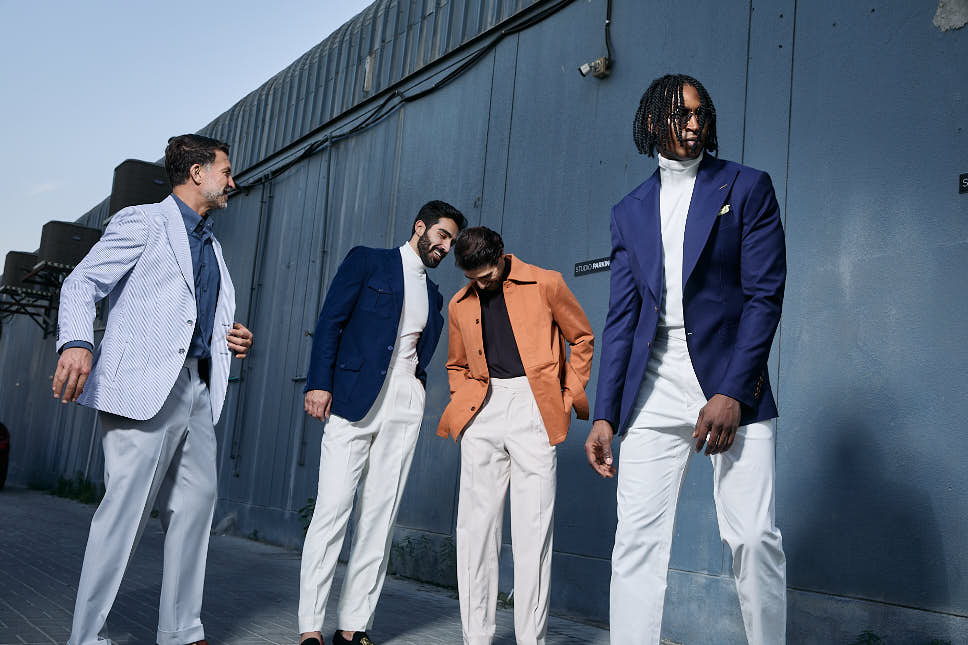
Begin with the trousers. They set the formality and tell you whether a jacket adds anything. Flat-front cotton trousers, lightweight wool trousers and clean dark denim all have a place; venue, time of day and outdoor walking decide between them.
-
Choose the setting. A rooftop dinner, creative office and afternoon wedding require different degrees of polish.
-
Set the trouser formality. Tailored wool trousers are dressiest. Chinos sit in the middle. Dark, unwashed denim is more relaxed.
-
Add a shirt or knit. Linen, cotton poplin, Oxford cloth and fine merino each bring a different surface and degree of structure.
-
Decide whether a jacket helps. It earns its place for an evening venue, client dinner or reception. In severe heat and a genuinely relaxed setting, it is unnecessary.
-
Finish with shoes, not trainers by default. Loafers, derbies and restrained leather trainers work. Heavy sports shoes usually do not.
Balance is the test. A slim trouser needs enough thigh room for sitting without strain, and a shirt should follow the torso rather than cling to it. You feel a poor balance quickly when you leave a cool car and walk through Dubai humidity.
Three reliable starting points
-
A pale linen shirt, beige tailored trousers and brown loafers for daytime lunches and relaxed meetings.
-
A navy knit polo, mid-grey trousers and dark leather loafers for an evening restaurant.
-
A blue shirt, dark denim, suede loafers and an unstructured blazer for a smart social event.
Use these as foundations, not uniforms. Cloth, fit and shoe shape decide whether the result looks resolved.
Shirts and Trousers
The shirt and trouser must speak the same language. A crisp business shirt with narrow collar points can feel too corporate beside casual cotton trousers. A loose resort shirt can seem underdressed with formal wool trousers. Meet in the middle.
Shirts that work
Linen earns its place in Dubai because it breathes and takes on a relaxed texture through the day. It will crease; that is its nature. Still, the neck, shoulder and sleeve must fit. A creased shirt that is also too large looks careless.
Oxford cotton has more body and a visible weave. Choose it where a T-shirt would be too relaxed, especially in an office. Poplin is smoother and sharper, making more sense for evenings or when you may add a jacket.
For the relaxed end of smart casual, replace the shirt with a knit polo. Keep the collar clean and the fit close but comfortable. Pulling across the chest or hanging below the trouser rise breaks the line.
Trousers that do the work
Tailored trousers give you the widest range. Mid-grey, stone, tobacco, olive and navy work harder than bright colours because they accept linen, knitwear and jackets without competition. Side adjusters keep the waist clean when you do not want a belt.
Chinos are useful, but not interchangeable with tailored trousers. Their cloth is usually more casual and their pockets less refined. Keep the fit moderately tapered, clean and free of excess fabric pooling over the shoe.
For smart casual evenings, dark denim can be right. Avoid heavy fading, torn knees, exaggerated whiskering and bulky contrast stitching. If it belongs in a nightclub queue, it is unlikely to help at an engagement dinner.
Jackets and Layers
A jacket can make smart casual look intentional in seconds. It also causes many mistakes. Men often wear the structured business jacket they use with a tie, then find it too stiff for a birthday dinner or relaxed wedding lunch.
The unstructured blazer
Less internal padding and less rigid canvas through the chest give an unstructured blazer its softer line. Canvas is the internal layer that shapes a jacket’s chest and lapel. In Dubai, this construction matters: a jacket that feels fine in an air-conditioned fitting room may become unpleasant during the walk from car to entrance if its cloth is heavy and fully lined.
For daytime, I would usually consider open-weave wool, wool-linen-silk blends or lighter linen constructions. A cloth around 220 to 280 grams can work in warm conditions, depending on weave and lining. Weight alone is not the answer: a dense 250-gram cloth can feel warmer than a more open cloth at a similar weight.
Overshirts and bomber jackets
An overshirt works over a fine T-shirt or knit polo for a creative office or casual evening. Keep the shoulder neat and the length short enough that it does not sit like a long shirt over the trouser seat.
A bomber is the more casual route. Let the trousers and shoes supply refinement. A bomber with tailored trousers and leather loafers can work; loose joggers and athletic trainers change the dress code entirely.
When not to wear a jacket
At a beach club, daytime garden gathering or very relaxed lunch, a good shirt and trousers are enough. Do not add a jacket merely because you think smart casual demands one. The better outfit is the one that remains calm without unnecessary layers.
Smart Casual Shoes
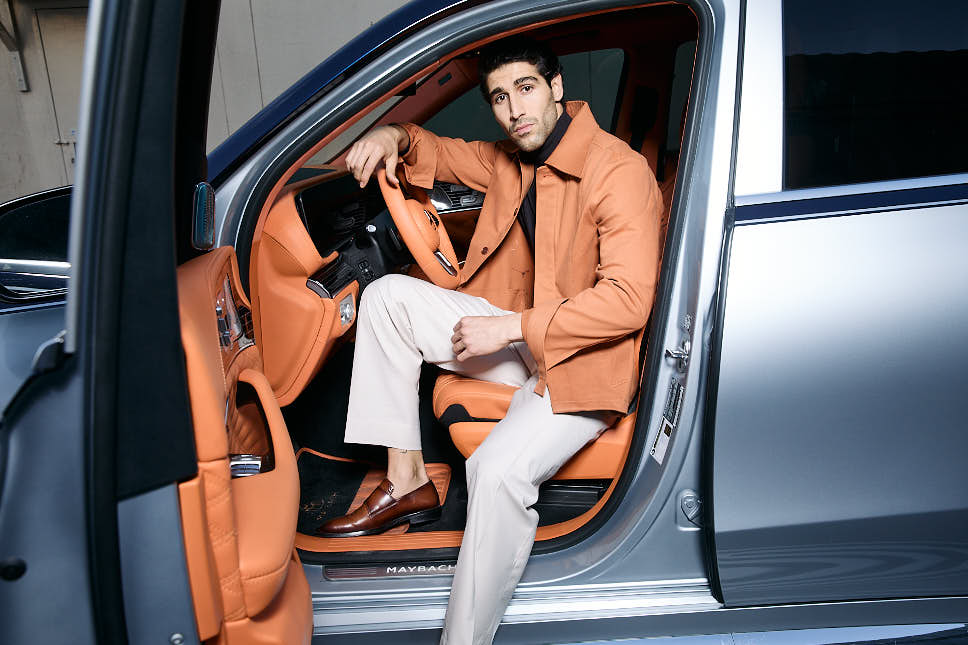
Shoes set the final register. A polished black Oxford is generally too formal for linen trousers and an open-collar shirt; a running shoe is generally too relaxed for tailored wool trousers. The middle ground is broad, but it needs judgement.
Loafers
For men in Dubai, loafers are among the most useful smart casual shoes. They work with cropped or lightly broken trousers, take invisible socks, and move easily from daytime lunch to an evening venue. Brown suede feels relaxed. Dark leather reads sharper and suits evening plans better.
Derbies and monk straps
When you need more structure than a loafer provides, choose derbies. A rounded toe in brown, burgundy or dark suede works with chinos, tailored trousers and dark denim. Monk straps can work, though a large polished buckle can become too dressy beside casual cloth.
Leather trainers
Minimal leather trainers have a place, particularly in contemporary offices. Keep them clean, low-profile and free of oversized logos. White works with navy, stone, olive and grey trousers. Black leather trainers suit darker evening outfits, but can look severe beside pale linen.
Footwear to leave out
Leave out flip-flops, chunky running shoes, heavily branded high-top trainers and worn driving shoes. Comfort matters, but proportion does too. A broad thick sole can make a tapered trouser appear abruptly short.
Accessories and Finishing Details
Keep accessories in support. A slim leather belt, simple watch, plain socks and structured bag are generally enough. When jacket, shirt and trousers already bring texture or colour, leave the rest quiet.
Side-adjuster trousers need no belt. Adding one can interrupt a clean waistband. Where a belt is necessary, it need not match the shoes exactly: dark brown shoes can sit well with a medium-brown belt when both belong to the same visual register.
Let socks disappear into trouser and shoe rather than introduce an unrelated pattern. A leather tote, document case or neat backpack works for the office. Sports bags and oversized hardware pull the outfit back towards casual clothing.
Dubai rewards restraint in layers. A heavy scarf, thick cardigan or crowded pocket square can feel wrong before you reach the venue. A light pocket square may suit a jacket at dinner or a reception; it serves no purpose with an overshirt or bomber.
Outfits by Occasion
Smart casual for the office
At the office, begin slightly more polished than you think necessary. A pale-blue Oxford shirt, navy or grey trousers and loafers will pass in most professional settings. In a relaxed culture, introduce a knit polo or clean leather trainers gradually instead of changing every element at once.
Ask yourself whether you could sit across from a client without wishing you had brought a jacket. If not, take an unstructured blazer.
Smart casual for an interview
Reserve smart casual for interviews where the employer, industry or recruiter has clearly indicated a relaxed dress code. If you are unsure, dress one level more formally. An interview is not where to test the outer limit of a dress code.
A collared shirt or fine-knit polo, tailored trousers and leather loafers or derbies are safe. Keep a jacket available for a client-facing role, established company or meeting with senior staff. A creative workplace does not make distressed denim, trainers or heavily branded clothing appropriate.
Smart casual for a wedding or engagement
Respect the host without competing with the groom. Light tailored trousers, a linen or cotton shirt, loafers and a blazer are usually safer than denim. A tie is often optional, but a jacket is useful if daylight plans move into an air-conditioned ballroom.
Daytime engagements allow more colour. Soft blue, stone, olive, tobacco and muted pink work well. Leave bright prints, slogan shirts and visibly distressed footwear out.
Smart casual for a party
Texture gives a party outfit personality. A dark knit polo, pleated trousers and loafers is more interesting than a standard office shirt. A patterned shirt can work when the trousers stay quiet and any jacket is plain.
Smart casual for a funeral
Keep smart casual for a funeral subdued. Where the family has requested it, choose navy, charcoal, dark grey or black trousers, a plain shirt and dark leather shoes. Avoid loud prints, open sandals, white trainers and celebratory colours.
Uncertain? Err towards a dark jacket and formal shoes. Being slightly more restrained is better than missing the tone.
Festive smart casual
Festive smart casual allows richer colour, a textured jacket or one embellished detail, while the foundation remains tailored. A deep green, midnight blue or burgundy jacket works with plain trousers and black or dark brown loafers. One focal point is enough.
Smart Casual in Dubai Heat

Dubai gives you two climates in one evening: five minutes of intense heat between car and entrance, followed by hours under strong air-conditioning. The wrong fabric can leave you damp outdoors and cold indoors.
Fabric and weave
Choose linen, cotton, open-weave wool and wool-linen blends for shirts and trousers. Linen gives airflow and visible texture but creases quickly. Fine wool often recovers better and can drape more cleanly, particularly in trousers.
I would not recommend a heavy, fully lined jacket for a daytime event in the hotter months unless you expect to remain indoors almost continuously. Half-lined and unlined constructions are more comfortable, though they show the cloth’s natural movement more clearly.
Fit in humidity
Give clothing breathing room. Tight sleeves hold heat. Trousers cut too close through the thigh pull when you sit in a car. A shirt clinging across the back will show perspiration sooner than one with enough ease to move.
This is not an argument for larger clothing. It is about placing the right room in the right places.
Colour choices
Stone, beige, light grey, pale blue and soft olive are practical by daylight. Dark navy remains useful in the evening. Very light trousers need clean footwear and a careful seat fit, particularly for a long dinner.
A VAVCI Smart Casual Edit
Build smart casual clothing with fewer pieces that connect. I would begin with trousers that sit properly at the waist, one breathable shirt, considered shoes and a jacket or shacket only if your routine calls for it. VAVCI’s bespoke suits are an option for clients choosing a fully custom-made or made-to-measure route. Ready pieces are useful when the fit is already close and the occasion is less formal.
White Shirt

This white cotton shirt is a clean, versatile base for smart casual dressing. Cotton holds a crisper surface than linen, so it works for the office, daytime lunches and evenings where you may add a jacket. Confirm the exact weave and fit if that affects your choice.
Orange shacket

This orange cotton shacket sits between a shirt and a jacket, so it takes smart casual in a more relaxed, expressive direction. Keep the trousers quiet and the leather shoes simple. I would not choose it for a conservative office or a funeral.
Navy Blue Blazer

This navy blue linen blazer has a notch lapel and a self-textured surface. Linen keeps it comfortable in Dubai heat, so it suits evening restaurants, client dinners and warm-weather smart casual events. Confirm the exact fibre content if that affects your choice.
Beige blazer

This beige wool blazer has a notch lapel and a plain finish. Its lighter colour works particularly well for daytime smart casual, with a white or blue shirt and brown or olive loafers. Confirm the cloth weight if you expect to wear it outdoors in the hotter months.
Beige Trousers

Cut slim in suiting wool and finished with side adjusters, these beige trousers are a useful base for linen shirts, knit polos and loafers. They work particularly well for daytime smart casual dressing. Confirm the exact fibre content and blend percentage if that affects your choice.
Olive Green And Brown Bespoke Loafer Shoes

These pure leather loafers have a round toe and a patina finish in olive green and brown. Wear them for daytime smart casual when a trainer is too relaxed: stone or navy trousers and a linen shirt are natural partners. Confirm the available sizes before ordering.
Dress Code Guides
What the Smart Casual Dress Code Actually Requires sets out the practical boundary between polished and overdressed. Read it when an invitation says “smart casual” but provides no venue details. It helps you identify the core pieces that work, then judge whether the host is likely to expect a jacket, collared shirt or more relaxed footwear.
5 Smart Casual Outfit Combinations That Always Work is for finished combinations rather than theory. It shows how shirts, trousers, jackets and shoes support one another. Use it before dinner, a casual business event or a social plan when you need a reliable answer quickly.
What Is Smart Casual, Exactly? A Plain-English Definition answers the first question I hear from many men: how relaxed can smart casual become before it stops being smart? It is a useful starting point for a first smart casual wardrobe and separates the dress code from formal business clothing, weekend sportswear and black-tie attire.
Smart Casual for the Office: What Actually Passes Muster focuses on professional settings. Office smart casual has to account for hierarchy, client meetings and company culture. The guide helps you judge when a knit polo is sufficient, when a jacket is wise and why a clean shoe matters more than most men expect.
Smart Casual for a Party: Dressing Up Without a Suit covers the social end of the dress code. A party allows more colour, texture and personality, while the basic proportions still matter. Read it for a celebratory look that does not feel like office clothing.
7 Smart Casual Outfit Ideas for Different Occasions maps the dress code across daytime plans, evenings, work settings and celebrations. It is useful when your wardrobe is small and each purchase needs to work in more than one setting. The aim is not more clothing. It is better combinations.
Building a Smart Casual Wardrobe: Where to Actually Start concerns the foundations. Start there when replacing clothes that no longer fit, changing roles at work or buying your first well-cut trousers and shoes. It establishes neutral colours and practical fabrics that make later choices easier.
Smart casual has a clear ceiling. When an invitation specifies formalwear, read the black tie dress code rather than asking a dark blazer to do a dinner jacket’s work. Black tie has its own rules, and smart casual substitutions usually look wrong.
Common Smart Casual Mistakes
Wearing everything slim
Slim does not mean tight. A narrow trouser, close shirt and cropped jacket can restrict movement and exaggerate every crease. You should be able to sit in a car, reach for a glass and walk comfortably without cloth pulling hard across the seat or shoulders.
Using one outfit for every invitation
A white shirt, navy chino and trainer combination can work in a relaxed office. It may be too plain for an engagement dinner and too informal for a wedding reception. Smart casual requires judgement because the same words cover different expectations.
Ignoring trouser length
Trouser break is the cloth that meets the shoe at the front. Smart casual trousers usually look best with little or no break. Too much cloth stacks at the ankle and makes even good shoes appear neglected.
Choosing shoes last
Many men build a good outfit, then reach for the nearest trainers. Shoes are not an afterthought. They decide whether the result reads considered, formal, relaxed or unfinished.
Confusing expensive with appropriate
A premium jacket can still be wrong for a daytime outdoor event. A formal shoe can still be wrong with linen. Price does not settle it. Cloth, construction, fit and context do.
Where to Go From Here
Still unsure about the definition? Begin with What Is Smart Casual, Exactly? A Plain-English Definition. For the working week, move to Smart Casual for the Office: What Actually Passes Muster. For immediate combinations, use 5 Smart Casual Outfit Combinations That Always Work.
Men who prefer a sharper silhouette may find Slim-Fit Suits for Men useful. The same fitting rules apply: the jacket must permit movement, trousers must sit correctly at the waist, and a close fit must never become strained.
Frequently Asked Questions
What is the difference between casual and smart casual?
Casual clothing puts comfort first, with fewer expectations around tailoring, footwear and finish. Smart casual uses a cleaner fit, well-kept pieces and deliberate shoes, even with relaxed items such as dark denim or a plain T-shirt. The setting determines how far you can relax it.
What is a smart casual outfit for men?
A smart casual outfit for men usually combines a collared shirt or knit polo, tailored trousers or clean dark denim, and loafers, derbies or minimal leather trainers. Add an unstructured jacket for evening venues, client dinners or sharper occasions. Each piece should look as though it belongs with the others.
Is smart casual appropriate for a job interview?
Smart casual can suit a job interview where the employer, recruiter or industry has clearly stated that the workplace is relaxed. Choose a collared shirt or fine-knit polo, tailored trousers and leather loafers or derbies; keep a jacket available where appropriate. If the dress code is unclear, more formal clothing is safer.
Can men wear shorts for smart casual?
Shorts are rarely right for smart casual, particularly at offices, interviews, weddings or evening restaurants. Tailored shorts may work at a genuinely relaxed daytime resort or beach venue if the host has made that informality clear. In most cases, lightweight tailored trousers look more considered and travel better between outdoor heat and air-conditioned interiors.
Can men wear jeans for smart casual?
Yes. Dark, clean denim can work for smart casual, especially in the evening. Choose a pair without rips, heavy fading or oversized branding, then add a collared shirt, knit polo, loafers or restrained leather trainers. For an office, wedding or engagement, tailored trousers remain the safer choice.
Are trainers smart casual for men?
Minimal leather trainers can be smart casual when clean and low-profile. They work best with tapered chinos, dark denim or modern tailored trousers. Running shoes, chunky soles and heavily branded trainers are generally too sporty for a smart casual invitation.
Do I need a blazer for smart casual?
No. A good shirt, tailored trousers and proper shoes are enough for many daytime and relaxed settings. Add a blazer for client dinners, evening receptions, air-conditioned venues or occasions where you may otherwise feel underdressed.
What should men wear for smart casual in summer?
For smart casual summer dressing, choose breathable linen, cotton, open-weave wool and lighter jacket constructions. A linen shirt, lightweight tailored trousers and loafers make a reliable starting point. In Dubai, avoid very tight fits and heavy full linings, especially for daytime events.
Can I wear a T-shirt for smart casual?
A plain, well-fitting T-shirt can work under an overshirt or relaxed blazer in a creative or social setting. It needs a firm neckline, clean fabric and no large graphics. A collared shirt or knit polo is more reliable when you do not know the host’s expectations.
What are the best smart casual shoes for work?
Loafers, suede derbies and clean leather trainers are often the best smart casual shoes for work. Your office formality and client contact decide the choice. In a conservative workplace, choose loafers or derbies. In a contemporary office, minimal leather trainers may be acceptable.
Can I wear black shoes with beige trousers?
Yes, particularly for an evening outfit with a black, navy or dark-blue top layer. The contrast is stronger than brown footwear, so the rest of the outfit should support it. With daytime linen and lighter colours, brown or suede loafers usually produce a softer result.
Glossary
-
Break: The fold created where the trouser hem meets the shoe.
-
Canvas: An internal jacket layer that shapes the chest and lapel. Softer jackets may use little or no canvas.
-
Drape: The way cloth hangs and moves on the body.
-
Half-lined: A jacket lined through part of the body rather than the full interior.
-
Unstructured jacket: A softer jacket with less padding and internal rigidity.
-
Side adjusters: Tabs at the trouser waist that adjust fit without a belt.
Key Takeaways
-
Smart casual combines tailored structure and relaxed clothing, but the result must look deliberate.
-
Choose trousers first, then build the shirt, jacket and shoes around their degree of formality.
-
Loafers, derbies and clean leather trainers are more useful than athletic shoes.
-
Dubai heat makes cloth weight, weave, lining and ease of movement essential.
-
A jacket helps for evenings and client-facing settings, but is not compulsory for every smart casual invitation.
Conclusion
Smart casual works when each piece has a reason to be there. You do not need a crowded wardrobe or a jacket for every occasion. You need trousers that fit, shirts in suitable cloth, shoes with enough refinement and the judgement to dress for the venue rather than the label on the invitation. I would begin with one light shirt, one dark shirt or knit polo, two well-cut pairs of trousers and loafers. Once those pieces fit properly, dressing becomes less of a calculation. For a sharper, more personal solution, a VAVCI fitting can establish the proportions, cloth and construction that suit your routine in Dubai.
Dress-code expectations vary by host, venue, workplace and cultural context. This guide offers general menswear guidance and does not replace the instructions on an invitation or workplace policy. Product availability and specifications may change. Confirm garment details, fit, fibre content and suitability before purchase. Bespoke, made-to-measure and custom-made tailoring requirements should be discussed during a personal consultation.