

How to Choose the Best Tailor in Dubai for Your Budget
Two jackets can look alike on the hanger yet behave very differently after the drive from DIFC to dinner, a handshake, or an hour in a cold meeting room. The label is rarely the deciding factor. Pattern, cloth, handwork, and allowance for your posture matter more than an average body shape. This guide is for men in Dubai comparing routes from a quick alteration to a fully bespoke commission. I will show where each price tier usually earns its place, what to inspect before paying, and when paying more will not improve the result.
For a closer local comparison of workshops and fitting methods, read Dubai’s Bespoke Tailors.
Who This Guide Is For
This is for the first-time buyer seeking a proper suit, the executive replacing jackets now tight through the chest, and the groom deciding whether made-to-measure is enough for the photographs and the years after them.
Use it, too, if you own suits but cannot say why one feels easy and another restrictive. You need not learn tailoring language before a fitting. You do need a few sound questions.
What You Will Learn
-
How ready-to-wear, alterations, made-to-measure, and bespoke differ.
-
What Dubai price tiers commonly include and exclude.
-
Why shoulder balance and chest shape matter more than trouser length.
-
How cloth weight, weave, lining, and canvas affect comfort in Dubai.
-
Which questions reveal whether a tailor controls the work properly.
-
How many fittings a serious commission may require.
-
Which compromises are sensible for workwear, weddings, and black-tie dressing.
-
How to compare a local fitting with an online custom-suit order.
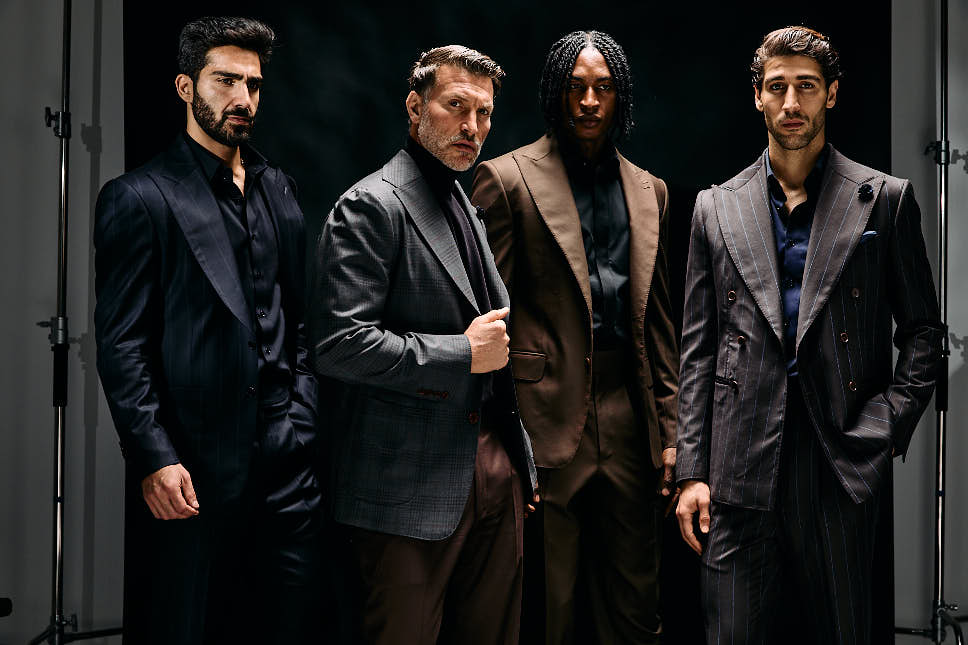
Dubai Tailoring Price Tiers
Altered ready-made clothing
A ready-made suit with thoughtful alterations is often right when time is short, your proportions are close to a standard size, and you need reliable occasional wear. A competent alterations tailor can adjust the trouser waist and hem, jacket sleeve length, and sometimes the jacket waist.
He cannot move the shoulder point, create chest room that was never there, or correct a jacket that loses balance when you sit. Those are structural matters.
This route deserves respect. It has a limit. If the collar lifts from your neck, the shoulder divots, or the button pulls before alterations begin, choose another jacket. Do not try to rescue it.
Made-to-measure tailoring
Made-to-measure starts with an existing house pattern, adjusted to your measurements and chosen style. It can serve men with fairly regular proportions and a clear need very well.
The question is how far the tailor can alter the pattern, not whether “custom” appears in the description.
Ask whether there is a basted stage, how posture is recorded, and who decides balance corrections. Some made-to-measure programmes offer many options but only one fitting. Others permit more technical correction. They are not the same service.
Fully bespoke work
Every bespoke commission starts at the same point: a pattern built solely from your own measurements. The cutter accounts for the slope of your shoulders, the fullness of your chest, your stance, your seat, and where your arms naturally fall. This is why the basted fitting carries such weight, with the garment still open and unfinished, any imbalance in the construction can be caught and corrected before the final stitches make it permanent.
In Dubai, bespoke suits from a premium house should include a considered consultation, serious cloth selection, more than one opportunity to assess fit, and work crafted exclusively for you.
Not every garment needs bespoke.
Where higher spend earns its place
Spend more where the result stays visible every time you wear it: shoulder shape, collar fit, chest balance, cloth quality, and the skill to correct the body in front of the tailor.
Be careful with details that do not improve fit. A dramatic lining, large monogram, or long list of button choices will not repair a poor shoulder.
Suit Alteration Scope and Limits
Changes that are usually straightforward
Trouser hems, modest waist adjustments, sleeve shortening, trouser tapering, and limited jacket-waist suppression are usually realistic. They refine a garment that already fits through the shoulder, chest, and seat.
The best alteration looks as though the suit was right from the beginning. It should not advertise itself.
Changes that carry more risk
Shoulder reconstruction, major jacket-length changes, armhole changes, and extensive chest alterations require opening the parts of a jacket that govern its balance. They may be possible in limited cases, but cost and risk can exceed the garment’s value.
I would not recommend extensive restyling simply because a suit was expensive when new. Ask whether it can become right for you, not whether it deserves saving.
Older suit assessment
Before altering an older suit, inspect the cloth at the seat, knees, elbows, and trouser cuffs for thinning or shine. Check that enough seam allowance remains and that the lining, pockets, and internal construction are sound.
A small repair can extend a good suit’s life. Tired cloth or an incorrect shoulder is usually reason enough to replace it.
How to Vet a Tailor Before You Commit
Ask what is being cut
I ask every client to separate a personalised order from a bespoke one. Both can be worthwhile. The difference lies in the pattern and fitting process. A tailor should say plainly whether he modifies a standard block or drafts an individual pattern.
Then ask how the order progresses: measurement, cutting, fitting, corrections, and collection. Vague answers tend to create vague expectations.
Inspect the shoulder and collar first
Stand naturally. Do not pull your shoulders back for the mirror. The jacket shoulder should end where your own shoulder ends, without a ridge, hollow, or collapse. The collar should sit against the shirt collar at the back of the neck.
Some movement is normal. A permanent collar gap is not something I would accept on a new commission.
Test the jacket in motion
Button the jacket. Sit down, reach towards a steering wheel, then raise one arm as if greeting someone. You are not asking a suit to feel like knitwear. You are checking that it returns to position instead of climbing your back or pulling sharply across the chest.
Bright shop lights flatter many jackets. Sit in it as well. A garment that works only upright will disappoint you quickly.
Ask about cloth rather than thread count
Thread count is not a useful shortcut for suit cloth. Ask the mill, fibre composition, weight, weave, and intended use. For much of Dubai, a breathable open weave or lighter wool around 220 to 260 grams may make more sense than dense 320-gram cloth.
The answer changes if most of your day is spent in heavily air-conditioned offices.
Consider the pedigree behind a bolt of cloth from Vitale Barberis Canonico, founded in 1663, Piacenza 1733, or Tessitura Monti, established in 1911, centuries of mill craftsmanship distilled into every yard. Such provenance offers a tailor valuable orientation, a shorthand for quality and character. Yet a storied name is only a starting point; it cannot substitute for the discipline of selecting weight and handle suited to how the cloth will actually be worn.
Clarify delivery and correction policy
Ask how many fittings are included, who performs alterations after collection, and whether the same cutter remains responsible for the order. Do not leave a wedding garment until the final week.
For a work suit, collect early enough to wear it at home for twenty minutes before it matters.
For location-specific questions, How to Vet a Tailor Near You Before You Commit to One gives you a practical visit checklist.
Construction, Cloth, and Fittings

Canvas and fused fronts
Consider the chest of a full-canvas jacket, where a floating interior layer moves independently beneath the cloth, allowing the garment to soften and mould itself to the wearer across seasons of use. This structure runs the entire length of the jacket front, while a half-canvas version reserves that craftsmanship for the chest and lapel alone, relying on lighter, simpler construction beneath. By contrast, a fused jacket forgoes this floating architecture altogether, joining its layers with an adhesive bond instead, a method built for efficiency rather than the slow, hand-guided shaping that defines true canvassing.
None of these terms makes a suit automatically good or bad. A well-made fused jacket can serve a limited role.
In Dubai heat and humidity, though, a poorly fused front may bubble or lose its clean line over time. For a suit you expect to wear regularly for years, ask for a clear answer about its construction.
Lining and climate
Consider two identically cut jackets worn on the same warm afternoon: the fully lined one glides over a shirt with quiet ease, its interior finished and discreet, while its structured cloth is held in clean, disciplined shape. That comfort, however, comes at the cost of an additional layer across the back and chest. A half-lined or unlined counterpart sheds this weight and breathes more freely, yet it lays bare the tailor's inner handiwork, a look, and a construction, not every fabric is suited to carry.
The walk from car to lobby is short. It is still long enough to expose a heavy jacket.
A tightly woven dark cloth with dense lining can feel uncomfortable before you reach the lift. Choose for your actual routine, not the month in which you order it.
Fittings that accomplish something
A fitting should identify changes. At the basted stage, inspect balance through the back, a clean collar, even hem, correct sleeve pitch, and enough seat room in the trousers. At the final fitting, check the trouser break, the fold where trouser meets shoe, with the shoes you will actually wear.
One fitting may be enough for a straightforward made-to-measure order. More complex proportions usually need more attention.
The useful measure is not the number of appointments printed on a brochure. It is whether the garment is corrected before it is finished.
Personalisation That Affects Wearability
Decisions made before cutting
Lapel width, buttoning point, pocket style, jacket length, trouser rise, and lining belong in the conversation before cutting. Each changes how the jacket sits on your body and how often you will wear it.
A buttoning point set too high can pull across the stomach. A low trouser rise may restrict you in a car or through a long dinner.
Details that follow fit
Contrast buttonholes, monograms, and statement linings are personal details. They are not fit corrections. Choose them after cloth, construction, and proportion are settled.
A restrained suit with the right shoulder and trouser line will serve you more often than a distinctive one that works only in photographs.
Use and visual character
Business suits usually benefit from controlled structure, practical pockets, and cloth comfortable between outdoor heat and office air-conditioning. Wedding suits can carry more shape and character, provided the cut still works after the ceremony.
Evening suits call for cleaner lines and more restraint, particularly for black-tie occasions.
The occasion should guide design. Your body should guide the cut.
Tailoring Service Buying Guides
Dubai's Bespoke Tailors: What Separates the Best From the Rest sets out the practical difference between a premium bespoke commission and a garment carrying only custom language. Read it when you are weighing cloth, fittings, pattern work, and the long-term value of a suit for formal meetings or occasion wear.
Working around Business Bay? Tailoring Options in Business Bay: What to Expect First covers the first consultation and the decisions worth making before choosing a workshop. It helps you judge time, access, fitting standards, and suitability for office clothing.
Custom Tailoring in Business Bay: How to Choose Well is for the man comparing made-to-measure with more individual custom work. It explains what to ask about pattern adjustment, construction, delivery, and the difference between attractive options and genuine fit correction.
Much of a tailoring house cannot be seen in an online gallery. What Makes a Bespoke Tailoring Shop Worth Choosing considers consultation quality, cloth guidance, fitting discipline, and accountability after collection. It is especially useful for a first serious commission.
Before an appointment, read How to Vet a Tailor Near You Before You Commit to One. It gives closer local vetting guidance, including questions on workmanship, alteration limits, access to the cutter, and whether the tailor understands the clothes you need to wear.
Ready Design Examples and Styling References

These pieces can help as design references while you compare tailoring options. Do not mistake them for a fully bespoke commission. A ready design can clarify your preferred lapel shape, colour direction, or cut before a consultation.
Coffee Pinstripe Double Breasted Suit

This coffee wool suit has a pinstripe, a double-breasted front and a notch lapel. It is a useful reference if you want to discuss how a double-breasted cut and a stripe sit across your chest and waist before committing to a formal or evening commission.
Beige 3 Piece Suit
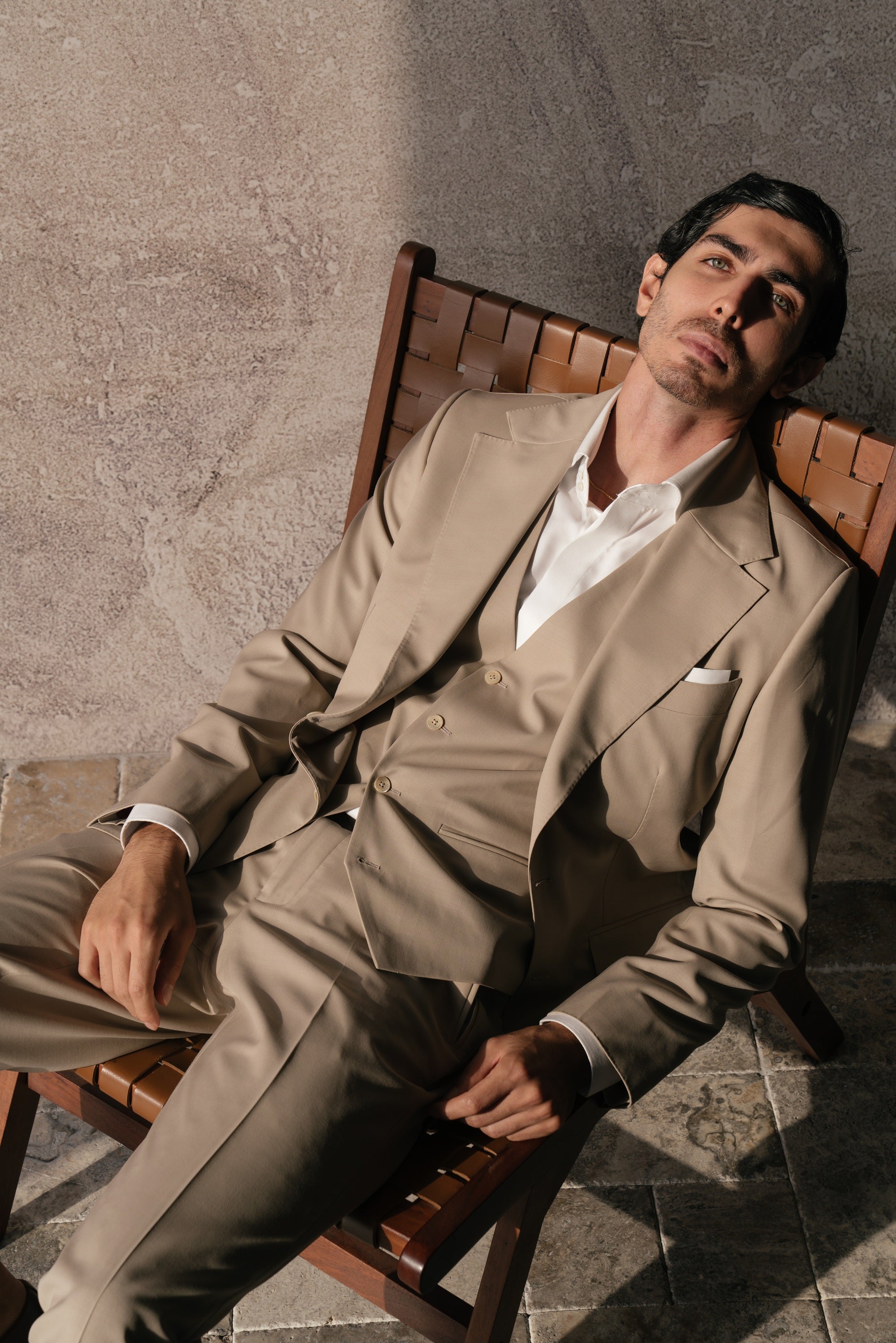
This beige wool three-piece suit is single-breasted with a notch lapel. It works as a reference for daytime weddings and warm-weather occasions, and for weighing whether a waistcoat suits your build and the events you dress for.
Bottled Green Linen Suit

This bottle green suit is cut double-breasted in a silk and linen blend with a peak lapel. It is a starting point for discussing colour direction beyond navy and grey, and how a lighter blend behaves between Dubai heat and air-conditioning.
Grey Checkered Blazer

This grey checked blazer is single-breasted in wool with a notch lapel. A blazer can be the better answer when you want tailored presence without matched trousers; use it to judge how much pattern you are comfortable wearing to work or social events.
Beige Tuxedo Jacket

This beige shimmer tuxedo jacket is single-breasted in wool with a shawl lapel. It is a reference for black-tie and evening dressing, and for deciding whether a lighter dinner jacket suits you better than a conventional black one.
Pros and Cons
Strengths of a carefully vetted tailor
-
A clear process reduces the risk of paying for cosmetic customisation instead of meaningful fit work.
-
Cloth, construction, and lining can be chosen for Dubai heat and heavy air-conditioning.
-
Multiple fittings may correct posture, shoulder slope, trouser balance, and sleeve pitch.
-
A good tailor can steer you away from details that date quickly or restrict how often you wear the garment.
-
A properly chosen commission may stay more comfortable through long meetings, travel, and formal events.
Considerations before spending more
-
Bespoke takes time and does not suit a need for a suit within days.
-
Higher spend does not guarantee better fit without disciplined fittings.
-
A highly individual design can be less versatile than a restrained navy or charcoal suit.
-
Even an excellent jacket cannot compensate for cloth that is too heavy for your daily environment.
Common Mistakes
Buying the story rather than the fit
Italian cloth, handmade, and bespoke sound reassuring. They are not enough on their own. Inspect collar, shoulder, chest, and trouser seat. A suit must work on your body before its specification means much.
Ordering a hot-weather suit in the coldest room
Many consultations happen under strong air-conditioning. A jacket can feel perfect there and oppressive outdoors. Tell the tailor how you travel, how long you walk outside, and whether your office is cold enough to justify slightly more substantial cloth.
Making the first suit too distinctive
A bold check, wide peak lapel, contrast buttonholes, and bright lining can each work. Together, they often limit the garment. Build a first serious suit around fit and cloth.
Add character in a second or third commission.
Leaving no room for corrections
Do not collect a suit on the morning of a wedding or major presentation. Wear it at home, sit down, walk, and check it with your shirt and shoes. Small corrections are normal.
They are easier when time exists.
Alteration Timing and Final Wear Checks
Time before an event
Plan alterations well before a wedding, presentation, or formal dinner. A simple hem may take little time, but a jacket adjustment can require a further fitting after the work is completed.
Leave room for a correction. Under pressure, a garment is more likely to be accepted before it has been properly checked.
What to bring to the fitting
Bring the shirt, shoes, belt, and formal accessories you intend to wear. Trouser length changes with shoe height, and collar space can look different with your actual shirt than with a fitting-room substitute.
For a wedding, bring the complete outfit if possible. Small differences show in photographs.
Collection movement check
At collection, sit, walk, raise your arms, button the jacket, and check the trouser break in a full-length mirror. Look for pulling across the chest, twisting through the trouser leg, and a jacket hem that rises sharply in motion.
You are checking a suit for wear, not one still photograph.
Where to Go From Here
If you are considering a wider wardrobe rather than one suit, start with Bespoke Garments in Dubai. It places suits, jackets, trousers, and occasion pieces into a considered order of purchase.
A well-cut shirt changes the result more than many men expect. Collar height, neck measurement, sleeve length, and cuff shape affect how a jacket sits at neck and wrist. Read Custom Shirts in Dubai before commissioning shirts for a new suit.
At Vavci, the first discussion should concern use: boardroom work, a Western wedding, black-tie evenings, or a wardrobe reset. Bespoke suits have cloth, construction, and fittings agreed before work begins.
That route is for clients wanting a garment made exclusively for them, not one merely adjusted after purchase.
Frequently Asked Questions
How do I choose the best tailor in Dubai?
Choose a tailor who explains his process clearly and assesses your body accurately. During fittings, check shoulder, collar, chest, and trouser balance. Then ask about cloth weight, construction, delivery, and post-collection corrections.
Location matters, but it should not outweigh fit quality and accountability.
Is made-to-measure good enough for a business suit?
Made-to-measure can work very well for a business suit when your proportions are reasonably close to the house pattern and fittings are careful. It may be less suitable for pronounced posture or balance issues.
Ask what adjustments are available before assuming every made-to-measure service gives the same result.
What does a bespoke suit cost in Dubai?
A premium bespoke suit in Dubai varies with cloth, construction, design, and the work required. Confirm the fittings and expected collection date with the tailor before commissioning.
How many fittings should a bespoke suit require?
A bespoke suit commonly needs more than one fitting, especially where a basted fitting corrects balance before finishing. The number alone is not the point.
Each fitting should resolve specific matters such as collar position, shoulder slope, sleeve pitch, and trouser shape.
What suit cloth works best in Dubai?
Lighter wool around 220 to 260 grams can be a sensible starting point for many Dubai clients, particularly in an open weave. Your routine matters.
A man moving between outdoor heat and cold offices may prefer different cloth from someone attending evening events in air-conditioned venues.
Can a tailor fix any ready-made suit?
No. A tailor can usually improve sleeve length, trouser length, waist suppression, and some trouser adjustments. He cannot reliably rebuild an incorrect shoulder, remove a persistent collar gap, or change a jacket with chest and armhole shape fundamentally wrong for you.
Start with the best base garment possible.
Should I buy a custom suit online or visit a Dubai tailor?
An online custom suit may suit a man who knows his measurements, has stable proportions, and accepts more limited correction. A local fitting is usually better when fit matters greatly, for a wedding, or after problems with shoulders, posture, trousers, or jacket balance.
How much do suit alterations cost in Dubai?
Suit alteration costs in Dubai vary with the garment, construction, and work required. Trouser hems and modest waist adjustments usually involve less work than jacket sleeve work or alterations involving the lining.
Ask for the details after inspection, because hidden construction can affect the work involved.
How long do suit alterations usually take in Dubai?
Consider a groom entrusting his ensemble to a Dubai atelier just weeks before his wedding: the timeline he encounters will hinge on the house's schedule, the season's demands, and the intricacy of the craftsmanship required. A trouser hem, being the simpler task, is typically resolved with greater speed than a jacket that calls for the lining to be carefully opened and restored. For this reason, those preparing for a significant occasion are advised to seek their tailor's attention well in advance.
Allow time for a further fitting before an important event.
Which parts of a suit can be altered professionally?
A skilled tailor may readily shorten a trouser hem, ease or nip in a waistband, refine the leg's taper, and adjust sleeve length, along with a measure of shaping through the jacket's waist. Venture beyond these, however, into the architecture of shoulders, armholes, chest, or overall jacket length, and the undertaking grows considerably more delicate, often yielding results that scarcely justify the risk.
The original shoulder fit remains decisive.
Is it worth altering an older suit or buying a new one?
Alter an older suit when the cloth remains sound, the shoulder fits correctly, and the required change is modest. Buy new when cloth is worn, seams lack allowance, or the jacket needs structural reconstruction.
A careful inspection should settle that decision before money is spent.
Glossary
Basted fitting
An early fitting in which the suit is loosely assembled with temporary stitches, allowing the cutter to correct shape and balance before final finishing.
Canvas
An internal layer in the jacket front that helps chest and lapel hold their shape and drape naturally over the body.
Drape
How cloth falls and moves on the body. Good drape depends on cloth, cut, construction, and fit.
Fused construction
Jacket construction in which layers are bonded with adhesive rather than supported by a traditional canvas layer.
Break
The crease where trouser hems meet the shoes. A full break creates more cloth fold. A slight break is cleaner and shorter.
Sleeve pitch
The angle at which a jacket sleeve is set. It should follow the natural position of your arms so the sleeve hangs cleanly.
Key Takeaways
-
The best tailor for you has a process that matches your body, use, timetable, and expectations.
-
Judge shoulder fit, collar fit, chest balance, and comfort in motion before style details.
-
In Dubai, cloth weight, weave, and lining deserve as much attention as colour.
-
Ready-made clothing with alterations can be sensible, but cannot correct every structural problem.
-
Premium bespoke tailoring should involve a clear fitting and correction process.
Conclusion
A good suit starts with an honest decision about what you need. If you need one quickly and a ready-made jacket fits well through the shoulder, alter it properly. If you need a suit that accounts for posture, working routine, and personal proportion, give the fitting process its time.
In Dubai, the right cloth and construction matter long after the first mirror photograph.
Bring a clear use case to your consultation. A tailor can then advise whether you need an alteration, made-to-measure work, or a fully bespoke commission crafted exclusively for you.
Given the bespoke nature of fine tailoring, particulars such as fabric availability, construction choices, and delivery schedules will inevitably shift with each client's unique measurements, design preferences, and cloth selection. We therefore ask that all specifications be verified prior to commissioning a garment. As bespoke, custom-made, and made-to-measure pieces are crafted around the individual, they necessarily involve a consultation process, with additional fittings often required before the finished garment is ready for collection.